
CNC Fiber Laser Cutter Machines for Beginners & Professionals
Last Updated: 2026-10-19 10:29:12
A fiber laser cutting machine is an automatic precision metal cutting system that uses a CNC controller to drive a 1064nm laser beam to cut along the tool path generated by the CAD/CAM software to get clean and smooth metal cuts, which is a fine cutting tool for sheet metals, metal tubes, bars and straps with the ability to cut both flat and beveled metal shapes and profiles. Featuring a robotic arm, it can even perform personalized 3D metal cutting. Fiber lasers can cut metals from 1mm to 200mm with powers ranging from 1,500W to 60,000W at a maximum speed of over 120m/min. A fiber laser cutter is capable of cutting hard metals such as mild steel, carbon steel, stainless steel, silicon steel, spring steel, iron, titanium and alloy, as well as various highly reflective metals including aluminum, copper, brass, gold and silver, which make it popular in sheet metal fabrication, elevator manufacturing, electronic appliances, auto parts, machinery manufacturing, precision parts, marine aviation, custom advertising, metal arts and crafts. Compared with traditional CNC plasma cutters and waterjet cutting machines, fiber laser is faster, more precise and environmentally friendly, making it an ideal metal cutting tool for modern metal fabrication. Here is STYLECNC's picks of most popular fiber laser metal cutting machines with expert reviews for both beginners and pros alike. From home to commercial use, hobby to industrial applications, entry-level to professional level, it's easy to find the perfect match for your needs and budget. No need to wait any longer, let's get started.
Fiber Laser Sheet Metal Cutters
A fiber laser sheet metal cutter is a high-precision metal cutting system with a fully automatic CNC controller, which allows it to use the CAM system to drive the laser head to cut through metal plates (such as stainless steel, carbon steel, aluminum, brass, gold and silver) based on the CAD software designed layout file, resulting in various personalized shapes, contours and profiles created in metalworking. A fiber laser sheet metal cutting system can easily cut through metal sheets with thicknesses ranging from 1 to 200 millimeters. It works at speeds from 0.05m/min to 100m/min, with optional powers from 1500W to 60000W, and with gas options including air, N₂, O₂ and mixed gases. The cheapest fiber laser sheet metal cutting machine is priced around $15,000, while some high-power models cost up to $300,000+.
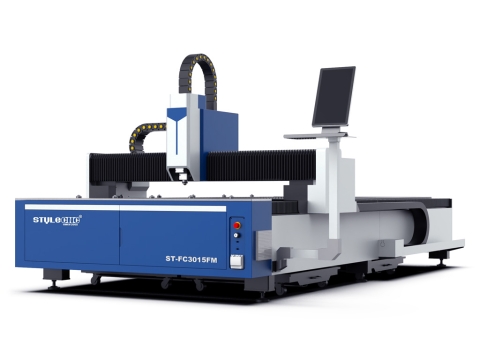
ST-FC3015FM
Raycus, IPG, MAX
1500W, 2000W, 3000W, 4000W, 6000W
$15,000 - $43,000
Pick Your Perfect Fiber Laser Cutting Machine for Metal Sheets
The best sheet metal laser cutter is a full-size (5x10 ft) automatic CNC metal cutting system with power options of 1500W, 2000W, 3000W, 4000W and 6000W for beginners and professionals. This laser metal cutter can cut through metal plates from 1mm to 25mm at a maximum speed of up to 100 m/min, creating your personalized metal signs, parts, crafts, artworks, gifts, logos, labels, letters, panels, screens, and decorations. Now this affordable fiber laser cutting machine for metal sheets is on sale at cost price.
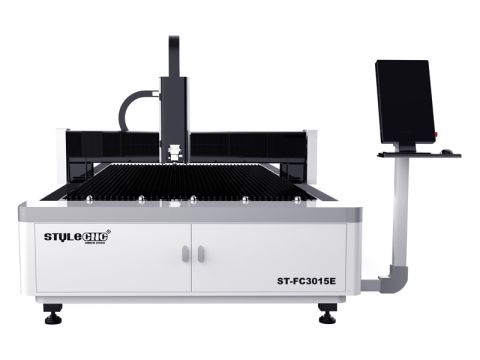
ST-FC3015E
RECI, Raycus, IPG, MAX
1500W, 2000W, 3000W
$12,800 - $16,000
Most Popular Fiber Laser Cutter Machine for Metal in 2026
The top-rated fiber laser cutting machine is designed for sheet metal fabrication of steel, titanium, aluminum, brass, copper, alloy, gold, silver, and iron with power options of 1500W, 2000W, and 3000W. The ST-FC3015E blends cutting-edge technology with low costs for small business owners looking to improve their productivity, as well as hobbyists eager to try new things with metalworking. Now the affordable fiber laser cutter for sale at cost price with the best and professional laser metal cutting service and support.
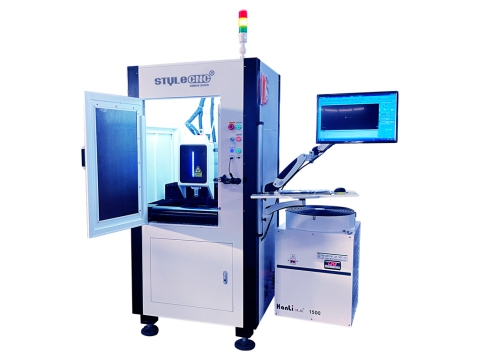
ST-FC3030
Raycus
1500W, 2000W
$12,200 - $14,500
Precision Fiber Laser Jewelry Cutting Machine for Brass, Gold, Silver
Looking for the best precision laser cutting machine (1500W and 2000W) to make personalized metal jewelry such as rings, earrings, pendants, bracelets, cufflinks, necklaces, brooches and other personal ornaments with silver, gold, brass, copper, titanium or stainless steel? Review this top-rated mini fiber laser jewelry cutter for sale at cost price in 2026. It is compact, takes up little space, and comes with an automatic CNC controller and user-friendly metal jewelry cutting software for both beginners and professionals.
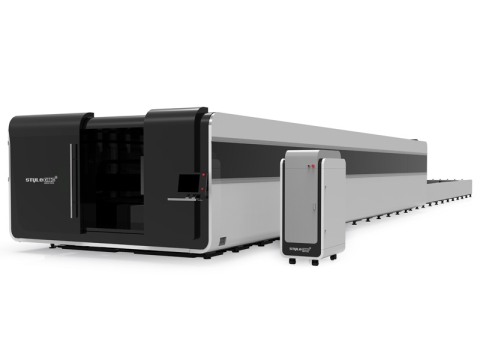
ST-FC12025GH
IPG, Raycus, MAX
12000W, 20000W, 30000W, 40000W
$138,000 - $280,000
High Speed 12000W IPG Fiber Laser Cutting Machine for Metalworking
High-speed IPG fiber laser cutter is type of high-power and high-precision laser metal cutting machine that comes with the best 12000W IPG fiber laser source (the most popular fiber laser generator manufacturers and brands from the United States, Germany, and Russia) for commercial use of professional thicker sheet metal fabrication, including stainless steel, carbon steel, tool steel, mild steel, titanium, magnesium, brass, copper, iron, aluminum, alloy, as well as most rare metals in modern industrial manufacturing.
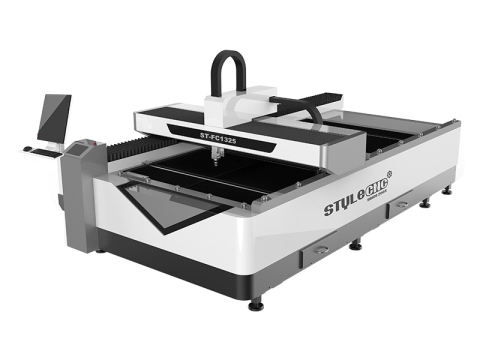
ST-FC1325
Raycus, IPG, MAX
1500W, 2000W, 3000W
$14,000 - $18,500
Affordable 4x8 Fiber Laser Stainless Steel Cutting Machine
2026 cheapest 4x8 laser stainless steel cutting machine is a budget-friendly and full-size CNC metal cutter with 1500W fiber laser generator, which is used to cut through thinner metals less than 2mm aluminum, 3mm stainless steel, 4mm carbon steel and brass, as well as thicker metals using higher powers (2000W, 3000W). It is a beginner-friendly and low-cost metal cutting tool for both small business owners and industrial metal fabricators. Now the best and affordable stainless steel laser cutter for sale at cost price.
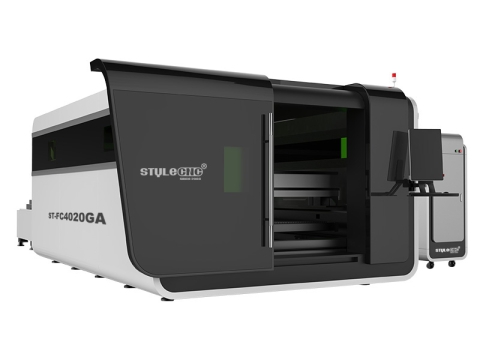
ST-FC4020GA
Raycus, IPG, MAX
2000W - 6000W, 8000W - 40000W
$39,000 - $83,000
6x12 Fiber Laser Cutter Table 6000W for Metal Fabrication
6000W fiber laser metal cutting machine is a 6x12 CNC laser cutter table that comes with a high power laser generator for full-size metal cutting, and an exchange pallet for automated metalworking, featuring with faster speed, higher precision, and various power options of 2000W, 3000W, 4000W, 8000W, 12000W, 20000W, and up to 40000W for commercial use in industrial metal fabrication, performing thicker sheet metal cuts with clean edges, allowing for metal tubing using an optional rotary attachment.
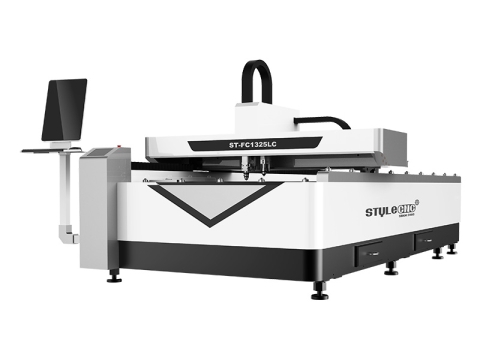
ST-FC1325LC
Raycus, IPG, MAX, RECI, YONGLI
150W + 1500W, 2000W
$15,800 - $20,500
CO2 & Fiber Combo Laser Cutter Machine for Metal & Nonmetal on Sale
ST-FC1325LC 1500W fiber laser metal cutting machine combined with 150W CO2 laser cutting system is a professional full-size 4x8 hybrid laser cutter for metals (steel, aluminum, brass, copper, iron, alloy) and nonmetals (wood, plywood, MDF, plastic, acrylic, leather, fabric, paper). It is an affordable combination of features and performance in one machine, which saves space and allows for multitasking, making it a state-of-the-art option that offers the most flexible and accurate way to handle all materials.
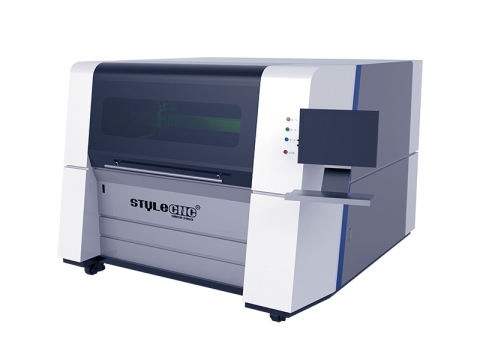
ST-FC1390
Raycus, IPG, MAX, RECI
1500W, 2000W, 3000W, 6000W
$17,000 - $31,000
Small Entry-Level Fiber Laser Metal Cutting Machine for Beginners
ST-FC1390 small metal laser cutter is an entry-level fiber laser cutting system with compact structure for hobbyists and home use in small business to cut out personalized metal parts, signs, tags, logos, letters, jewelries, and cut through all types of sheet metals with fully enclosed design, environmental friendly operation, 1500W, 2000W, 3000W and 6000W laser powers for option. The ST-FC1390 is an ideal choice for individuals who are ready to start metal fabrication with professional precision and craftsmanship.
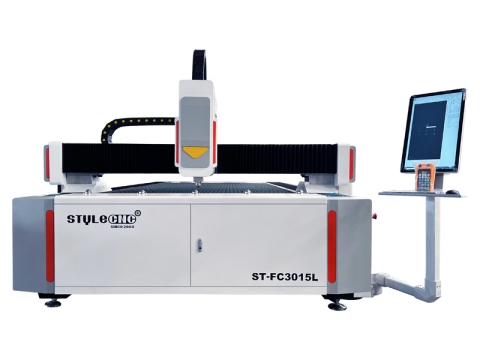
ST-FC3015L
Raycus, IPG, MAX
1500W, 2000W, 3000W, 6000W
$19,500 - $31,000
Sheet Metal Laser Cutting Machine with 1.5KW-6KW Fiber Lasers
ST-FC3015L is an affordable CNC fiber laser cutting machine for commercial use to cut sheet metals of stainless steel, mild steel, carbon steel, tool steel, titanium, aluminum, copper and brass, which comes with different power options of 1500W, 2000W and 3000W, from popular laser brands such as Chinese Raycus, German Precitec and IPG. It's budget friendly for those who have a tight metalworking budget and plan to improve enterprise productivity and increase business benefits with lower investment.
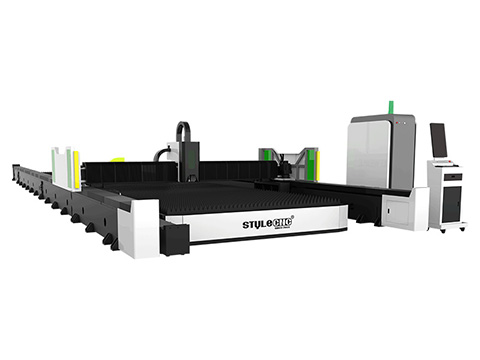
ST-FC12025SL
Raycus, IPG, MAX
6000W, 12000W, 20000W, 30000W, 40000W
$36,800 - $138,000
30KW Large Format Fiber Laser Cutting Machine for Sheet Metal
The ultra-large-format fiber laser cutting table comes with an automated CNC controller and a high-powered laser generator (China Raycus, Max or Germany IPG) with a power of 30000W (6000W, 12000W, 20000W and 40000W are optional), allowing for cutting through larger and thicker metal sheets (everything from soft brass to hard stainless steel) with widths from 2500mm to 5000mm and lengths from 6000mm to 32000mm, as well as private custom sizes for professional metal manufacturers with special needs.
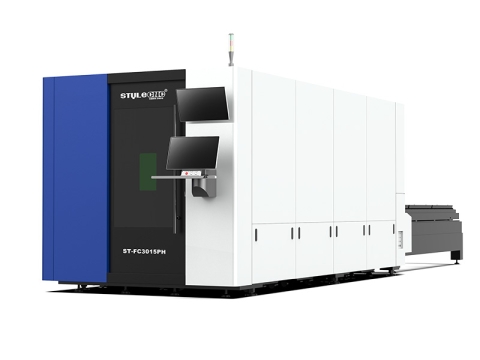
ST-FC3015PH
Raycus, IPG, MAX
1500W, 2000W, 3000W, 6000W, 12000W
$22,500 - $64,000
Fully Enclosed Fiber Laser Metal Cutting Machine for Sale
ST-FC3015PH fiber laser cutting machine comes with dual 5x10 automatic exchange working tables for full-size sheet metal cuts (a rotary attachment is optional for metal tubing), and a fully enclosed cover for safety metal fabrication, which makes it professional for both primary metal cuts and industrial metalworking. The 5-foot by 10-foot cutting table is large enough to handle metal of any size. The Cypcut software integrates CAD and CAM in one program to complete drawing, editing, nesting and cutting in easy steps.
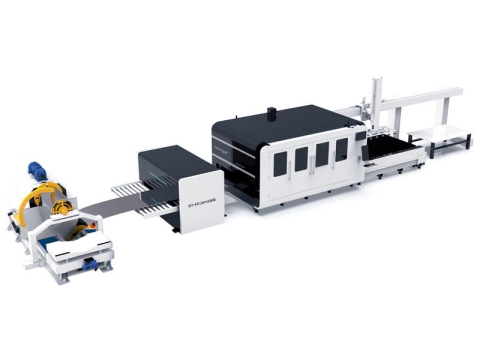
ST-FC3015MB
Raycus, IPG, MAX, RECI
1500W, 2000W, 3000W, 4000W
$75,000 - $135,000
Laser Blanking Line Machine: Automatic Coil Fed Laser Cutting System
Looking for an affordable laser blanking line machine for coil fed cutting in sheet metal fabrication such as HVAC duct and fittings, metal cabinets, auto parts, kitchenware and accessories? Find and buy the best and affordable automatic coil fed laser blanking system with 1500W, 2000W, 3000W and 4000W fiber laser power options at cost price in 2025, featuring a smart CNC nesting and cutting software for getting the most out of metals, taking on a wide range of materials and uses for industrial batch manufacturing.
Fiber Laser Pipe & Tube Cutting Systems
A fiber laser tube cutter is a professional CNC metal pipe cutting machine with an integrated modular design that combines a computer control system, a precision mechanical transmission kit and thermal cutting technology. The user-friendly human-computer interaction interface makes its operation more convenient and easy, which enables fast and accurate cutting of various metal pipe blanks with smooth and clean results. A fiber laser tube cutting system costs anywhere from $45,500 to $117,500 with power options of 1500W, 2000W, 3000W and 4000W.
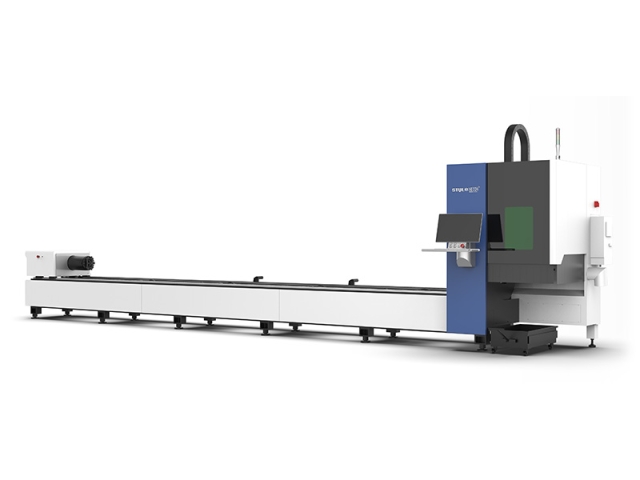
ST-FC6020T
Raycus, IPG, MAX
1500W, 3000W, 6000W
$20,800 - $56,800
2026 Top Rated Affordable Fiber Laser Tube Cutting Machine for Sale - 1500W To 6000W
This top-rated and most-affordable laser tube cutting machine with 1500W, 3000W and 6000W fiber laser power options is an automatic CNC metal pipe cutting system used for creating shapes, holes, slots, structural sections, channels, profiles, as well as making custom designs on square, round, rectangular, oval, and shaped tubes. Its easy-to-use CNC controller software make it simple for operators to program shapes, outlines and profiles in metal fabrication. Now the best fiber laser tube cutter for sale at cost price.
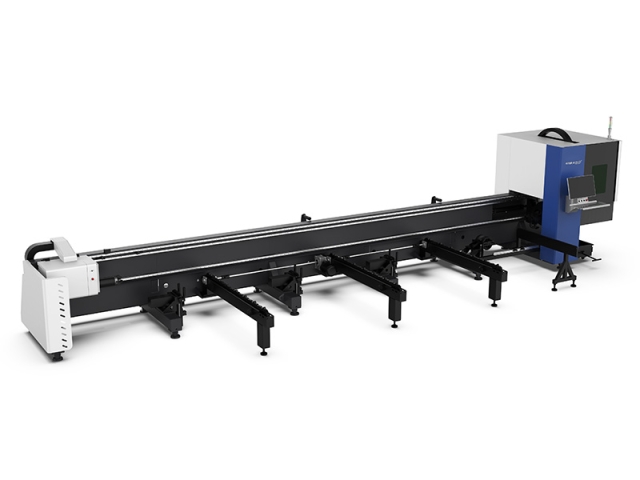
ST-FC6012K
MAX, Raycus, IPG
1500W, 3000W, 6000W
$25,000 - $66,800
CNC Laser Metal Tube Cutting Machine with Automatic Feeder for Sale - 1500W To 6000W
A CNC metal pipe laser cutting machine is an automatic fiber laser tube cutter that uses computer-controlled toolpaths and a rotating chuck system to create precision cuts on round tubes, square pipes, rectangular profiles, channel beams, and special-shaped metal tubing. Equipped with an automatic feeding system featuring loading, unloading, and conveying capabilities, this machine handles tube diameters from 10mm to 350mm and lengths up to 12 meters, with fiber laser power options from 1500W to 6000W.
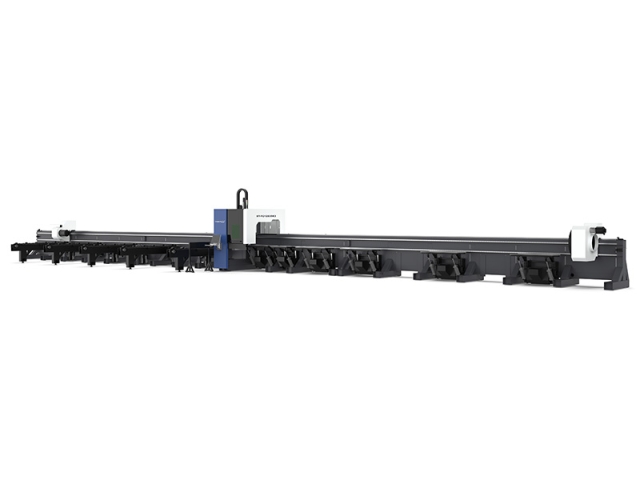
ST-FC12035K3
Raycus, IPG, MAX
6000W, 12000W, 20000W
$115,000 - $148,000
3D Tube Laser Bevel Cutting Machine with Automatic Feeder - 6000W, 12000W, 20000W
Looking for a professional metal cutting tool to create precise bevels of 15, 30 or 45 degrees on metal tubes or profiles for welding, assembly or fabrication? This 3D tube laser cutting machine with bevel cutter and automatic feeding system is the best option to help you get the job done with ease. The ST-FC12035K3 comes with three rotary chucks for rotating and moving metal pipes of heavy-duty and large-diameter, enabling the high-speed cuts of lines, holes, contours, bevels, and complex shapes in 2D/3D.
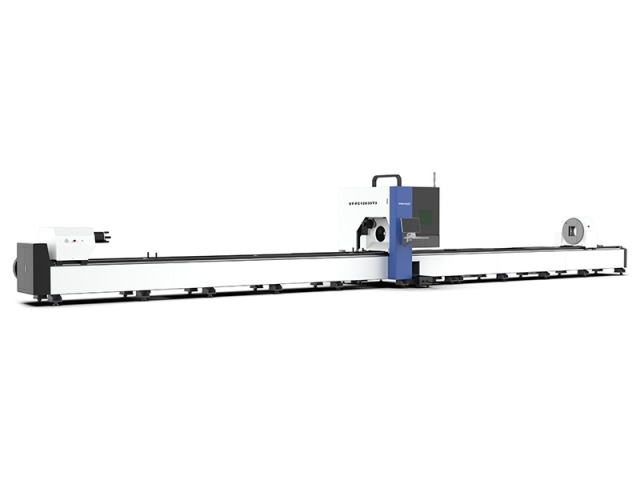
ST-FC6020T3
Raycus, IPG, MAX
6000W, 12000W
$90,000 - $115,000
Industrial Tube Laser Cutter for Metal Pipes & Profiles - 3000W, 6000W, 12000W
An industrial tube laser cutting machine with CNC controller is professional for creating precise cuts using an automatic feeder and 3 rotary chucks, allowing for all types of metal tube and profile options, including stainless steel, carbon steel, mild steel, aluminum, titanium, brass, copper, nickel and cobalt, as well as a diverse range of alloys for each. The ST-FC6020T3 is an economical and efficient metal pipe and profile cutter with a maximum cutting length of up to 12 meters, and a cutting diameter of up to 350 mm.
All-In-One Fiber Laser Cutting Machines
An all-in-one fiber laser cutting machine is a multifunctional CNC metal cutter that uses laser beam to cut metal plates and pipes to create custom shapes and profiles. One machine with multiple uses for both metal sheets and tubes, which comes with gantry structure, cast iron lathe bed, precision transmission system, and features with high cost performance, high precision, fast cutting speed, full functions, user-friendly interface and easy-to-use software. A 1500W low-power fiber laser sheet metal and tube cutter starts at $42,500, while a 12000W high-power fiber laser metal sheet and tube cutting machine can go up to $380,000.
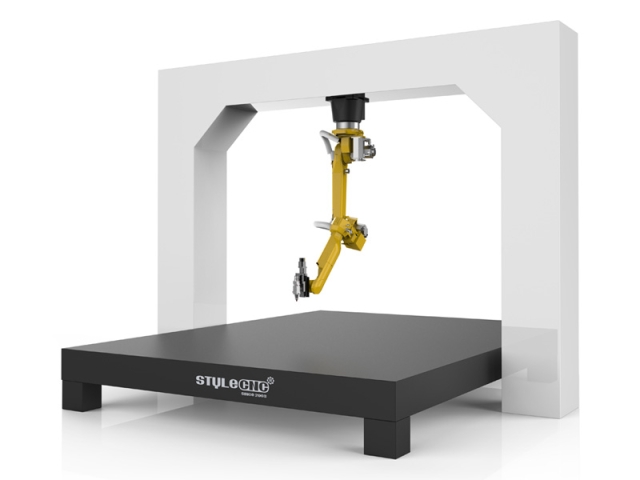
ST-18R
Raycus, IPG, MAX, RECI
1500W, 2000W, 3000W
$46,000 - $78,000
Industrial 5 Axis 3D Laser Metal Cutting Robot with 1500W, 2000W, 3000W Fiber Laser Source
3D robotic laser cutting machine with 1500W, 2000W, 3000W fiber laser source is an industrial 5 axis laser cutter robot from ABB for flexible 3D dynamic metal cuts of multi-dimensional and multi-angle. The 3D fiber laser metal cutter with robotic arm is used in 3D curved metal parts, metal tubes, auto parts, kitchenware, electronic components. Multi-axis laser cutting robot makes special-shaped metal cuts easy, allowing it to be integrated into metal production lines, achieving automation in industrial metal manufacturing.
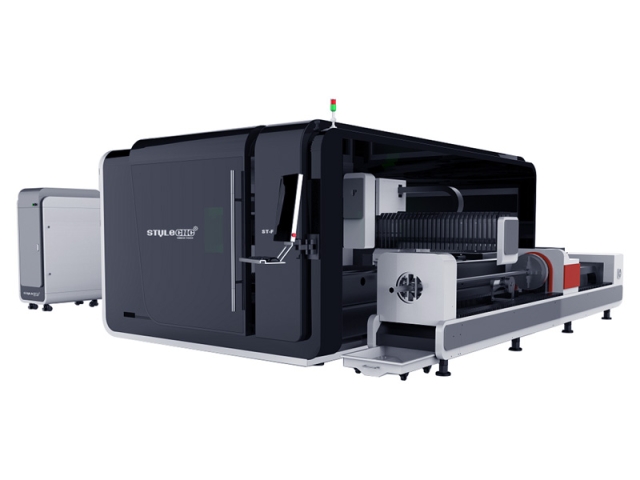
ST-FC3015GAR
Raycus, IPG, MAX
1500W, 2000W, 3000W, 6000W, 12000W
$40,000 - $730,000
Dual-Purpose 6000W Fiber Laser Cutting Machine for Metal Sheet & Tube (1500W to 12000W for Option)
ST-FC3015GAR dual-purpose fiber laser cutting machine 6000W is a commercial laser metal cutter with fully enclosed housing and dual functions to handle metal plates and tubes made of steel, aluminum, titanium, copper, brass, iron, alloys in various thicknesses and sizes, and comes with different power options such as 1500W, 2000W, 3000W, 4000W, 8000W and 12000W to meet various budgets and needs. The switchable dual working platform makes sure that the workflow is seamless and as smooth as silk.
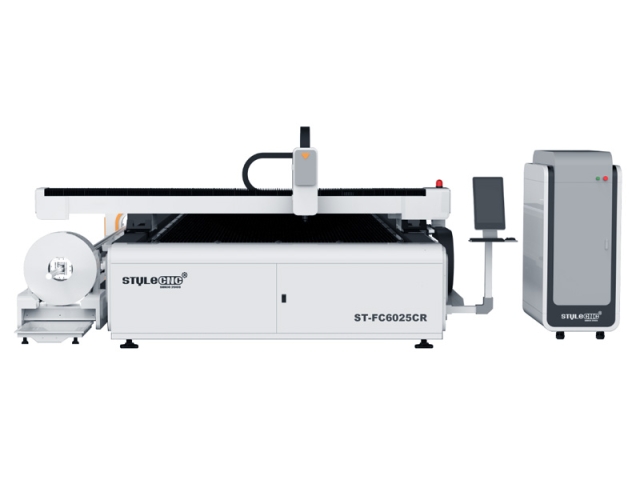
ST-FC6025CR
Raycus, IPG, MAX
12000W, 20000W, 30000W, 40000W, 60000W
$88,000 - $200,000
20000W Ultra High Power CNC Fiber Laser Metal Cutter for Sheeting & Tubing
20000W ultra high-power fiber laser cutter is an automatic CNC laser metal cutting machine with power options of 6000W, 12000W, 30000W, 40000W, and 60000W, which can cut through thicker sheet metals from 1mm to 120mm, with repeatable positioning accuracy of 0.02mm, at a maximum speed of 120m/min, as well as cut out personalized shapes and outlines from metal tubing. All things are done with one machine, saving space and cost, making it professional for commercial use and industrial manufacturing.
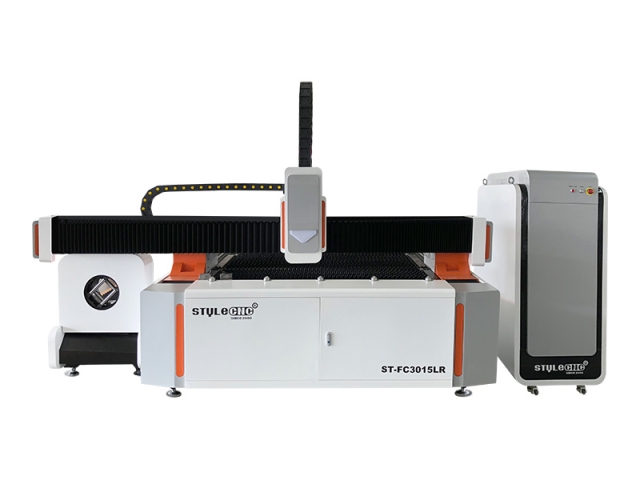
ST-FC3015LR
Raycus, IPG, MAX
1500W, 2000W, 3000W, 6000W
$19,800 - $46,000
5x10 Industrial Fiber Laser Metal Cutting Table for Sale - 1500W To 6000W
ST-FC3015LR 5x10 industrial fiber laser cutting table with 1500W, 2000W, 3000W and 6000W power options is used for precision cutting metal tubes and sheet metals all in one machine, which is user friendly and easy to operate for both beginners and professionals. It is a long-term partner that brings precision, efficiency, and cost-effectiveness for those businesses that require versatility and productivity within their operations. Now the best and affordable industrial 5x10 laser metal cutting table for sale at cost price.
What Materials Can Fiber Laser Cut?
Fiber lasers are professional for cutting most types of metal materials, from hard metals such as carbon steel (mild steel), stainless steel, cold rolled steel, galvanized steel, titanium, aluminum and iron to soft metals such as brass and copper, as well as precious metals such as silver and gold, but the specific type, properties and thickness of the metal will affect the speed, accuracy and quality of the final cut. Fiber lasers can cut through metal sheets of various thicknesses, as well as tubes and profiles of different shapes, with speeds ranging from 0.05m/min to 120m/min and power options ranging from 1500W to 60000W, allowing cutting through stainless steel and carbon steel up to 200mm thick, and aluminum and copper up to 120mm thick. However, some alloys and reflective metals, such as brass and copper, as well as silver and gold, require specialized laser settings to achieve ideal cutting results.
 Stainless Steel
- Carbon Steel
- Galvanized Steel
- Aluminum
- Copper
- Brass
- Titanium
Feature Stories On Fiber Laser Cutting
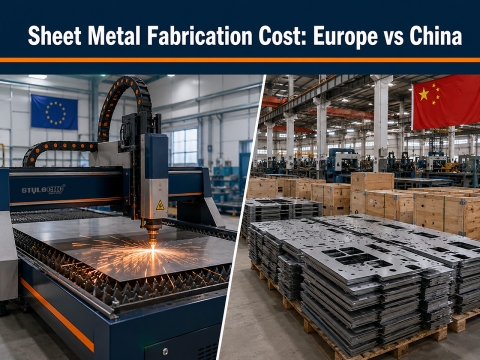
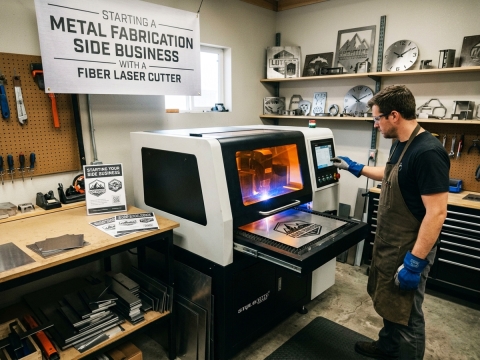

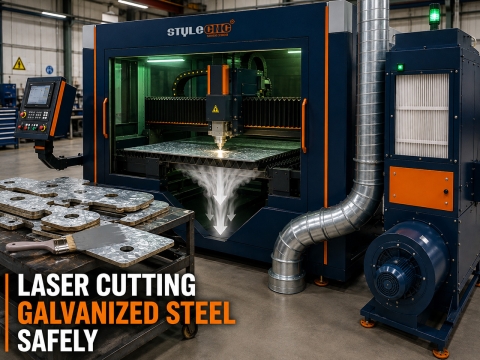

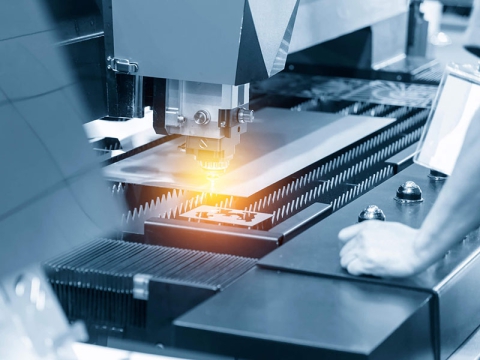
Maximize Your Productivity with High-Speed Fiber Laser Metal Cutting Systems
There is no doubt about the fact that fiber laser cutters have revolutionized the manufacturing industry by offering faster, more efficient, and more precise cutting capabilities. Their versatility and capability to cut metals in precise proportion make them a desirable item for metal workers and manufacturing firms. From sheet metals to profiles and pipes, these laser cutting machines have proven to be an essential tool for industries such as automotive, aerospace, and manufacturing, as well as for hobbyists and small businesses. If you are on a mission to grab a new cutting system to cut metal shapes and contours for your business or to make your next sleek design, STYLECNC is present here with proper instructions and guidelines you may love to check before making your purchase. Interested? Let's get started.
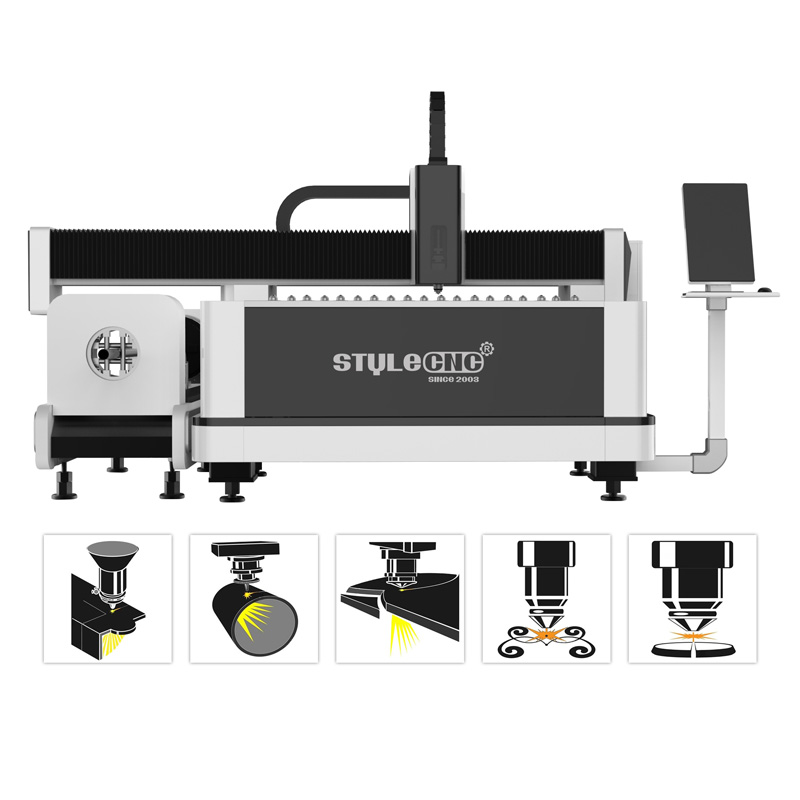
What Is A Fiber Laser Cutter?
A fiber laser cutter is an automatic laser metal cutting machine with CNC controller used to cut out precise metal shapes, contours, lines and prototypes on sheet metals, pipes and profiles at high speed to create metal parts, signs, arts, crafts, gifts, puzzles and decorations. It is designed for all types of metal fabrication, as well as your good metal working partner. It comes with various laser power options(1500 watts, 2000 watts, 3000 watts, 4000 watts, 6000 watts, 8000 watts, 10000 watts, 12000 watts, 15000 watts, 20000 watts, 30000 watts, 40000 watts, 60000 watts) for cutting through different thicknesses and types of metal including carbon steel, stainless steel, electrical steel, tool steel, galvanized steel, mild steel, aluminum zinc, aluminum alloy, aluminum, titanium alloy, iron, brass and copper.
Fiber Laser Cutter Machine Specifications
| Brand | STYLECNC |
| Laser Type | Fiber |
| Laser Source | Raycus, IPG, MAX, RECI |
| Laser Power | 1500W, 2000W, 3000W, 4000W, 6000W, 8000W, 10000W, 12000W, 15000W, 20000W, 30000W, 40000W, 60000W |
| Laser Wavelength | 1064 nm |
| Cooling System | Water Chiller |
| Max Cutting Thickness | 200mm |
| Max Cutting Speed | 120m/min |
| Price Range | $11,500 - $1000,000 |
| Applications | Sheet Metal & Tube Fabrication |
| Cutting Materials | Mild Steel, Carbon Steel, Tool Steel, Stainless Steel, Galvanized Steel, Silicon Steel, Spring Steel, Aluminum, Zinc, Copper, Brass, Magnesium, Titanium, Silver, Gold, Iron, Alloy |
Features
⦿ High electro-optical conversion efficiency, exceeding 30%. Low-power laser units utilize air cooling rather than water chillers, significantly reducing energy consumption and labor costs while delivering exceptional production efficiency.
⦿ Requires only electrical power to operate—no additional gases are needed—ensuring minimal operating and maintenance costs.
⦿ Features a modular, redundant semiconductor design. The resonant cavity contains no optical lenses, eliminating the need for startup time, alignment, or routine maintenance, while offering high stability, lower component costs, and reduced downtime.
⦿ Operates at a wavelength of 1.064 microns, providing high beam quality and high power density—ideally suited for absorption by metallic materials.
⦿ Employs fiber-optic beam delivery, removing the need for complex optical systems like mirrors; the optical path is simple and robust, requiring no external maintenance.
⦿ The cutting head is equipped with a protective lens, drastically reducing the consumption of expensive consumables such as focusing lenses.
⦿ Simplifies mechanical system design, allowing for easy integration with multi-axis motion platforms or industrial robots.
⦿ With the addition of a laser shutter, the beam can be split via fiber optics to support multiple simultaneous outputs; this facilitates easy functional expansion and straightforward system upgrades.
Pros & Cons
Pros
Fiber laser cutting is a cutting-edge, state-of-the-art laser technology. It operates by emitting a high-energy-density laser beam and focusing it onto the surface of a workpiece, causing the material at the ultra-fine focal point to instantly melt and vaporize. A computer numerical control (CNC) system directs the movement of the laser spot, enabling automated cutting. Compared to bulky gas or solid-state lasers, this technology offers significant advantages. It has become an essential solution for applications in high-precision cutting, LiDAR systems, aerospace technology, and the medical sector.
This technology supports both flat and beveled cutting, producing clean, smooth edges—making it ideal for the precision processing of metal sheets. Furthermore, when integrated with a robotic arm, it can perform three-dimensional (3D) cutting, serving as an alternative to traditional five-axis laser cutting machines. Compared to CO2 laser cutting systems, this equipment is more space-efficient, consumes less gas, and boasts exceptionally high photoelectric conversion efficiency. It is an advanced, energy-efficient, and eco-friendly processing tool, representing one of the world's leading CNC machine technologies.
✅ High Precision: Positioning accuracy reaches 0.05 mm, with a repeatability of 0.03 mm.
✅ Narrow Kerf: The laser beam is focused into an extremely small spot, creating a high power density that rapidly heats the material to its vaporization point. As the laser beam moves linearly relative to the material, these vaporized points connect to form a narrow cut (kerf), typically ranging from 0.10 to 0.20 mm in width.
✅ Smooth Edges: The cut edges are free of burrs, with surface roughness typically maintained within an Ra 6.5 rating.
✅ High Speed: Cutting speeds can reach 10 m/min, with a maximum positioning speed of 30 m/min—far surpassing other metal-cutting tools.
✅ High Quality: Utilizing a non-contact cutting process, the heat-affected zone is minimal, resulting in virtually no thermal deformation of the workpiece. It also eliminates the edge collapse or deformation often associated with mechanical stamping or shearing processes. • Non-destructive cutting: The cutting head does not come into contact with the surface of the substrate, ensuring the workpiece remains free from scratches.
✅ High flexibility: Offers exceptional versatility, allowing for the cutting of any shape; suitable for processing metal tubes and various complex-shaped metal components.
✅ No molds required: Eliminates the need for mold investment, saving time and operational costs, reducing overall manufacturing expenses, and making it ideal for large-scale industrial production.
✅ Material efficiency: Through CNC (Computer Numerical Control) programming, parts of various shapes can be nested and cut, maximizing material utilization.
✅ Ease of operation: Designs are created using CAD software, processed into models via CAM software, and then executed by a CNC controller to drive the equipment, enabling automated metal cutting.
✅ Safe and eco-friendly: Generates minimal waste and low noise; the processing environment is clean, safe, and pollution-free, significantly improving working conditions.
Advantages Compared with CO2 Laser Cutting Machine
☑ Superior beam quality: Produces a smaller focused spot and a narrower kerf (cut width), resulting in higher processing efficiency and better cutting quality.
☑ Faster cutting speed: At the same power level, the cutting speed is twice that of a CO2 laser cutting machine.
☑ Higher stability: Offers stable performance, with key components boasting a service life of up to 100,000 hours.
☑ Higher electro-optical conversion efficiency: With an electro-optical conversion efficiency of approximately 30%—three times that of a CO2 laser—it is more energy-efficient and environmentally friendly.
☑ Lower operating costs: The total power consumption of the machine is only 20%–30% that of a comparable CO2 laser cutting machine.
☑ Lower maintenance costs: Eliminates the need for assist gases and reflective mirrors, leading to significant savings on maintenance expenses.
☑ Ease of operation and maintenance: Utilizes fiber-optic transmission, requiring no optical path adjustments.
However, compared to CO2 laser cutting machines, fiber laser cutting machines have a relatively narrower cutting range. Due to wavelength limitations, they are only capable of cutting metallic materials; they are not easily absorbed by non-metallic materials, which to some extent restricts their range of applications.
Advantages Compared with YAG Laser Cutting Machine
☑ Higher cutting speed: The speed is 4–5 times that of YAG lasers, making it suitable for high-volume processing and production.
☑ Lower operating costs: Operating costs are lower than those of YAG solid-state laser cutting.
☑ Photoelectric conversion efficiency: The photoelectric conversion efficiency is approximately 10 times that of YAG lasers.
While the price is significantly higher than that of YAG lasers, it is much lower than that of CO2 laser cutting machines. Overall, it offers the best value for money among the three.
Cons
⛔ Staring at a cutting machine for an extended period can cause severe damage to the retina. All operators must wear protective eyewear. Operating or observing the machine without proper protective measures is strictly prohibited. Keep all parts of your body away from the cutting path to prevent accidental injury.
⛔ Dust generated during the cutting process can be harmful to human health. Operating equipment in an unsuitable environment may expose you to dust-related hazards. Prolonged exposure to a dusty environment can cause serious damage to the lungs and trachea, potentially leading to pulmonary or respiratory diseases.
⛔ Oxygen is frequently used during the cutting process, and the sparks generated can easily ignite a fire. Therefore, storing flammable or explosive materials in the work area is strictly prohibited, and appropriate fire protection equipment must be available.
⛔ Additionally, be aware that the materials being cut—or their surface coatings—may decompose at high temperatures, releasing substances that are harmful to human health.
⛔ Safety depends on following the manufacturer's guidelines and ensuring that the protective equipment procured by the company meets relevant safety standards. Different types of equipment pose varying levels of potential risk to the human body (particularly the eyes and skin); please refer to the operation manual for specific hazard classifications. Every unit is equipped with protective eyewear. During cutting operations, do not stare directly at the laser for long periods, and avoid observing the process at close range without a protective shield, as molten slag may be ejected. Most modern equipment is equipped with a dust-extraction system to effectively mitigate the impact of smoke and dust. While the gases used in laser processing may contain trace amounts of carbon monoxide, the concentration is so low that it poses no harm to human health.
Care & Maintenance
When using this equipment for cutting operations, it is essential to master the techniques for its operation and maintenance to fully leverage its capabilities and maximize efficiency.
⚙️ Regularly check the tension of the conveyor belts. Although they may seem inconspicuous, conveyor belts pose significant risks; improper handling can lead to personal injury or even loss of life.
⚙️ Every six months, inspect the straightness of the guide rails and the vertical alignment of the machine. If any irregularities are detected, perform maintenance and adjustments immediately. Failure to do so may result in poor cutting performance and increased margins of error, compromising the quality of the cuts. This procedure is critical and must be carried out.
⚙️ Use a vacuum system weekly to remove dust and debris from inside the machine. Ensure that all electrical cabinets remain closed and properly protected against dust ingress.
⚙️ Frequently clean the guide rails to remove dust and other debris. Additionally, keep the equipment's gear racks clean and apply lubricant to ensure they remain well-lubricated and free of accumulated foreign matter. Regular cleaning and lubrication of the guide rails and motors ensure smoother machine operation and higher cutting precision, ultimately improving the quality of the finished products.
⚙️ If any component is found to be damaged during operation, it must be replaced promptly. This not only protects the equipment itself but also ensures that the machine consistently delivers optimal cutting results.
Fiber laser cutters require regular inspection and maintenance. If the cutting head shows signs of deformation or other irregularities, it is considered damaged and must be replaced immediately. Failure to replace a damaged component will not only impair cutting quality and increase costs, but may also necessitate the reworking of parts, thereby reducing overall production efficiency.
Caution
⚠️ Ensure a secure connection at the power outlet and verify that the grounding wire is properly connected to an earth ground.
⚠️ Ensure a stable operating voltage for the chiller.
The refrigeration compressor is sensitive to power supply voltage; its standard operating range is 200V–250V (100V–130V for 110V models). If a wider operating voltage range is required, custom configurations can be provided upon request.
⚠️ Mismatched power frequency can cause equipment damage.
Please select the appropriate 50Hz or 60Hz model based on your local power specifications.
⚠️ To protect the circulating water pump, never operate the unit without water.
The water tank is drained before packaging. Ensure the tank is filled with water before powering on the unit; operating it without water will likely damage the pump. If the water level falls below the minimum requirement indicated on the gauge, the chiller's cooling capacity will decrease—always maintain the water level within the specified range. Never attempt to drain the system using the circulating pump.
⚠️ Ensure the air inlets and outlets remain unobstructed.
Maintain a clearance of at least 500mm from the air outlet (on top of the chiller) to any obstacles, and at least 200mm from the air inlets (on the sides) to any obstacles.
⚠️ Clean the air inlet filter regularly.
Periodically remove and clean the air filter. A severely clogged filter can cause the chiller to malfunction.
⚠️ Be mindful of condensation.
When the water temperature is lower than the ambient temperature—especially in high-humidity environments—condensation may form on the circulating water pipes or the surfaces of the equipment being cooled. If this occurs, consider increasing the water temperature or applying thermal insulation to the water pipes and the equipment being cooled.
⚠️ This is industrial-grade laser equipment; it should only be operated by qualified, trained personnel.
Trends
Laser cutting is one of the most important application technologies in the manufacturing industry. Technological workers continue to explore the technology and promote the continuous development of laser cutting technology. At the same time, companies need to step out of price competition and practice internal skills. Because of their many advantages, they have been widely used in automobile, rolling stock manufacturing, aviation, chemical industry, light industry, electrical appliances and electronics, petroleum and metallurgy.
With the increase of power, laser cutting is developing from light industrial thin metal fabrication to heavy industrial thick metal, and due to the improvement of high-power laser beam mode and the application of 32-bit microcomputer, favorable conditions have been created for high speed and high precision.
In order to meet the needs of 3D metal cutting in the automotive and aerospace industries, a variety of 5-axis and 6-axis 3D laser cutters have been developed. Currently, marine steel plate cutting generally uses flame cutting and plasma cutting. Deck and hull materials of special materials cannot be accurately cut. Laser cutter manufacturers may wish to try high-tech operations, vigorously develop computer network engineering, and improve business efficiency through the improvement of office tools.
At the same time, the high-precision 3D robot laser cutter has important strategic significance for improving the level of aerospace technology equipment. As the volume becomes smaller, the power increases and the auxiliary devices continue to improve for thick plate cutting and large format metal fabrication. The generator, power supply, host, control system and cooling circulation device are closely combined to form a complete set of compact laser cutter with small footprint and perfect function.
Strengthen the close connection with upstream and downstream enterprises in the supply chain to form a highly competitive and concentrated CNC laser cutter business circle. For some manufacturers, it is of great significance to enhance their competitiveness and expand market share. Focus on product structure optimization, product quality improvement, core technology mastery and innovation, and the expansion of corporate brand influence.
Where Your Assist Gas Comes From
Gas is the running cost nobody quotes, and how you supply it changes the economics of every job. Compressed air is nearly free once you own a compressor, and with proper drying it cuts thin mild steel and much stainless well. Nitrogen produces the bright, oxide-free edge that welding and food-grade work demand, but bottled cylinders are expensive per part and someone is always swapping them. Shops cutting stainless daily move to an on-site generator or bulk liquid instead, at which point the cost per hour falls sharply. Purity matters as well, since lower-grade nitrogen leaves a faint tint on the edge that shows up badly on polished work. Work out your gas bill per part before choosing a machine, not after, because it can dwarf the electricity that a 6000W laser cutter draws.
Optics Are the Consumable That Matters
Fiber machines are famously low maintenance, and the page is right that there is no beam path to align. What still wears is inside the cutting head: the protective window that shields the focusing lens from spatter, and the nozzle that shapes the gas stream. Both are cheap, and both quietly ruin cut quality as they degrade, since a spattered window absorbs energy instead of passing it and a damaged nozzle blows gas off-centre. When edges start showing dross that was not there last week, check those two before touching your parameters, as this guide to laser cutting performance explains. Keeping spares on the shelf turns a lost day into a five-minute swap. Focus drifts too, so if a machine that cut cleanly last month leaves ragged edges, recalibrating the focal position often fixes what no parameter change will.
Copper, Brass, and the Reflection Problem
The page notes that reflective metals need special settings, and it is worth knowing why. Copper, brass, gold, and silver bounce much of a 1064nm beam straight back up the nozzle, which both wastes energy and can damage the source. Modern generators include back-reflection protection and will shut down rather than be harmed, so the practical rules are to confirm your machine has it, to pierce these metals gently, and to expect thinner limits than steel at the same power. Compact machines such as this small metal laser cutter handle brass and copper jewellery work happily, while thicker reflective plate calls for real power and careful settings. Pulsed piercing helps here, because a short burst couples into the surface before the metal has a chance to reflect the beam away. The fiber laser explainer covers the optics behind it.
Choosing How To Supply Assist Gas
| Gas Supply | Suits | Watch Out For |
|---|---|---|
| Compressed air | Thin steel, everyday parts | Needs drying and filtering |
| Cylinder nitrogen | Occasional bright-edge work | Costly per part, frequent swaps |
| Nitrogen generator | Steady stainless production | Upfront cost, purity settings |
| Bulk liquid nitrogen | High volume, thick stainless | Tank rental and deliveries |
Fiber Laser Running Checklist
✔ Cost your assist gas per part before buying.
✔ Dry and filter shop air before it reaches the head.
✔ Stock protective windows and nozzles on the shelf.
✔ Recheck focus when edge quality starts to drift.
✔ Confirm back-reflection protection before cutting copper.
Enclosed machines such as this fully enclosed fiber laser also keep spatter off the optics and fume out of the shop air.
Buyer's Guide
A higher laser power of the machine will deliver better cutting capability. Therefore, we always recommend to our customers to choose these kind of machines with higher laser capability. The higher the power of the laser, the better the machine will be able to cut metals. At the same time, the software that would maneuver the machine is also worth checking. A user-friendly software interface will make that look easy for a person who will maneuver the machine. You may also look at the cooling system of the tool kit. it will save the machine from excess heat.
It is always necessary that you always look at the costs that you will have to spend for maintenance. It may look like a better purchase when the total cost of the machine seems lower. But in the long-term scenario, this can force you to spend higher on the maintenance.
Last but not the least. Consider from where you are making the purchase. I mean the reputation of the company or manufacturer matters in the long run. That is from where you will get the customer support in case you face any difficulties while using the tool.
Why Choose STYLECNC?
What do you think makes a good manufacturer? When you love the quality of their delivered products or the technical support that you get after the purchase, you name the brand as trustworthy. STYLECNC is renowned for delivering extra ordinary technical assistance and support when you need them the most. At the same time, STYLECNC always ensures that you get best rated machine that you need to get wholesome output. Grab your desired machine from the brand, and you certainly will love the decision that you did so.
Frequently Asked Questions
How Fiber Laser Cutters Improve Manufacturing Efficiency?
With faster cutting speed, higher precision and less maintenance, these machines deliver better manufacturing support compared to other traditional cutting tools. That means within a short time, you will be able to increase your production capability. That means as a business owner, you are saving your costs when you have such a tool in your repertoire.
Fiber laser is a type of high-energy beam based on a fiber amplifier that uses glass fiber doped with rare earth ions as the gain medium. The pump light irradiates the rare-earth-doped glass fiber pump source, which induces the rare-earth ions to absorb photons, and the excited radiation has the same frequency as the incident photons. Under the action of pump light, it is easy to form high power density in the fiber, which results population inversion of the laser working substance. When a positive feedback loop (constituting a resonant cavity) is properly added, the laser oscillation output can be formed. These laser cutters have a wide range of applications, including material processing, communications, medical beauty, scientific research and military, instrumentation and sensors. It has been used for cutting, engraving, etching, marking, welding, surface treatment, cleaning, cladding, and some other applications.
The pump light entering the fiber has multiple modes, and different pump modes have different effects on different signal modes, making the analysis of laser generators and amplifiers more complicated. The doping profile in the fiber also has a great influence on the laser generator. In order to make the medium have gain features, the fiber is doped with working ions (i.e. impurities). The working ions are uniformly distributed, whereas the distribution of the pump light is non-uniform. Therefore, to improve the pumping efficiency, the ion distribution and the pumping energy distribution should be as close as possible.
Fiber laser generators are similar to traditional gas and solid laser generators, which are composed of pump sources, resonators, gain media. The pump light is coupled into the gain fiber through the optical system, and the gain fiber generates spontaneous emission after absorbing the pump light, and outputs stable beam.
What Are Fiber Laser Cutting Machines Used For?
A fiber laser cutting machine is an automated, smart metal cutting system equipped with Computer Numerical Control (CNC) technology. It is capable of cutting a wide range of metal sheets, pipes, and profiles, including materials such as stainless steel, mild steel, carbon steel, galvanized steel, tool steel, brass, copper, iron, gold, silver, titanium, and aluminum. This equipment not only enables high-precision cutting of various component contours—such as those for automotive, marine, and aerospace applications—but is also ideally suited for processing diverse shapes of kitchenware, lighting fixtures, jewelry, decorative items, and signage. Furthermore, it serves as an excellent tool for those engaged in customized metal fabrication businesses.
Applied Industries
Fiber lasers are applied across a wide range of manufacturing sectors, including electronics, automotive, aerospace, automotive and metro components, electrical equipment, textile machinery, precision parts, construction machinery, food processing machinery, shipbuilding, home appliances, metallurgical equipment, tool manufacturing, elevators, metal art and crafts, metal gifts and decorations, advertising, kitchenware, contract metal fabrication, and various other industrial fields.
Applicable Materials
Fiber lasers can cut through metal sheets, pipes, and profiles made of materials such as carbon steel, stainless steel, silicon steel, alloy steel, spring steel, mild steel, aluminum, galvanized steel, tool steel, Al-Zn coated steel, copper, brass, pickled steel, titanium, silver, gold, iron, and various other alloys.
How Do Fiber Lasers Cut Through Metal?
Fiber laser cutting machines utilize a laser generator and a CNC (computer numerical control) system. A gain medium is doped into an optical fiber, and a laser beam is generated by coupling light of a specific wavelength—emitted by a semiconductor laser—into that fiber. The equipment then focuses this laser beam into a spot with an extremely small diameter, creating a high-energy-density, ultra-bright beam that is directed onto the metal being cut. This causes the temperature at the point of impact to rise sharply, reaching the metal's vaporization temperature almost instantly; the metal vaporizes, creating a hole. From this starting point, the system controls the relative motion between the laser beam and the workpiece—following a predetermined path based on the required shape—to cut through the material. Simultaneously, an auxiliary gas-assist system clears away any dross (molten residue) generated during the cutting process.
How Thick And Fast Can A Fiber Laser Cut Metal?
Speed & Thickness
How thick of metal can a fiber laser cut through, and what is its maximum cutting speed? Fiber laser cutters are capable of cutting various metals and alloys of different thicknesses. By using auxiliary gases—such as oxygen, nitrogen, or air—users can achieve clean, smooth cut edges. Different brands of fiber lasers have their own respective strengths and weaknesses when it comes to metal cutting. Even within the same brand, the maximum metal thickness that can be cut and the cutting speed will vary depending on the power output. Furthermore, lasers from different manufacturers also differ in terms of cutting precision and quality. For instance, IPG fiber lasers generally offer higher precision and faster cutting speeds, though they also come at a higher price point. Meanwhile, brands such as Raycus, MAX, and RECI each possess their own unique characteristics.
Find Your Cutting Parameters
⊛ The entry-level 1500W low-power laser is suitable for cutting stainless steel up to 6mm thick, carbon steel up to 16mm, and aluminum and copper up to 5mm, with maximum cutting speeds exceeding 35 meters per minute.
⊛ The 2000W laser can cut carbon steel up to 16mm thick, stainless steel and aluminum up to 8mm, and brass and copper up to 6mm, with maximum cutting speeds reaching 40 meters per minute.
⊛ The widely used 3000W laser offers a broad application range, capable of cutting carbon steel up to 20mm thick, stainless steel and aluminum up to 10mm, and brass and copper up to 8mm, with maximum cutting speeds exceeding 45 meters per minute.
⊛ The professional-grade 4000W medium-power laser can cut stainless steel up to 12mm thick, carbon steel up to 22mm, aluminum up to 14mm, and copper and brass up to 10mm, with maximum cutting speeds reaching 50 meters per minute.
⊛ The commercial-grade 6000W medium-power laser provides sufficient thermal energy to cut carbon steel up to 25mm thick, stainless steel and aluminum up to 16mm, and copper and brass up to 10mm, with maximum cutting speeds exceeding 60 meters per minute.
⊛ The industrial-grade 8000W high-power laser can cut stainless steel and aluminum up to 25mm thick, carbon steel up to 30mm, and brass and copper up to 12mm, with maximum cutting speeds reaching 70 meters per minute.
⊛ The 12000W high-power laser cutting machine is ideally suited for cutting carbon steel, stainless steel, and aluminum up to 50mm thick, as well as copper and brass up to 20mm, with maximum cutting speeds exceeding 80 meters per minute. ⊛ The 15,000W laser is suitable for cutting carbon steel and stainless steel up to 60mm thick, aluminum up to 50mm thick, and copper and brass up to 30mm thick, with maximum cutting speeds exceeding 90m/min.
⊛ The 20,000W high-power laser can easily cut carbon steel up to 70mm thick, stainless steel and aluminum up to 80mm thick, and brass and copper up to 70mm thick, with maximum cutting speeds exceeding 100m/min.
⊛ The 30,000W ultra-high-power laser can precisely cut stainless steel over 100mm thick, as well as carbon steel, aluminum, brass, and copper up to 80mm thick, with maximum cutting speeds exceeding 110m/min.
⊛ The 40,000W extreme-high-power laser is typically used for the precise cutting of carbon steel, stainless steel, aluminum, brass, and copper with thicknesses exceeding 120mm, achieving cutting speeds of up to 120m/min.
⊛ The 60,000W laser cutting machine—the most powerful option—is generally used for cutting carbon steel and stainless steel ranging from 16mm to 200mm in thickness, with cutting speeds between 0.05m/min and 15m/min.
Note: The 1000W laser power option has been discontinued and is no longer available; it has been replaced by the 1500W power option (available as a free upgrade).
How Much Does A Fiber Laser Cutter Cost?
When you wonder how much a fiber laser is worth, you'll need to factor in the costs of its power, table size, brand, and features. From low-end hobbyist models to high-end industrial models, you'll have to spend anywhere from $12,000 to $1,000,000. To make sure you can comfortably afford the cost, make sure you account for the following when budgeting for a fiber laser cutting machine you want:
◉ Hardware costs vary by brand and manufacturer, both in terms of raw materials and manufacturing processes, where hardware includes CNC spare parts and accessories such as machine bed frame, generator, cutting head, water chiller, gas cylinder, air storage tank, power supply, air compressor, cooling dryer, filter, exhaust fan and dust remover, and slag extractor.
◉ CNC control systems and laser cutting software vary in cost.
◉ After-sales service and support charges vary by dealer.
◉ Maintenance and care costs.
◉ Operational expenses.
◉ Additional costs.
If you're purchasing from outside your home country, you also need to consider the following factors:
◉ Shipping costs.
◉ Import taxes and duties.
Here's what you need to know about all the costs of owning a fiber laser cutting machine:
The average price of a brand-new fiber laser cutter in 2026 is around $32,600, 18% lower than the 2025 average of $39,800, according to data from Amazon, Google, and STYLECNC.
An affordable entry-level fiber laser cutter costs anywhere from $14,200 to $32,800 with lower powers of 1500W and 2000W for beginners with hobbyists, while a professional automatic fiber laser cutting system starts at around $29,800 with medium powers of 3000W, 4000W, and 6000W for precision cutting in in commercial use. An industrial CNC fiber laser cutting machine is priced from $88,000 to $500,000+ with higher powers of 8000W, 10000W, 12000W, 15000W, 20000W, 30000W, 40000W, 60000W for thicker metal fabrication in enterprise use. The best budget fiber & CO2 combo laser cutting tables range from $19,800 for multipurpose to cut metal, wood, MDF, plywood, acrylic, plastic, fabric, and leather.
A low-cost fiber laser sheet metal cutter starts at $15,000, while some high-power IPG fiber laser sheet metal cutting machines can go up to $300,000+. A fiber laser tube cutter is priced from $45,500 to $117,500 for all types of pipe cuts. An all-in-one sheet metal and tube fiber laser cutting machine cost from $42,500 to $236,800. An automtic industrial 3D cutting robot ranges from $49,000 to $83,500 for multi-dimensional and multi-angle metal cuts.
Pick Up Your Budget
| Laser Powers | Minimum Price | Maximum Price | Average Price |
|---|---|---|---|
| 1500W | $13,000 | $34,000 | $17,210 |
| 2000W | $15,000 | $42,000 | $21,320 |
| 3000W | $20,000 | $60,000 | $26,010 |
| 4000W | $36,000 | $70,000 | $45,300 |
| 6000W | $37,000 | $80,000 | $50,100 |
| 12000W | $85,000 | $190,000 | $112,600 |
| 20000W | $120,000 | $300,000 | $165,100 |
| 30000W | $200,000 | $400,000 | $252,300 |
| 40000W | $320,000 | $600,000 | $391,800 |
| 60000W | $500,000 | $1000,000 | $721,900 |
What Our Customers Say?
The best fiber laser cutting machine cannot come from our own words, only the experience of our real customers can be convincing. We always ask customers to make factual reviews with pros and cons on purchase, building, shipping, setup, operation, service and support. Precision and speed are our pursuit, quality and service are our goals, integrity and reliability are our mission.