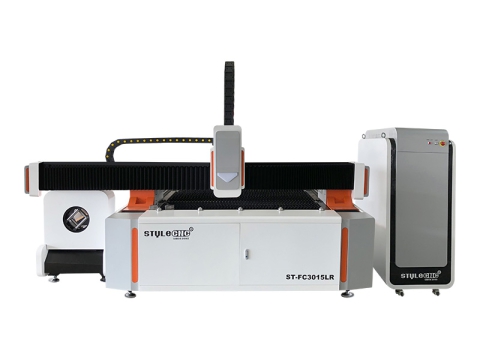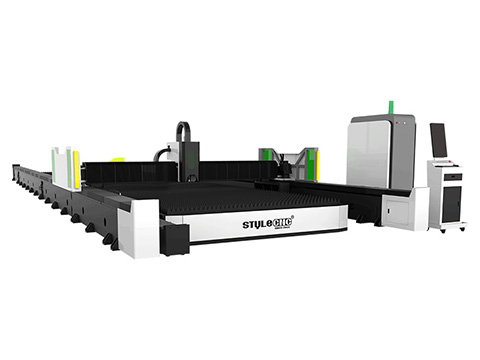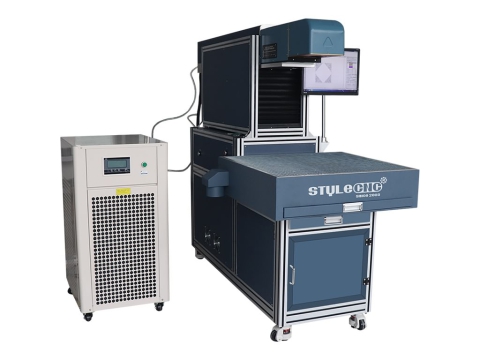

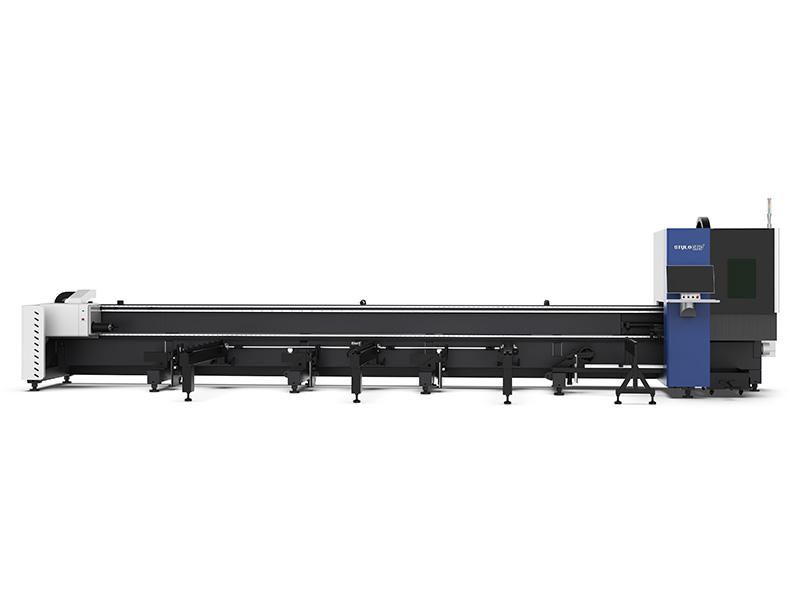
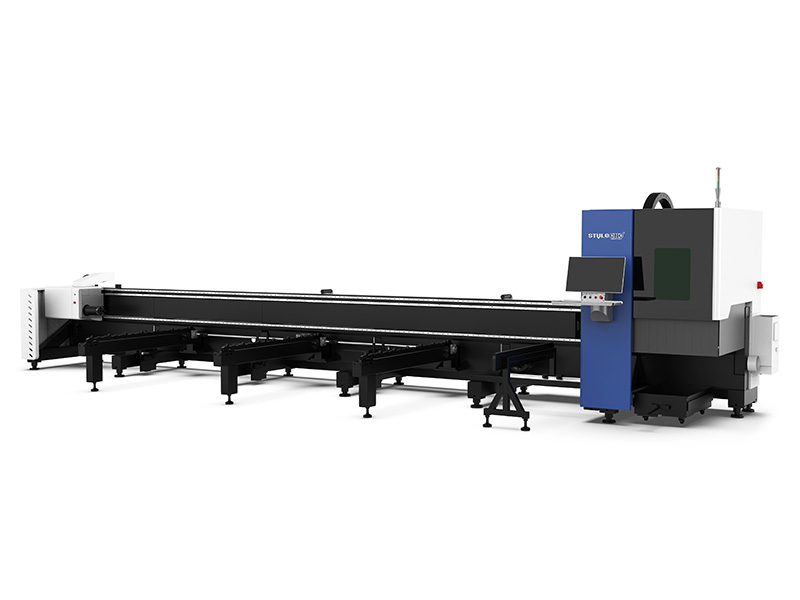
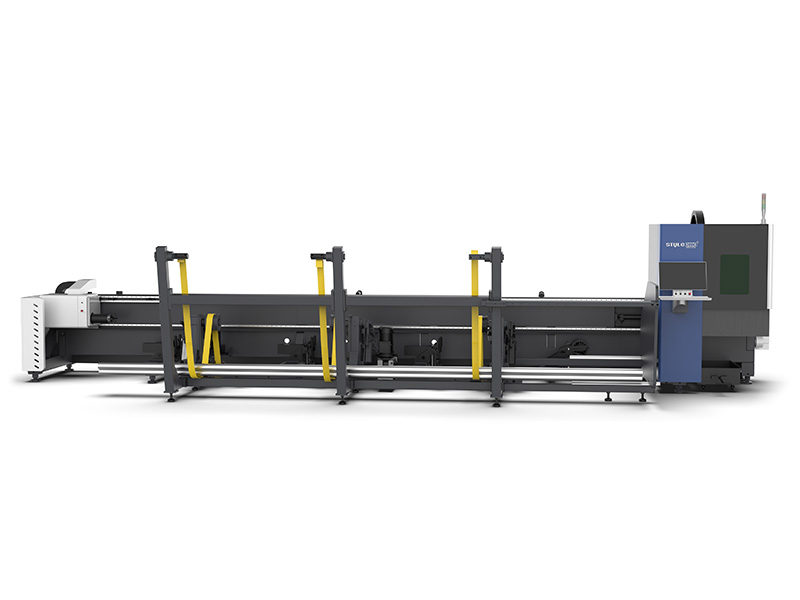
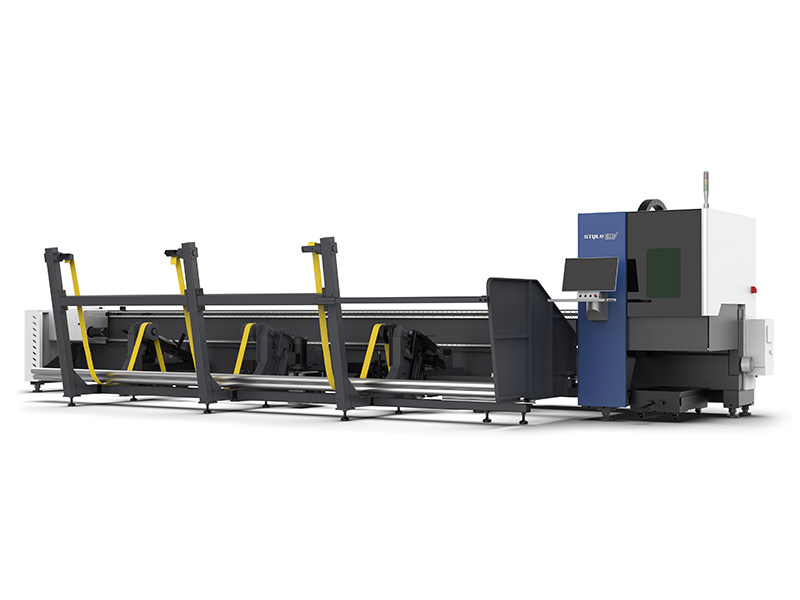
I bought this laser because I had finally reached my limit with the plasma cutter I had been using—it constantly left burrs on the cut edges. Given the consistently excellent experience I had previously enjoyed while using a friend's laser tube cutter, I ultimately decided to take the plunge and acquire this CNC laser cutting machine (ST-FC6012K | 3000W) for myself. Honestly, ever since it arrived, I haven't been able to stop tinkering with and testing it out. I'm having an absolute blast! It cuts with effortless ease—like a knife through butter—and handles every cutting job I require with absolute simplicity. Even cutting stainless steel pipes up to 1/4 inch thick is a piece of cake for it.
CNC Metal Pipe Laser Cutter with Automatic Feeding System
Last Updated: 2026-09-28 17:26:54
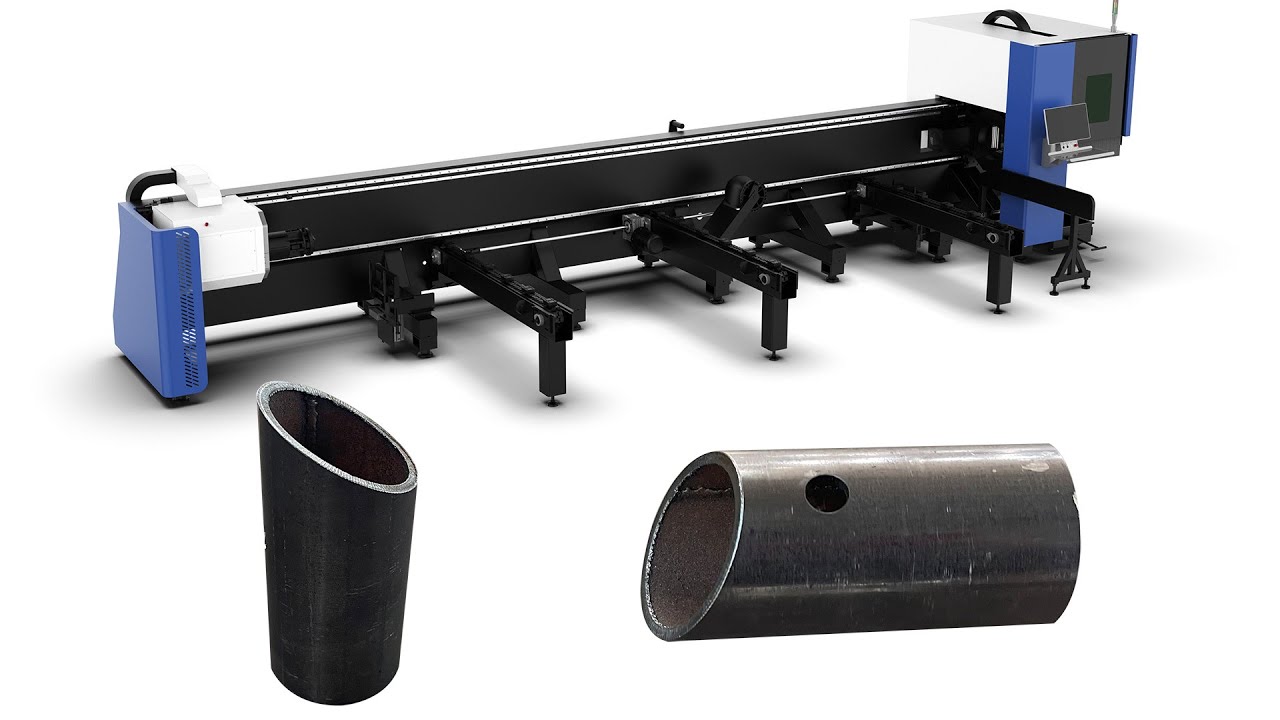
A CNC metal pipe laser cutting machine is an automatic fiber laser tube cutter that uses computer-controlled toolpaths and a rotating chuck system to create precision cuts on round tubes, square pipes, rectangular profiles, channel beams, and special-shaped metal tubing. Equipped with an automatic feeding system featuring loading, unloading, and conveying capabilities, this machine handles tube diameters from 10mm to 350mm and lengths up to 12 meters, with fiber laser power options from 1500W to 6000W.
- Brand - STYLECNC
- Model - ST-FC6012K
- Maker - Jinan Style Machinery Co., Ltd.
- Sizing - φ10mm - φ350mm
- Category - Fiber Laser Cutting Machine
- Laser Source - MAX, Raycus, IPG
- Power Option - 1500W, 3000W, 6000W
$25,000 - $66,800 for Basic & Pro Editions
- 180 Units in Stock Available for Sale Every Month
- Meeting CE Standards in Terms of Quality & Safety
- One-Year Limited Warranty for Entire Machine (Extended Warranties Available for Major Parts)
- 30-Day Money Back Guarantee for Your Purchase
- Free Lifetime Technical Support for End-Users & Dealers
- Online (PayPal, Alibaba) / Offline (T/T, Debit & Credit Cards)
- Global Logistics and International Shipping To Anywhere
What is a CNC Metal Pipe Laser Cutting Machine?
CNC metal pipe laser cutting machine is an automatic tube cutter that can create precise metal tube cuts in various shapes and styles with the cooperation of computer and laser generator. CNC laser tube cutting machines can cut any programmed shape on metal tubes in various directions and angles. The laser-cut shapes can be designed and updated flexibly and quickly through computer programming. The high flexibility of laser tube cutters provides strong technical support for more and more personalized metal fabrication, thereby reducing the use of molds and labor costs.
The modular design with the CNC controller realizes the unmanned and full data production of the pipe cutting operation. Compared with traditional metal pipe cutting system such as flame cutting, plasma cutting and water jet cutting, the precision of laser-cut metal pipes is much higher. The CNC laser tube cutter can be flexibly adjusted according to these deformations, which is also beyond the reach of many traditional metal tube cutting tools.
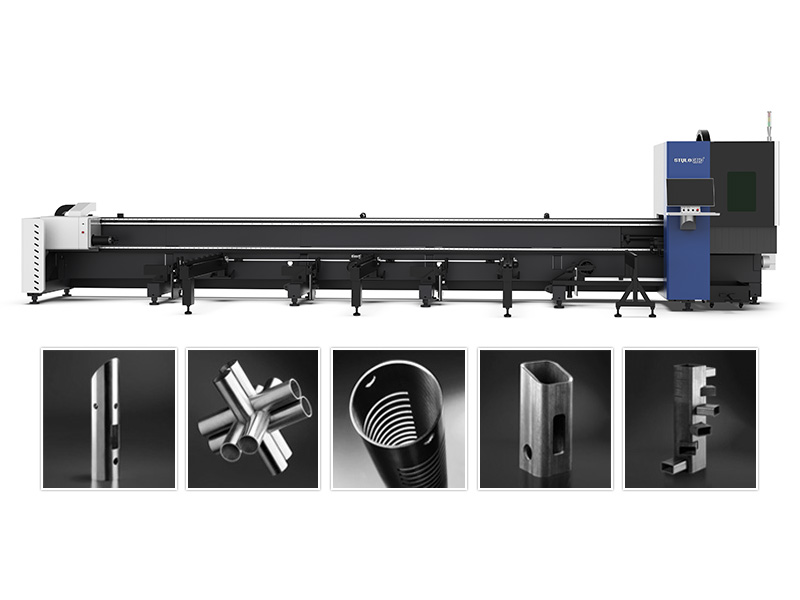
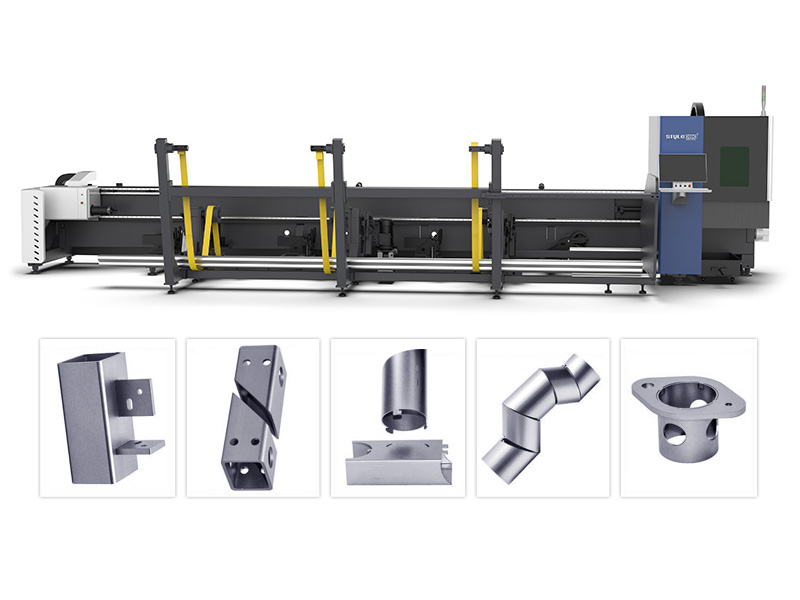
CNC laser tube cutting machine features with centralized operation, flexible cutting, automatic loading and unloading, and the clamping is convenient and fast. It comes with precision rack and double drive mode, which is easy to maintain and maintain, and is basically maintenance-free. It works with professional tube cutting software, which is the fundamental guarantee for effectively saving materials and improving cutting efficiency. Based on these advantages, laser pipe cutting machines are widely used in the processing of round pipes, square pipes, rectangular pipes and special-shaped pipes in fitness equipment, office furniture, kitchen cabinets and other industries.
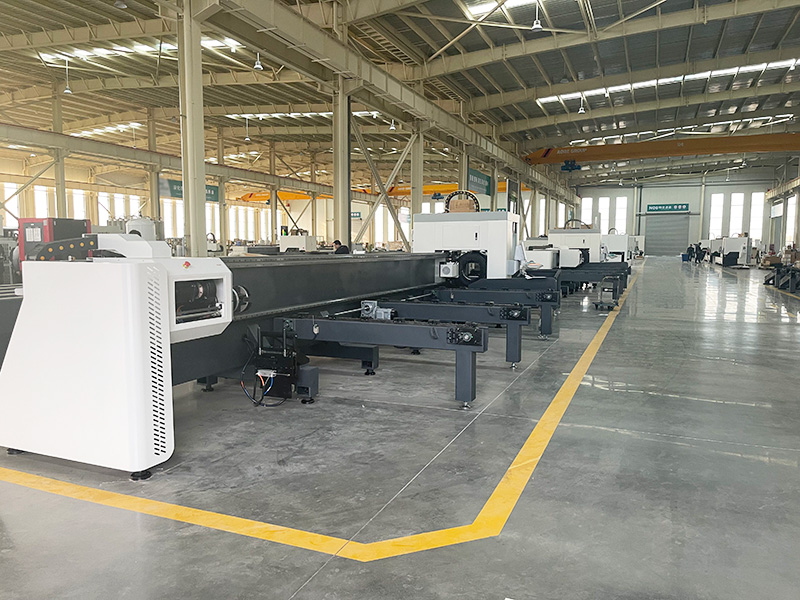
How a CNC Laser Tube Cutter Works?
The operating principle combines a high-energy fiber laser beam with a precision rotary chuck and CNC motion control. The laser source generates a focused beam that vaporizes or melts metal along a programmed toolpath, while assist gas blows molten material from the kerf to produce clean edges. The rotary chuck grips the tube and rotates it in coordination with the cutting head, enabling complex shapes, angles, and contours on all sides without repositioning.
Key automation stages of the automatic feeding cycle:
• Servo-driven feeder loads raw pipe stock from the material rack into the chuck.
• CNC controller indexes material to the correct cutting position automatically.
• Laser executes the programmed cut sequence across all programmed profiles.
• Finished parts eject into collection bins; next tube loads without operator intervention.
This closed-loop automation eliminates manual handling between cuts, reduces cycle time per part, and maintains consistent accuracy across batch runs. For shops processing both flat sheet and tubular stock, a dual-purpose fiber laser for sheet and tube consolidates two capabilities into a single footprint.
Supported Tube Profiles and Material Types
The ST-FC6012K processes a wide range of tube geometries and metal types. The self-centering chuck adjusts automatically to grip irregular profiles without manual jaw changes, which is critical for mixed-profile production runs.
Supported tube profiles:
• Round pipe, square tube, rectangular profile, flat bar.
• C-channel, H-beam, U-tube, angle iron.
• Custom special-shaped extrusions and open profiles.
Compatible metals:
• Carbon steel, mild steel, galvanized steel.
• Stainless steel (304, 316, 201).
• Aluminum, brass, copper.
Laser Power vs. Cutting Thickness Capacity
Cutting thickness depends directly on laser power configuration. The table below provides maximum wall thickness capacity by metal type and power level.
| Laser Power | Carbon Steel | Stainless Steel | Aluminum |
|---|---|---|---|
| 1500W | Up to 6mm | Up to 3mm | Up to 2mm |
| 3000W | Up to 12mm | Up to 6mm | Up to 5mm |
| 6000W | Up to 16mm+ | Up to 10mm | Up to 8mm |
For detailed speed-per-thickness reference values, see the full fiber laser cutting speed and thickness chart.
Why Laser Tube Cutting Outperforms Traditional Methods
Traditional tube cutting methods each carry limitations that fiber laser technology eliminates. The comparison below highlights the key performance differences.
| Feature | Fiber Laser | Plasma | Bandsaw | Flame |
|---|---|---|---|---|
| Kerf Width | 0.1–0.3mm | 1–3mm | 1–2mm | 2–4mm |
| Edge Quality | Smooth, oxide-free | Rough, dross | Burr marks | Heavy oxidation |
| Profile Cuts | ✓ Any shape | ✓ Basic shapes | ✗ Straight only | ✗ Straight only |
| Tool Wear | None (non-contact) | Electrode/nozzle | Blade replacement | Tip replacement |
| Secondary Finishing | Minimal to none | Grinding required | Deburring needed | Heavy cleanup |
For fabrication shops currently relying on a Hypertherm plasma pipe cutter for tube work, upgrading to fiber laser reduces per-part finishing time by 60–80% on stainless steel and aluminum profiles.
How the Automatic Feeding System Transforms Production
The automatic feeder converts a laser tube cutter from a semi-manual tool into a fully autonomous production cell. Here is what it delivers:
✓ One operator oversees multiple machines simultaneously, reducing labor cost per part
✓ CNC nesting software optimizes part placement along tube length, minimizing drop-off waste
✓ Zero pause between cuts for manual loading, maximizing machine uptime and throughput
✓ Consistent dimensional accuracy across batch runs without human positioning error
✓ Bundle loading at shift start enables hours of unattended operation
For operations that also require post-cut joining, pairing the tube cutter with an automatic CNC laser welding machine creates a complete fabrication workflow from raw tube to finished welded assembly.
Features and Advantages
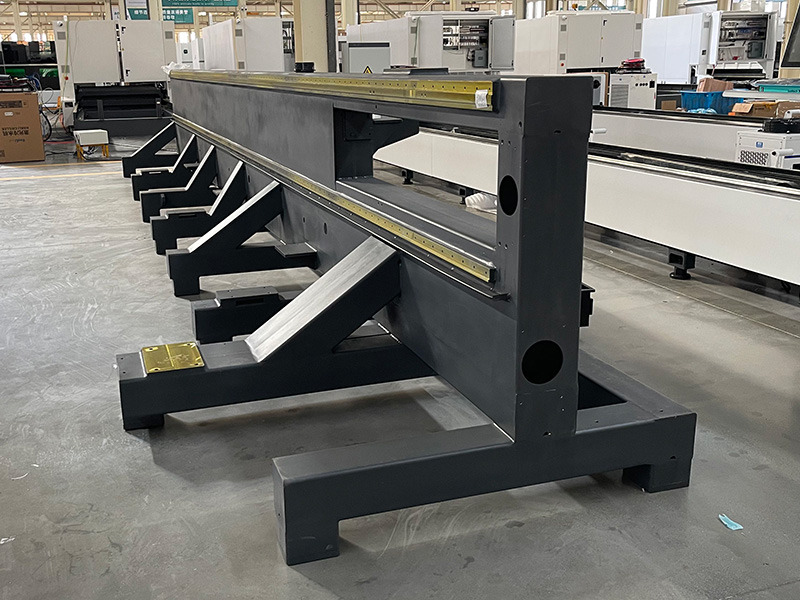
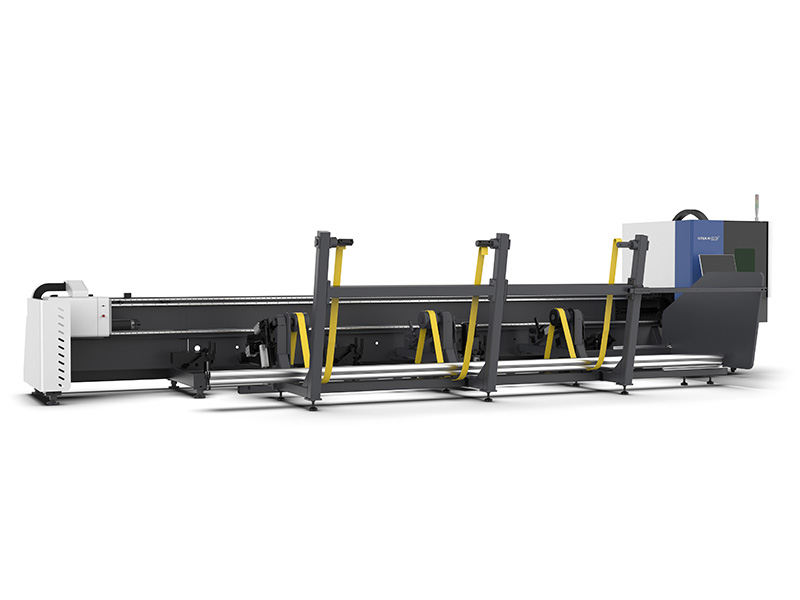
Side-hanging machine bed
Side-hanging design, lower center of gravity, stable and reliable operation, laser blanking, precision error within 0.5mm, to improve cutting precision.
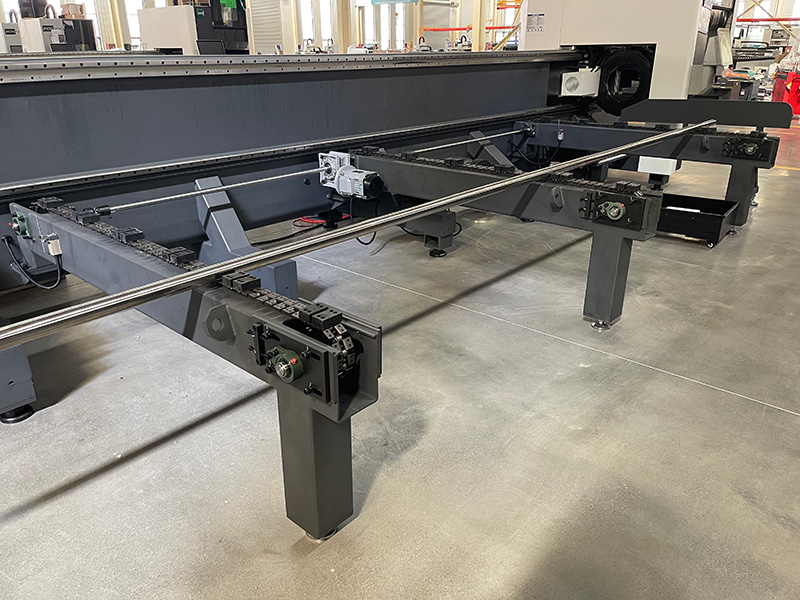
Semi-automatic feeding device
Quickly loading tubes one by one. No need manual intervention, saving labor costs and increasing production efficiency.
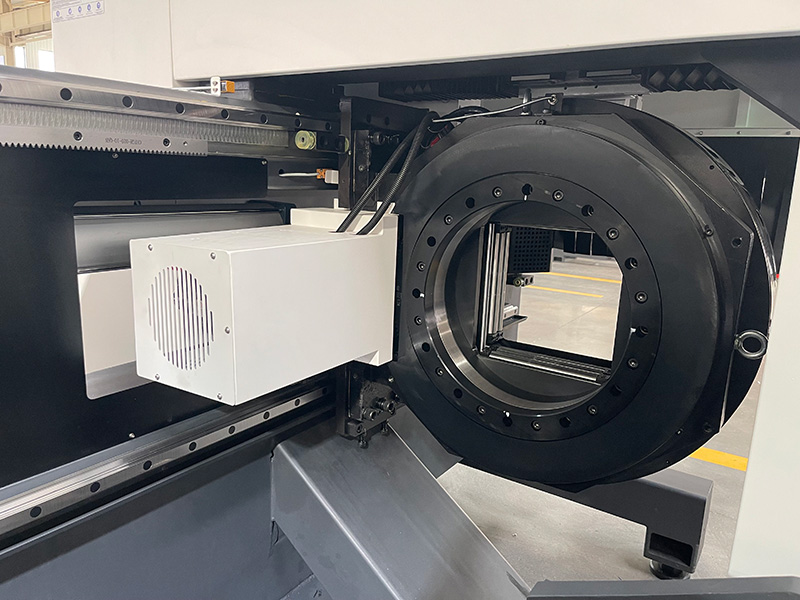
Fully automatic self-centering pneumatic chucks.
Precision pneumatic chucks, four-jaw automatic centering clamping, stable clamping without damaging the workpieces, high cutting efficiency.
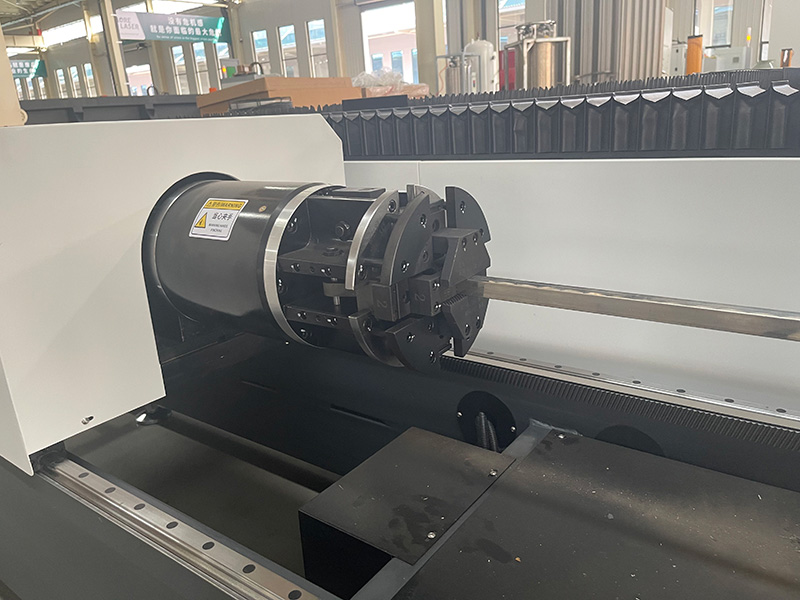
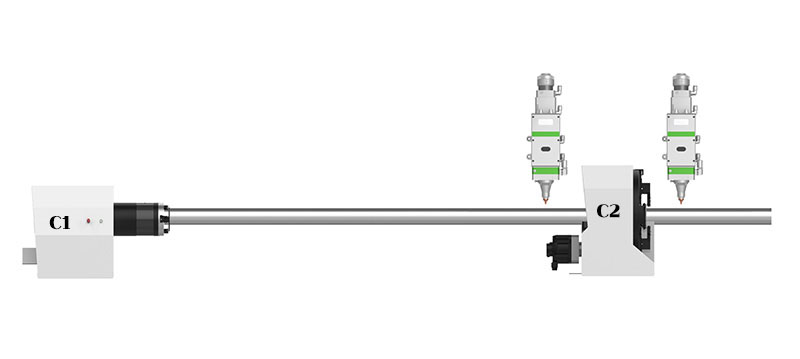
Chuck jumping for short tailings (6035K without)
K series can shorten the tailing length through chuck jumping.
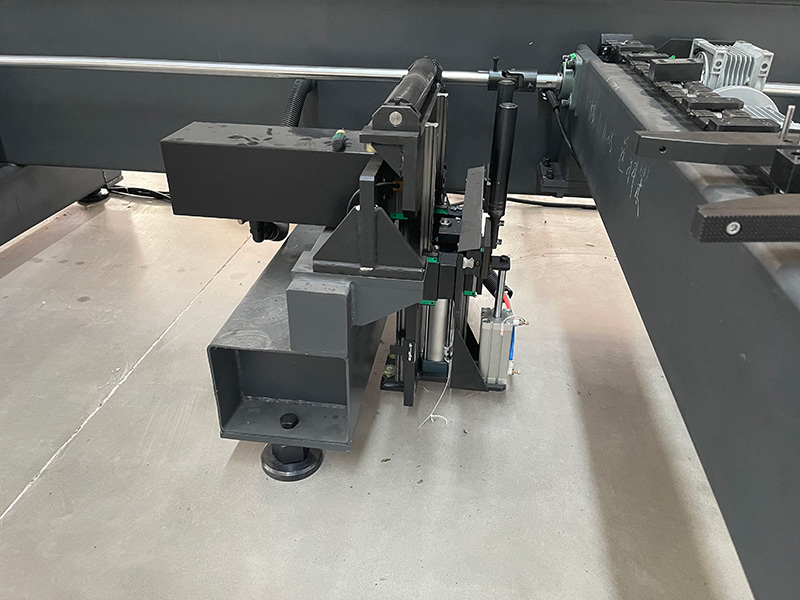
Servo follow-up support (6020K normal type)
The cutting table comes with with highly sensitive and independent servo follow-up support to provide enough support force in rotation cutting and achieve high cutting accuracy.
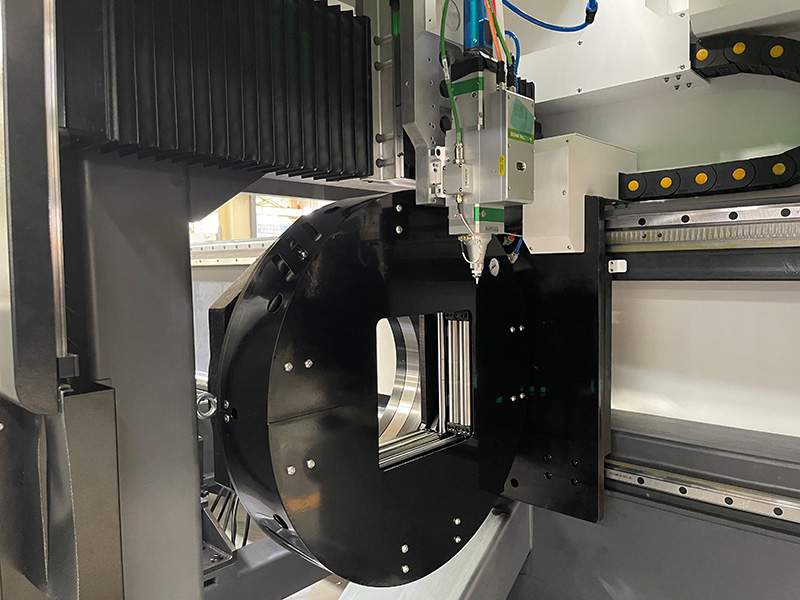
Raytools laser cutting head
Creating complex tube cuts with a slender TRA component and a slender nozzle.
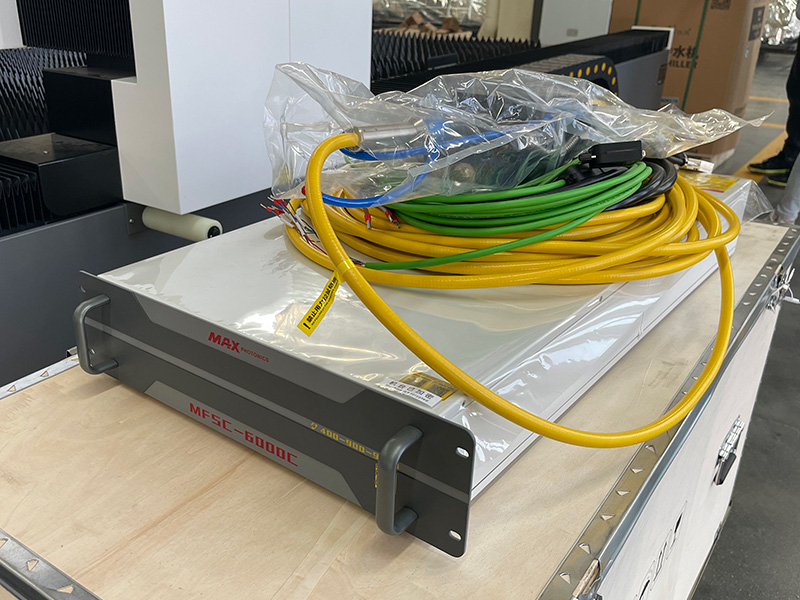
MAX laser source
Long lifespan up to 100,000 hours with high cutting speed. G5 connector for aluminum cutting. Raycus and IPG laser sources are optional.
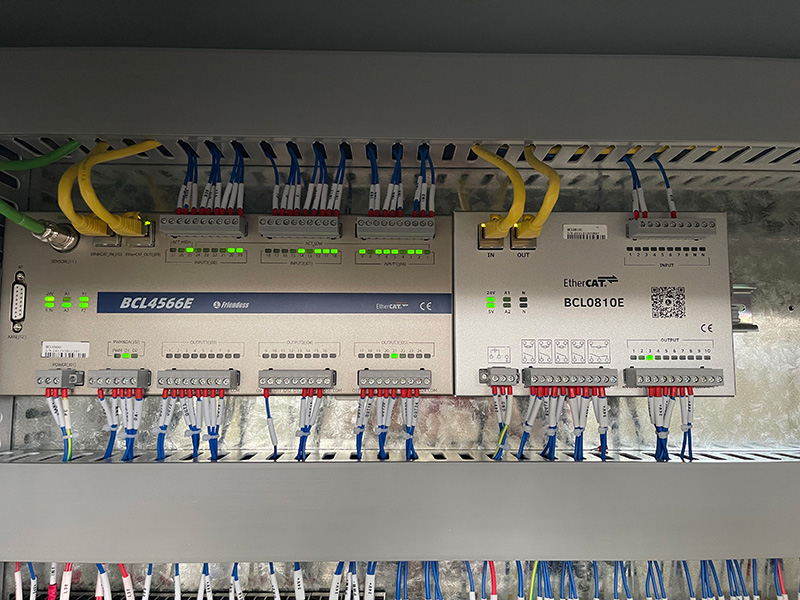
FSCUT3000 EtherCAT bus control system
Various auxiliary features of tube cutting is are designed to satisfy multiple processing demand.
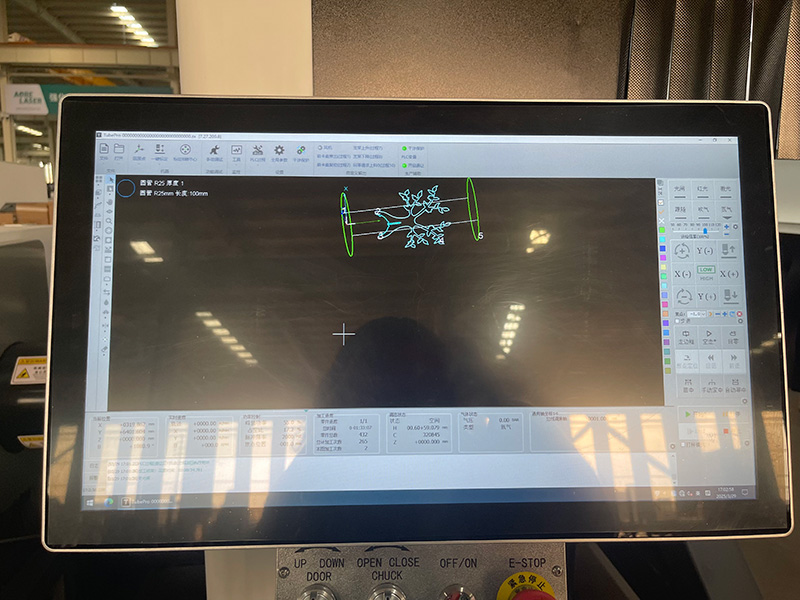
Tubepro controller with TubesT-Lite nesting software.
3D preview of the metal tube to be cut, which is user friendly and easy to operate. The TubesT professional nesting software is optional for pipes of L-type and C-type.
Full-automatic feeding devicefor 6012K optional
Automatic material preparation is synchronized during the processing, shortening the tube change time and improving production efficiency.
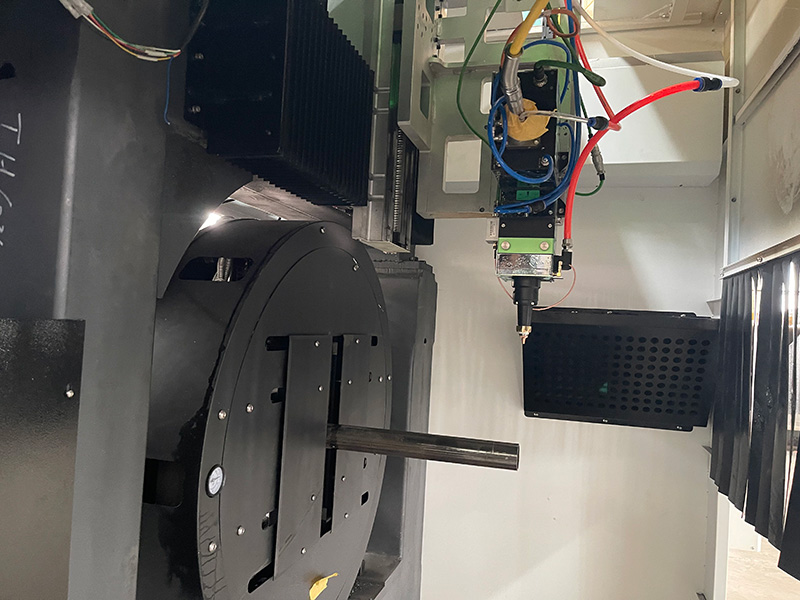
Beveling processing optional
Beveling tube cutting head (optional) is used to handle 0-45°beveling cutting.
Specifications
| Brand | STYLECNC | ||
| Model | ST-FC6012TK | ST-FC6020K | ST-FC6035K |
| Tube Diameter | φ10-φ120mm | φ15-φ230mm | φ20-φ350mm |
| Tube Length | ≤6300mm | ≤6300mm | ≤6300mm |
| Maximum tube weight | 100KGS | 300KGS | 900KGS |
| Shortest remaining material | 45mm | 70mm | 120mm |
| Laser Power | 1500W ( 3000W and 6000W for Option) | ||
| Laser Generator | MAX (Raycus and IPG for Option) | ||
| Laser Cutting Head | Raytools | ||
| CNC Controller | FSCUT control system | ||
| Positioning accuracy | ±0.05mm | ||
| Repeated Positioning Accuracy | ±0.03mm | ||
| Electricity | 380V,220V, 50HZ or 60HZ (based on order) | ||
| Price Range | $25,000.00 - $66,800.00 | ||
Key Industries and Applications
CNC laser pipe cutting machines serve a broad cross-section of metal fabrication industries:
• Structural steel & construction: precision framing, handrails, architectural metalwork
• HVAC: ductwork connectors, reducing assemblies, branch tee joints
• Automotive & fitness equipment: roll cages, exhaust systems, tubular frames
• Oil & gas, shipbuilding, aerospace: pipe saddle cuts, miter joints, bevel preparations
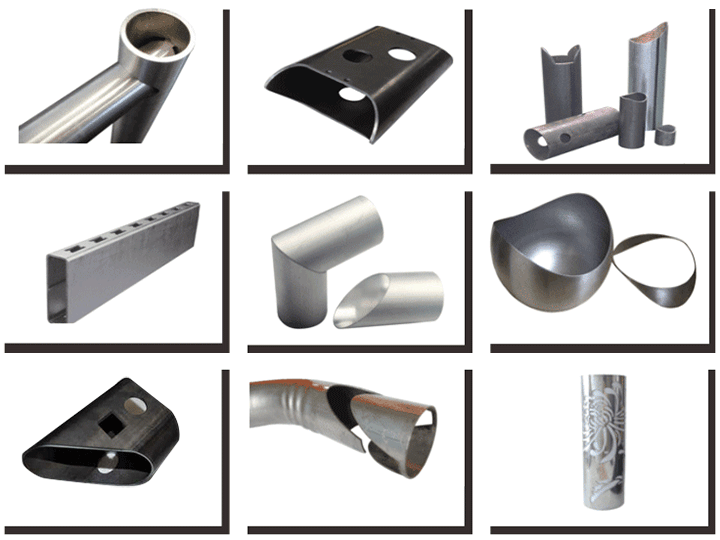
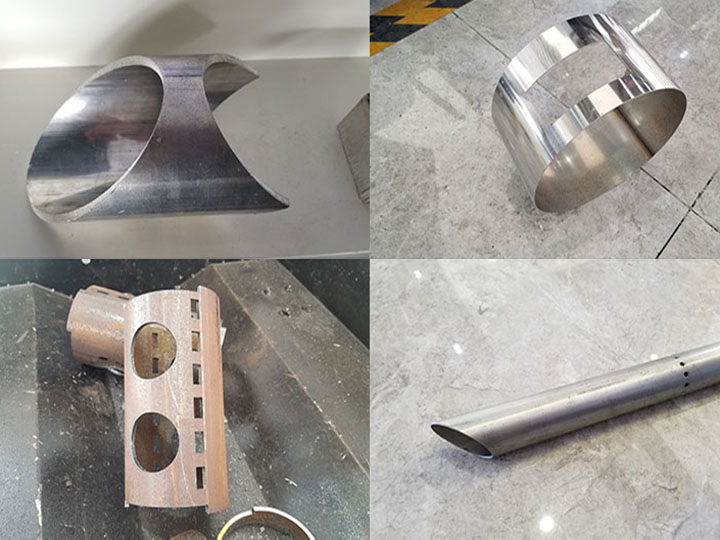
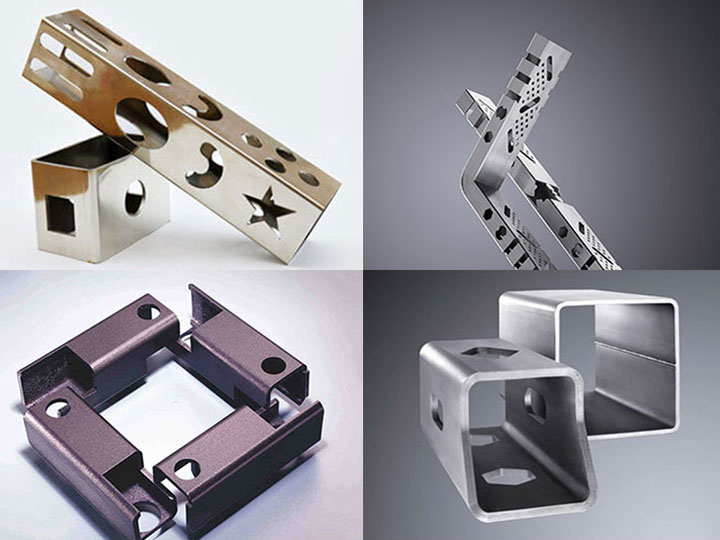
• Agriculture & furniture: holes, slots, notches, and decorative patterns cut directly into tube
For shops requiring programmable bevel angles on tube ends for weld prep, the 3D tube laser bevel cutting machine extends standard straight-cut capability with V, Y, and X groove profiles.
Laser Cut Metal Pipe Projects
How to Choose the Right Configuration
Laser source brand selection matters for long-term reliability. The ST-FC6012K offers MAX, Raycus, and IPG fiber laser options:
• IPG (Germany): Premium beam quality, longest service life, ideal for three-shift production
• Raycus (China): Proven track record, excellent price-to-performance ratio, strong domestic support
• MAX (China): Competitive pricing with reliable performance, well suited for single-shift shops
All configurations integrate with professional tube cutting software supporting DXF/DWG import, automatic nesting along tube length, and parametric joint libraries. To explore the complete lineup across all power levels, visit the fiber laser tube cutting machine collection, or review industrial tube laser cutters for heavy-duty production configurations.
How Automatic Feeding Boosts Tube Laser Productivity
An automatic loading and centering system eliminates manual handling bottlenecks, increasing effective cutting time by 30–40%. The feeder aligns each tube before it reaches the chuck, preventing misfeeds from bent stock. Paired with a dual-purpose sheet and tube fiber laser, one machine handles both flat and tubular work.
Choosing the Right Chuck Configuration
A 2-chuck system suits basic round and square tubes but leaves longer scrap tails. A 3-chuck setup adds mid-length support, reduces vibration, and achieves near-zero tail waste. For irregular profiles, 4-jaw chucks with independent clamping maintain the concentricity needed for precise fiber laser cutting.
Frequently Asked Questions
What tube shapes can a pipe laser cutter handle?
Round tubes, square and rectangular pipes, C-channels, H-beams, angle iron, and oval profiles. Ensure chuck jaws match the profile of square tubes, which often need dedicated adapters.
How do I prevent thin-walled tubes from deforming?
Reduce clamping pressure, use high-speed cutting with lower heat input, and apply nitrogen assist gas cooling. Anti-deformation supports help maintain shape on walls under 2 mm.
What causes hole misalignment on opposite sides of a tube?
Non-repeatable clamping from worn jaws, debris in guide rails, or low pneumatic pressure. Check runout with a dial indicator and clean jaws each shift per your laser machine parts maintenance guide.
Why does my tube laser leave dross on the cut edge?
Incorrect focal offset, insufficient gas pressure, or worn nozzle tips. Thinner walls need shallower focus (~–1 mm); thicker walls need deeper offsets. See our laser cutter troubleshooting guide.
How much laser power do I need for tube cutting?
1500–2000W handles mild steel up to 6 mm wall thickness. Stainless and aluminum benefit from 3000W+. Structural tubes above 8 mm typically need 4000–6000W.
What is zero tail waste and why does it matter?
Tail waste is unusable scrap between the last cut and the chuck. A 3-chuck system pushes tubes fully through, saving 5–10% on material over high-volume runs.
Can one machine cut both flat sheet and tubes?
Yes. Dual-purpose fiber lasers with interchangeable flatbed and rotary modules handle both without a second machine. Compare best fiber laser cutters for metal for combined options.
Things To Consider
The CNC laser tube cutting machine is a high-quality piece of fiber laser metal cutting equipment capable of achieving high-speed and high-efficiency cutting of round tubes, square tubes, irregularly shaped tubes, and other metal profiles. Particularly in recent years—driven by the widespread adoption and promotion of automation concepts—newly upgraded laser cutting equipment for metal tubes has not only enabled automated production and processing but also overcome the limitations of traditional laser cutting technologies. This results in significant time and labor savings, reduced costs, and—crucially—faster cutting speeds and higher precision. Leveraging its high-precision capabilities, this equipment can perform operations such as hole punching, cutting-to-length, and intersecting-line cutting on tubular materials, as well as the intricate laser cutting of complex patterns and irregular shapes that are often difficult to achieve using traditional methods. So, what precautions should be observed during daily operation?
⦿ Spindle speed adjustments must be performed only when the machine is completely stopped. When shifting gears, ensure that the gears are fully engaged and seated correctly. If any abnormal operation is detected while the machine is running, stop the machine immediately to conduct an inspection.
⦿ Before cutting, the cutting tool must be adjusted and the workpiece securely clamped. The clamping length of the workpiece must be no less than 50 millimeters. The positioning baffle must be firmly secured. Formal cutting operations may commence only after completing a series of trial run checks, including clamping, unclamping, forward rotation, and reverse rotation.
⦿ When the machine is in rotation, no part of the human body is permitted to come into contact with any moving transmission components. Operators must keep their sleeves tightly fastened and are strictly prohibited from wearing gloves while working. The operator's head should be kept clear of the cutting path.
⦿ The machine must be stopped before performing operations such as changing tools, measuring workpieces, conducting lubrication and maintenance, or clearing tube ends.
⦿ When cutting off tube ends (scrap remnants), appropriate measures must be taken to prevent the severed ends from flying out and causing injury.
⦿ When loading long tubes onto the material rack or releasing the feeding clamp, safety precautions must be implemented to prevent the tubes from rolling, striking, or sliding down and causing injury.
⦿ When using a grinding-wheel-type tube cutter, inspect the grinding wheel in advance to check for any damage, cracks, or signs of moisture exposure, and verify that the power cord connection is secure.
⦿ Before cutting, ensure that the tube cutter's dust collection system is in good condition and functioning properly.
⦿ Personnel are strictly prohibited from standing in the direction of workpiece feed or discharge.
Customers Say - Don't take our words as everything. Find out what customers say about our products and services they have purchased, owned or experienced.
Magion
TAYLOR
This laser tube cutter is the best CNC machine tool for cutting end profiles and dimensional profiles in the sidewalls of both square and round stainless steel tubing. I worked with this laser for metal tube fabrication from three months ago, everything runs well, one great machine.
Further Reading
Related Stories


Related Products