
Precision cutting tool for fabrics. Easy to use and essential in your clothing store. From feeding to cutting, everything is automatic. I tried cutting digital printed fabric and got precise cuts without the burnt edges that laser cutting tends to do. So far, this CNC cutter is perfect. Easy to get blades and tools for it too, which was a consideration. All in all, a game changer for my custom apparel business, and no more scissors.
Affordable CNC Digital Knife Cutters for Flexible Material Cuts
Last Updated: 2026-09-14 10:42:22
A CNC knife cutting machine is a professional automated digital cutting system that uses the up and down high-frequency vibration of the blade to cut flexible materials. It features with high precision, high speed, automatic loading and unloading, intelligent typesetting, and low cost of smooth incision processing. CNC digital knife cutters will take the place of the traditional manual flexible material cutting tools step by step. In the manufacture of automobile interiors, it is suitable for car mats, trunk mats, leather covers, seat covers, and cushions. In the advertising and packaging industry, it can quickly locate and identify, automatically find and cut edges, which is suitable for cutting KT board, Chevron board, self-adhesive, corrugated paper, and honeycomb board. In the field of garment processing, it adopts high-power knife cutter and special fabric cutting blade with more flexible corners, which is used for high-end custom garment manufacturers. In addition, you can also add a knife cutter on a CNC router table to do precision cutting for flexible materials.
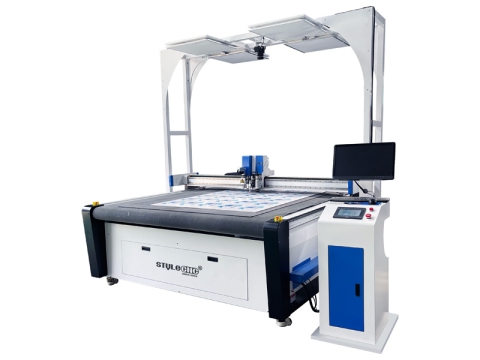
STO1625A
$14,500 - $17,800
Industrial Automatic Digital Fabric Cutter Machine for Sale
Automatic digital fabric cutter is an industrial fabric cutting machine with CNC controller to cut textile & leather for commercial use in clothing business.
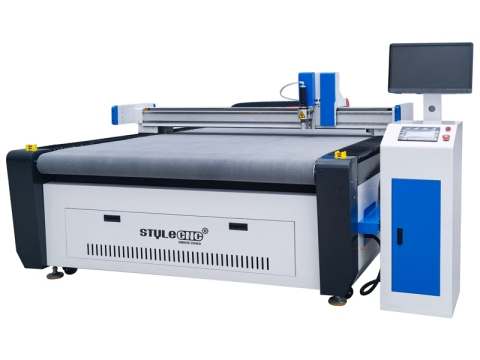
STO1625A
$14,500 - $18,800
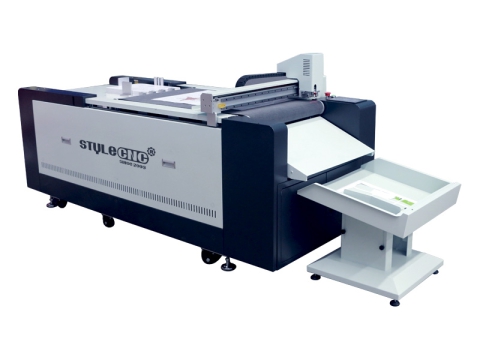
2026 Top Rated CNC Oscillating Knife Cutter for Sale
2026 top rated CNC oscillating knife cutter is a digital cutting system for fiberglass, fabric, leather, cardboard, plastic, paper, rubber, foam, and polymer.
STO1070
$13,200 - $16,000
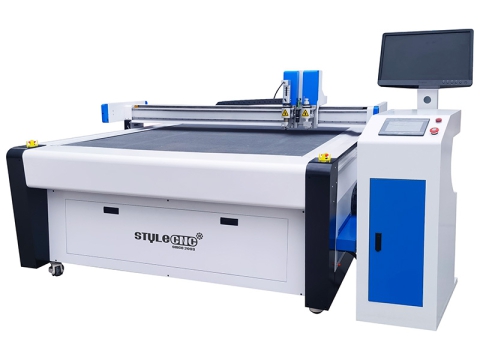
2026 Best Flatbed Vinyl Cutter & Cutting Plotter for Sale
2026 best flatbed vinyl cutter & cutting plotter on sale for custom stickers, vinyl labels, lettering, wall decals, signs in digital printing & signage.
STO1630
$14,000 - $15,500
2026 Best Automatic CNC Cardboard Cutting Machine for Sale
CNC cardboard cutting machine with oscillating tangential knife is the best industrial automatic carton box maker of 2026 with varied knife tools and blades.
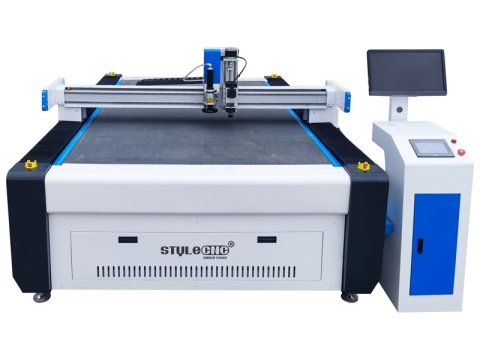
STO1625
$12,800 - $15,800
Automatic CNC Gasket Cutting Machine with Pneumatic Knife
Automatic CNC gasket cutting machine with pneumatic oscillating knife cutter is an industrial digital gasket cutting system for a variety of gaskets making.
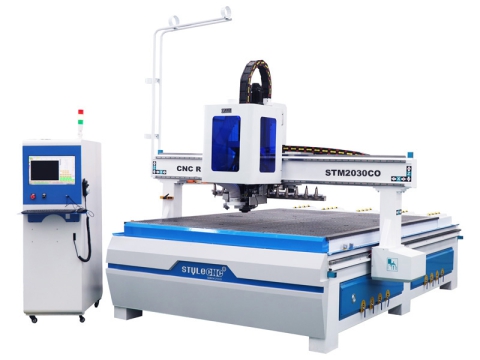
STM2030CO
2000x3000mm
$15,500 - $19,500
2026 Best ATC CNC Router with Oscillating Knife Cutter
2026 best smart CNC router machine comes with an automatic tool changer, a combined oscillating knife, and an industrial CCD camera visual positioning system.
- Showing 6 Items On 1 Page
A Guide To Buying Automatic Digital Knife Cutting Machines In 2026
Are you struggling to find a more precise cutting tool for flexible materials? Is the laser cutting machine unable to meet your needs? You're in the right place. We are STYLECNC, and have launched a couple of automatic digital knife cutters suitable for precise cutting of flexible materials. As one of the top brands of CNC digital cutting machines, we're committed to providing our clients with top tier customer service and support. Offering a large scale inventory of digital cutters, cutting plotters, and CNC knife cutting machines at low prices is why our customers continue to stay loyal to us. Flexible materials that can be precisely cut include vinyl, cardboard, fabric, textile, paper, leather, die, stencil, dieboard, foam, plastic, rubber, cork, carpet, felt and flexible polymers to make gaskets, stickers, signs, tags, packaging boxes, display boards, clothing, fashion, sportswear, car interiors, shoes and hats.
You're already here, so we encourage you to review this guide and browse through all of our CNC digital knife cutting machines and quality blades and tools. You can feel free to tell us your requirements and budget. STYLECNC is here to help you find exactly what your business needs, and would send you a free quote with features and costs.
What are you waiting for, let's get started.
What Is Automatic Digital Cutting Machine (CNC Knife Cutter)?
Automatic digital cutting machine (also known as CNC knife cutter) is a type of automated precision cutting system with CNC (Computer Number Controlled) controller which is used for high-precision cuts of heavier flexible and semi-rigid materials. It works with the multi-tool blades consisting of vibration knife, oblique knife, circular knife, punching knife, milling knife, punch roller, or marking pen. CCD camera and projector are optional for more precise cuts.
A automatic digital cutter is also known as digital cutting table, automatic flatbed cutter, cutting plotter, dieless cutter, flash cutter, CNC knife cutter, CNC drag knife, CNC tangential knife, CNC oscillating knife, automatic precision cutter, and CNC blade cutting table.
A drag knife can be assembled on your CNC router or spindle collet to cut fabric, leather and vinyl.
At home, outdoors, on vacation, in the streets, in a car or on an airplane – we are constantly surrounded by products likely to have come off a STYLECNC automatic digital cutter or cutting plotter. From street signs to storefronts, packaging to spacesuits, hot-air balloons to bullet-proof vests, airplane seats to windshields, STYLECNC's automatic digital cutters can cut all of the materials involved with the perfect tool for your project.
How Many Types of Automatic Digital Cutters?
Digital cutting machines are divided into digital gasket cutter, carpet cutter, fabric cutter, leather cutting tool, cardboard cutter, foam cutting system, paper cutter, film cutting tool, vinyl cutter and fiberglass cutting system.
What Are CNC Digital Knife Cutting Machines Used For?
CNC digital knife cutters are used for the cuts of special-shaped graphics made of non-metallic flexible materials. It can quickly complete various processes such as full-cut, half-cut, milling, perforate, crease and mark, solving the problems of special-shaped picture cuts, improving production efficiency, and reducing labor cost. It can reduce the defect rate caused by manual tool errors, help users complete high-quality cuts faster, more stable, and more accurately at low cost, improve user market competitiveness, and seize more market shares. Digital flatbed cutters are used in advertising packaging, clothing and footwear, automotive interiors, luggage, composite materials and other industries.
Graphics Industry
Applications: Outdoor advertising, displays, traffic signs, fleet graphics, exhibits, illuminated signage, store décor, decals, floor graphics, etc.
References: 3M, Airbus, Avery Dennison, Christinger, Fair-play, Fastsigns, Graphics Gallery, Imaba, Lufthansa, netService, PlotFactory, Quarmby Colour Studio, Sin Fung Advertisement, Stylographics, Supersine Duramark, Zebra Graphics, etc.
Packaging Industry
Applications: Printed or unprinted packaging, POP/POS displays, foam inserts, dies making.
References: Beiersdorf, Chesapeake, Edelmann, Hasbro Toys, Heidelberg, International Paper, Long Chen Paper, Mauro Benedetti, Mondi, Packaging Cooperation of America (PCA), Panther Packaging, Philip Morris, sanovi aventis, SCA,Seda, Smurfit Kappa, STI, TetraPack, Thimm Verpackung, Triwall, etc.
Leather Industry
Applications: Shoes, garments, upholstery, handbags, briefcases, car and airplane seats, etc.
References: Adidas, Akris, Bally, Cavallo, Clarks, Ecco, Gabor, Geox, Gucci, Louis Vuitton, Nike, Prada, Puma, Recaro, Rolf Benz, Samsonite, de Sede, Sergio Rossi, Timberland, etc.
Textile Industry
Applications: Garments, upholstery, airbags, flags, sun shades/umbrellas, car and airplane seats, etc.
References: BMW, Diesel, Ford, Hugo Boss, Interstuhl, Jil Sander, Joop, Levi Strauss, Mercedes, Triumph, Volkswagen, Zodiac, etc.
Composite Industry
Applications: Defense, functional textiles, rotor blades for wind wheels and helicopters, aircraft and automotive parts, etc.
References: 3C-Carbon Composite Company, ACE, Airbus, Audi, Bell Helicopter, BMW, Carbo Tech, DLR, Dyneema, Eurocopter, FACC, Ferrari, McLaren, Pilatus, Red Bull Racing, Scuderia Toro Rosso, SGL Group, ThyssenKrupp, etc.
Techtex Industry
Applications: Truck tarpaulin, carpets, awnings, hot-air balloons, sails, outdoor equipment, inflatable boats, etc.
References: Badertscher, Barrisol, Bieri, Daedler, de Sede, Eschenbach Zeltbau, Estrella Betten, Höcker HTS Structures, interstuhl, Kusch+Co, Quelli In Luce, Ruckstuhl, Sachsen Fahnen, W.Schillig, etc.
Specialty Applications
Applications: Adhesives, gaskets and filter materials, PVB film for auto glass, architectural models, foam, wood veneer, floor coverings, film for solar and photovoltaic systems, aluminium foil, watch faces, etc.
References: ABB, Daimler Chrysler, Dell, Ferrari, Herzog & De Meuron, LG Electronics, Pilkington, Porsche, Procter & Gamble, Red Bull F1-Team, Rolex, SaintGobain Sekurit, Samsung Electronics, Swatch, etc.
CNC Digital Knife Cutting Table Advantages
✅ High speed (cutting speed is 5–8 times that of laser cutters) with high precision and excellent quality.
✅ Features an advanced CNC system with an Ethernet interface for easy operation.
✅ Pollution-free processing; cut edges are free of scorch marks and maintain uniform color.
✅ Capable of cutting flexible materials with perfect edge and corner quality.
✅ Equipped with Japanese Yaskawa servo motors and drive systems for high speed and precision.
✅ Compatible with various tools and blades to meet diverse processing requirements.
✅ Equipped with safety sensors compliant with European standards.
✅ Intelligent table surface mapping function.
✅ Automatic tool calibration.
✅ Supports multi-task repetitive cutting and intelligent vacuum hold-down.
Automatic Digital Cutter Features
• Utilizes oscillating knife cutting technology, saving time and costs associated with the manufacture, management, and storage of cutting dies during production and development; moves beyond traditional manual die-cutting and labor-dependent models to pioneer the era of digital pattern making.
• Features a multifunctional cutting head design that integrates multiple high-precision tools, enabling a single workstation to collaboratively execute various processes such as cutting, punching, and marking.
• Capable of handling complex patterns and irregular shapes that are difficult to achieve with traditional dies, significantly expanding creative possibilities for footwear designers; enables the creation of novel styles impossible to replicate by hand, enhances pattern quality, and ensures design concepts are faithfully realized, even with complex craftsmanship requirements.
• Equipped with efficient nesting capabilities; the system automatically calculates nesting layouts, accurately accounts for costs, and manages material allocation, thereby truly realizing a digital "zero-inventory" strategy.
• Uses projectors or cameras to capture leather outlines and effectively identify defects; additionally, cutting directions can be flexibly adjusted based on the leather's natural grain, increasing yield, reducing waste, and maximizing material utilization.
• Simulates operations via computer programs, eliminating the impact of personal factors—such as worker mood, skill level, and fatigue—on production; this prevents hidden waste and further optimizes material utilization.
How To Buy An Automatic Digital Cutter?
Step 1. Consult
We will recommend the most suitable CNC digital cutting table to you after being informed by your requirements.
Step 2. Quotation
We will offer you with our detail quotation according to the consulted digital cutting system. You will get the most suitable specifications, the best accessories and the affordable price.
Step 3. Process Evaluation
Both sides carefully evaluate and discuss all the details (technical parameters, specifications and business terms) of the order to exclude any misunderstanding.
Step 4. Placing Order
If you have no doubt, we will send you the PI (Proforma Invoice), and then we will sign a contract with you.
Step 5. Production
We will arrange the digital cutting plotter production as soon as receiving your signed sales contract and deposit. The latest news about production will be updated and informed to the CNC knife cutting machine buyer during the production.
Step 6. Quality Control
The whole production procedure will be under regular inspection and strict quality control. The complete digital cutter machine will be tested to make sure they can work well before out of factory.
Step 7. Delivery
We will arrange the delivery as the terms in the contract after the confirmation by the buyer.
Step 8. Custom Clearance
We will supply and deliver all the necessary shipping documents to the CNC knife cutter buyer and ensure a smooth customs clearance.
Step 9. Support and Service
We will offer professional technical support and free service by Phone, Email, Skype, WhatsApp, Online Live Chat, Remote Service. We also have door-to-door service in some areas.
How To Choose A CNC Knife Cutter?
High Performance Milling Knife
This cutting machine utilizes a high-speed, high-performance, and high-precision motorized spindle capable of reaching speeds up to 60,000 rpm—adjustable based on specific materials and application requirements—to ensure smoother cut edges. It is capable of cutting both rigid non-metallic and flexible materials up to 20mm thick, delivering performance far superior to traditional cutting equipment; it also supports continuous 24/7 operation to maximize material output. The system is equipped with a professional, high-efficiency dust extraction unit that ensures an odor-free and dust-free processing environment, posing no health risks to staff and meeting environmental standards.
• ABS plastic.
• PVC foam board.
• Acrylic board.
• Aluminum-plastic board.
• Insulation board.
• MDF medium density fiberboard.
• Density board.
High Frequency Vibration Knife
The high-frequency oscillating knife utilizes the principle of high-frequency vibration to cut materials; it employs blades with varying amplitudes tailored to specific materials, thereby ensuring high-speed, efficient, and high-quality processing of diverse non-metallic flexible materials. The blades support cutting at various angles—such as 45°, 26°, and 16°—to accommodate materials of different thicknesses.
• Corrugated cardboard.
• Honeycomb board.
• KT board.
• Gray cardboard.
• PVC foam board.
• Leather.
• Carpet.
• Corrugated plastic board.
Multi-Angle Bevel Knife
The grooving angle can be adjusted to meet specific requirements, allowing for cuts at 0°, 15°, 22.5°, 35°, and 45° on materials up to 16mm thick.
• Honeycomb panel.
• Moderately rigid PVC.
• Corrugated paper.
• Grey board paper.
• Paper jam.
Creasing Knife
The creasing tool uses a creasing wheel to create creases in the material; the desired creasing effect can be achieved by selecting a wheel with the appropriate depth and width. By applying directional pressure, the characteristics of the crease or fold can be adjusted. Integrated with the software's creasing tools, the system controls the material's forward and reverse feed, enabling high-quality creasing without damaging the surface of the material.
• Corrugated paper.
• Gray board paper.
• PPC.
• Coated paper.
Round Knife
The round knife is driven by a DC motor that rotates the blade at high speed to cut the material. Equipped with either a circular or decagonal blade, the device is designed to cut various types of fabric; this design significantly reduces resistance, facilitating the cutting of individual fibers or yarns.
• Flag cloth.
• Non-woven fabric.
• Banner cloth.
• Textile fabrics.
• Woven materials.
• Glass fiber.
• Aramid fiber.
Drag Knife
Drag knives are suitable for cutting various flexible materials with a thickness of up to 5 mm.
• Paper jam.
• Self-adhesive stickers.
• Thin plastic.
• PP adhesive.
• Chevron board.
• Blanket.
• Soft glass.
• Imitation leather.
Safety Tips
✓ When moving the CNC cutting table, select an appropriate movement speed based on the distance to the workpiece to prevent collisions caused by excessive speed.
✓ During programming, determine the correct machining process and path based on actual conditions to avoid scrapping the workpiece or causing premature detachment due to insufficient machining clearance or inadequate edge strength.
✓ Before commencing cutting operations, verify the correctness of the program and compensation values.
✓ Upon starting the cut, observe and assess the machining stability of the CNC tool, making timely adjustments if any irregularities are detected.
✓ Continuously monitor the operation during the CNC cutting process and address any issues immediately.
Blades Are the Real Running Cost
A knife cutter needs no gas, no media, and no laser source, which is its great economic appeal, but blades wear and they wear at wildly different rates. Vinyl and paper barely touch an edge, while leather, rubber, and especially fibreglass and carbon dull blades quickly because the material is abrasive. The page lists blade angles of forty-five, twenty-six, and sixteen degrees for a reason: shallower angles suit thicker stock, and using the wrong one wears the tip fast. The tell-tale sign is fraying or incomplete cuts long before a blade looks blunt, so an oscillating knife cutter should always have spare blades on the shelf, along with a fresh cutting strip for underneath.
Yield Is Where the Money Is
In leather and technical textiles the material costs far more than the machine time, so nesting decides profitability. The page mentions projector and camera systems almost in passing, and they matter: a camera maps the outline of a hide and flags its defects, letting the software place parts around scars and thin spots rather than cutting straight through them. Grain direction can be respected at the same time. A few percentage points of extra yield on every hide adds up faster than any speed improvement, which is why an industrial fabric and leather cutter earns its place in an apparel or upholstery shop.
A Knife on a Router, or a Dedicated Table?
The page notes you can add a knife to a CNC router, and that is a real option worth weighing. A router with an oscillating knife head lets one machine mill rigid sheet and cut soft materials, which suits a sign shop handling both. The compromise is that a router bed and vacuum are built for rigid board rather than fabric, and every knife job blocks routing work. A dedicated table like a flatbed cutting plotter holds flexible material better and keeps both queues moving. Choose by which material you cut most days.
How materials treat your blades:
| Material | Blade Wear | What to Expect |
|---|---|---|
| Vinyl and paper | Very low | Long blade life, shallow depth |
| Corrugated and foam board | Moderate | Watch for fuzzy edges |
| Leather and rubber | Moderate to high | Dense material dulls edges |
| Fiberglass and carbon | High | Abrasive, plan frequent changes |
Knife cutting checklist:
✓ Stock spare blades before you need them.
✓ Change the blade when edges start fraying.
✓ Replace the cutting strip when it scores deeply.
✓ Nest around hide defects to protect yield.
✓ Match blade angle to material thickness.
Frequently Asked Questions
How do I know when to change the blade?
The material tells you before the blade looks worn. Fuzzy edges, fibres left uncut, parts that need tearing free, or a cut that no longer goes fully through at the same depth all mean the tip has gone. Change it rather than adding depth.
What sits under the material being cut?
A cutting strip or felt layer over the vacuum bed, which takes the blade overrun. It scores with use and eventually needs replacing, since a deeply grooved strip stops supporting the material and lets edges pull down and fray.
How thick can these machines cut?
It depends entirely on the tool. A drag knife handles thin flexible stock up to a few millimetres, a bevel knife works to around sixteen millimetres, and a milling spindle cuts rigid board up to roughly twenty, so match tool to thickness.
Can it cut fiberglass and carbon fiber?
Yes, and these are common composite applications. Expect fast blade wear from the abrasive fibres, and fit dust extraction, since the airborne particles from cutting these materials are unpleasant and should not be breathed.
Do I need compressed air?
For pneumatic tool heads, yes. A pneumatic gasket cutting machine uses air for the knife action, and the vacuum bed needs its own pump, so plan both supplies alongside power.
Is a conveyor table worth the extra?
If you cut rolls, yes, because the belt advances material automatically and turns a bed-length limit into a continuous run. For sheet work loaded by hand, a static table costs less and does the same job.
Customer Reviews and Testimonials
Don't just take our own words for granted. Hear what our customers are saying. What better proof than reviews and testimonials from our real customers? Feedback from our clients allows more people to build trust with us, which drives us to continue to innovate and grow.