What Is a Laser Stone Engraving Machine?
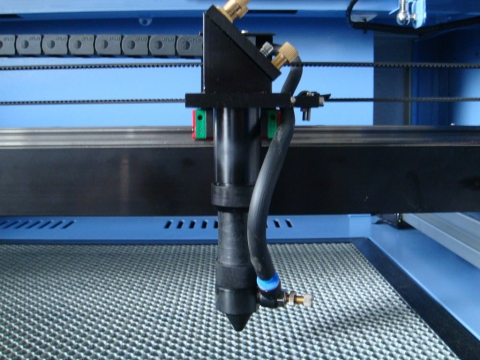
A laser stone engraving machine is a precision tool that uses focused CO2 or fiber laser beams to create permanent marks on stone surfaces. The laser heats the stone surface to create contrast through color change or micro-fracturing. These machines engrave granite, marble, slate, and other natural stones for memorials and awards, architectural applications, and personalized products.
What Are Laser Stone Engraving Machines Used For?
Laser stone engraving machines are primarily used for:
● Memorial products including headstones, grave markers, and cremation urns
● Corporate awards and recognition plaques, and trophies
● Architectural elements such as building signage and decorative stone panels
● Personalized gifts including photo engravings and custom home décor
● Artistic creations and stone artwork, and sculptures
2026 Market Overview and Industry Growth
The laser engraving industry continues to experience rapid expansion driven by automation and personalization trends. The laser engraving machine market was valued at USD 3.27 billion in 2024 and is projected to grow to USD 6.64 billion by 2033 at a CAGR of 8.2% during the forecast period.
The global stone engraving machine market, valued at $492 million in 2025, is projected to experience robust growth driven by increasing demand from the architectural and monumental, and artistic sectors with a CAGR of 5.3% from 2019 to 2033.
Key Market Statistics for 2025-2026
| Market Segment | 2025 Value | Projected 2033 Value | Growth Rate |
|---|---|---|---|
| Global Laser Engraving Machines | USD 3.54 Billion | USD 6.64 Billion | 8.2% CAGR |
| Stone Engraving Machines | USD 492 Million | Growing Segment | 5.3% CAGR |
| Tombstone and Memorial Market | USD 4.5 Billion | USD 6.8 Billion | 5.2% CAGR |
| Fiber Laser Segment Share | 43.90% | Fastest Growing | Leading Technology |
Regional Market Distribution
Asia Pacific dominates the laser engraving machines market with a share of 47.6% in 2025 due to rising manufacturing capabilities and expanding industrialization, and increasing government initiatives focused on Industry 4.0 adoption. North America holds approximately 29.4% market share and represents the fastest-growing region, driven by aerospace and defense and medical sector demand.
Understanding Laser Stone Engraving Technology
How Laser Engraving Works on Stone?
The process directs a concentrated beam of light at the stone surface. This creates visible marks through two mechanisms:
1. Color change: The laser alters the stone's surface color creating contrast
2. Texture modification: Micro-fracturing creates a lighter, rougher area against the polished surface
CO2 lasers operating at wavelengths around 10600nm are most effective for stone engraving. The CO2 laser segment maintains the largest market share valued at nearly USD 0.93 billion in 2023 due to high power output, versatility and cost-effectiveness.
Laser Types Comparison for Stone Applications
| Laser Type | Best Applications | Power Range | Cost Level |
|---|---|---|---|
| CO2 Laser | Non-metallic materials like stone and wood and acrylic | 30W to 150W | Moderate |
| Fiber Laser | Metal marking and deep engraving | 20W to 100W | Higher |
| UV Laser | High-precision specialized applications | 3W to 15W | Highest |
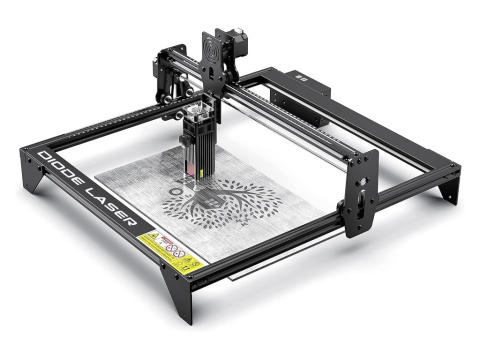
| Diode Laser | Entry-level hobby applications | 5W to 20W | Lowest |
For stone engraving applications, CO2 laser systems remain the preferred choice due to their interaction with natural stone materials.
Types of Stone Suitable for Laser Engraving
Not all stones produce equal results with laser engraving. Material selection significantly impacts final quality and contrast.
Stone Material Comparison Chart
| Stone Type | Hardness | Contrast Quality | Best Applications | Durability |
|---|---|---|---|---|
| Black Granite | Very Hard | Excellent | Memorials and outdoor monuments | 100+ years |
| Marble | Medium | Very Good | Awards and indoor décor | 50+ years |
| Slate | Medium-Soft | Good | Signage and wall décor | 50+ years |
| Sandstone | Soft | Moderate | Garden elements and artistic pieces | 25+ years |
| Limestone | Medium | Good | Architectural applications | 50+ years |
| River Stone | Variable | Good | Personalized gifts and garden items | 25+ years |
Granite
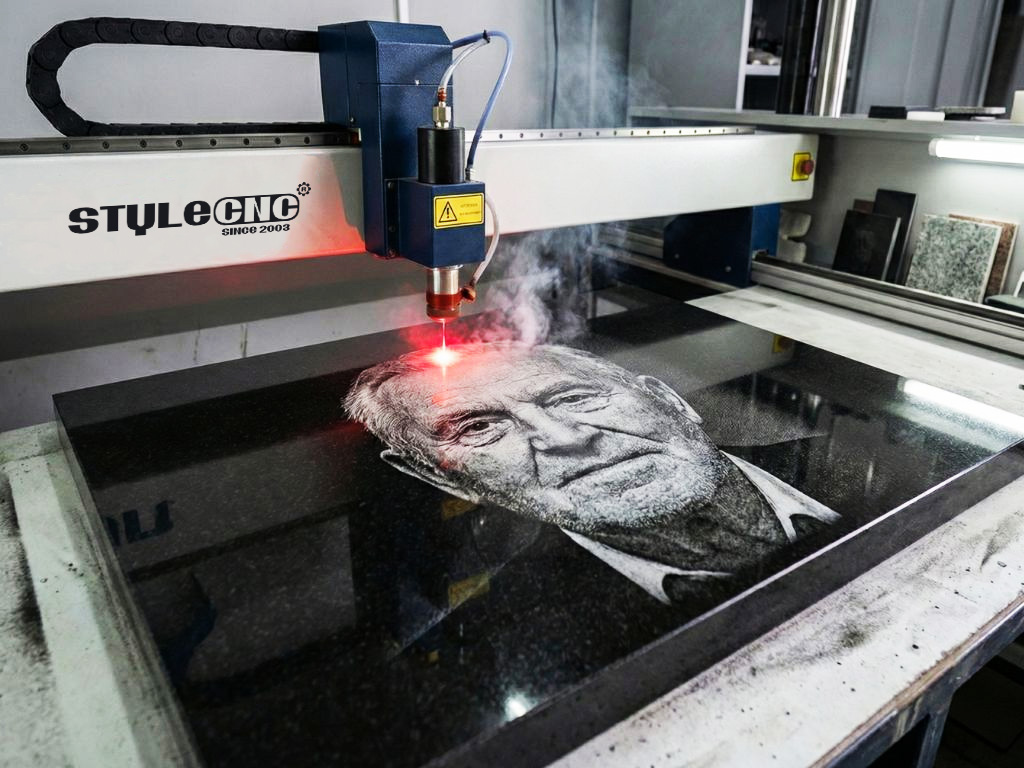
Known for exceptional durability and weather resistance, granite is the preferred material for outdoor memorials. Black granite produces the highest contrast as the laser creates visible white marks against the dark polished surface. This makes it ideal for tombstones and memorial stones and headstones requiring decades of outdoor exposure.
Marble
Marble's relatively soft texture compared to granite allows for clear high-contrast engravings. The elegant appearance makes it suitable for corporate awards and decorative plaques and premium gift items. White and black marble varieties produce distinctive results.
Slate
Slate's naturally layered structure creates excellent contrast for engraved designs. Available in gray, green, purple and rust tones, slate works well for wall decorations and floor tiles, and rustic-style signage.
Sandstone and Limestone
These softer stones engrave easily and produce distinctive warm tones. Sandstone is popular for decorative garden elements while limestone serves architectural applications where engraved designs add personalized touches.
Primary Applications and Use Cases
The versatility of laser engraving machines enables diverse commercial and artistic applications across multiple industries.
Memorial and Cemetery Products
Monumental applications are projected to dominate the stone engraving machine market, capturing roughly 35% of global sales. This stems from consistent demand for personalized and high-quality memorial engravings worldwide.
The memorial industry has embraced laser technology for its ability to:
● Create photo-realistic portraits on granite surfaces
● Reproduce detailed landscape and scenic imagery
● Engrave complex designs impossible with traditional sandblasting
● Produce consistent quality across multiple pieces
Nearly any artwork can be laser-engraved onto urns, pet memorials and gravestones. Memorial care businesses can laser engrave landscapes and portraits, names and dates, quotes and clip art, or song lyrics.
The current average cost of adding a cemetery engraving is $350. Laser engraving technology enables monument businesses to offer premium photo engraving services that command higher prices while reducing production time.
Corporate Awards and Recognition
Professional laser engraving systems enable the creation of prestigious presentation pieces:
● Executive recognition awards
● Years of service plaques
● Athletic trophies and championship markers
● Retirement commemorations
● Achievement certificates on stone
The precision of laser technology allows the incorporation of detailed logos and text and decorative elements that traditional methods cannot achieve.
Architectural and Commercial Signage
Building facades and interior accent walls, and commercial signage, increasingly incorporate laser-engraved stone. Applications include:
● Building identification and address markers
● Wayfinding elements and directional signage
● Decorative wall panels and accent features
● Historical markers and interpretive displays
● Donor recognition walls
Personalized Gifts and Home Décor
The personalization market drives significant demand for laser stone engraving:
● Wedding gifts and anniversary commemorations
● Address stones and house number markers
● Pet memorials and garden markers
● Photo coasters and decorative tiles
● Custom artwork reproductions
The boom in e-commerce has fueled demand for customized promotional products and packaging which are often produced using laser engraving techniques.
Artistic and Creative Works
Artists and craftspeople use laser stone engraving for:
● Original artwork creation
● Reproduction of designs on stone
● Decorative sculptures and objects
● Limited edition art pieces
● Commissioned stone portraits
Achieving Professional Results: Techniques and Best Practices
Success with laser stone engraving requires understanding material characteristics and machine parameters, and design preparation.
Power and Speed Optimization
Finding optimal settings is essential for quality results:
| Desired Effect | Power Setting | Speed Setting | Result |
|---|---|---|---|
| Deep visible engraving | Higher (70-100%) | Slower | Maximum contrast and depth |
| Subtle marking | Lower (30-50%) | Faster | Light marks for detail work |
| Photo engraving | Variable | Multiple passes | Grayscale reproduction |
| Text and logos | Medium (50-70%) | Medium | Clean readable results |
Key considerations:
● Higher power at slower speeds produces deeper, more visible engravings
● Excessive power causes fuzzy edges and unwanted color changes
● Lower power at higher speeds creates lighter marks for subtle effects
● Material-specific parameter libraries improve consistency
Image Preparation Requirements
Stone engraving demands careful image preparation:
● High-contrast images with clear detail separation produce best results
● Proper dithering algorithms translate continuous-tone images to a binary format
● Resolution settings should match the machine capabilities and viewing distance
● Portrait photographs require proper processing for smooth translation
Surface Preparation Standards
Proper preparation ensures consistent results:
● Clean dry surfaces engrave more consistently than dirty or wet materials
● Polished surfaces generally produce higher contrast
● Masking tape or specialized coatings protect the surrounding areas
● Stone quality directly impacts the final engraving appearance
Color Enhancement Techniques
While laser engraving creates monochromatic marks, many finished products incorporate color enhancement:
● Gold paint filling: Premium appearance for memorial engravings
● Silver or bronze paint: Classic finish for awards and plaques
● Colored epoxy resins: Durable color for outdoor applications
● Lithographic inks: Professional finish for artistic works
Proper surface preparation and sealing ensure color adhesion and longevity.
Choosing the Right Equipment
Equipment selection depends on production volume and material requirements and budget considerations.
| Business Type | Recommended Machine | Work Area | Typical Investment |
|---|---|---|---|
| Memorial Business | Large format CO2 | 36"x48" or larger | $15,000-$50,000 |
| Award Shop | Mid-size CO2 | 24"x36" | $8,000-$20,000 |
| Gift Personalization | Desktop CO2 | 12"x18" | $3,000-$8,000 |
| Hobby/Small Business | Entry-level | 12"x12" | $1,500-$4,000 |
Key Features to Consider
When selecting a stone laser engraving machine, evaluate:
● Laser power: Minimum 30W for stone applications, with 60-150W for production
● Work area size: Match to the largest anticipated work pieces
● Open architecture: Enables engraving of large or irregularly shaped stones
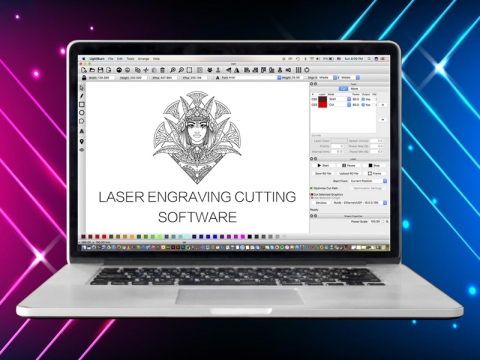
● Software compatibility: CAD/CAM integration for complex designs
● Ventilation requirements: Stone dust extraction systems
Complementary Equipment Options
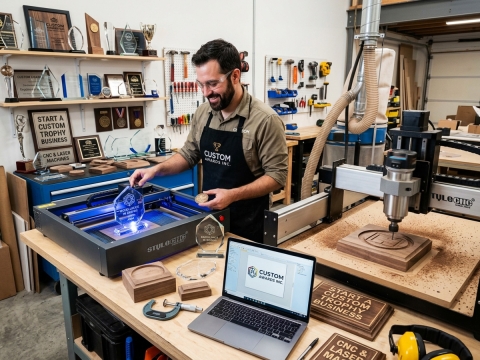
For operations requiring both laser engraving and mechanical cutting capabilities CNC stone carving machines offer expanded production flexibility:
● Deep relief carving and 3D sculptural work
● Cutting and shaping stone materials
● Combined engraving and carving workflows
● High-volume production capabilities
The CNC stone carving machine uses rotating cutting tools to remove material, enabling deep relief work that laser engraving cannot achieve.
Industry Trends Shaping the Market in 2026
Automation and Smart Manufacturing
As of 2025 above 60% of industrial manufacturers worldwide are integrating automation into their production lines, creating substantial demand for precision laser engraving solutions that increase efficiency without compromising quality.
Sustainability and Cost Reduction
Laser engraving removes the need for adhesives and inks and other expendables reducing operational costs by up to 30% over traditional marking methods while also supporting sustainability goals.
Technology Integration
Current trends include:
● AI-integrated systems for automated design optimization
● IoT connectivity for remote monitoring and maintenance
● Predictive maintenance capabilities
● Cloud-based design software integration
● Real-time production tracking
Personalization Demand Growth
The tombstone market is projected to reach USD 6.8 billion by 2033 driven by increasing consumer spending on memorialization and growing preference for personalized memorial products.
Safety and Maintenance Requirements
Essential Safety Measures
Operating laser stone engraving equipment requires:
● Proper laser safety eyewear rated for the specific wavelength
● Adequate fume extraction and ventilation systems
● Enclosed machine designs preventing direct laser exposure
● Effective dust collection for operator health protection
● Comprehensive operator training programs
Maintenance Best Practices
Regular maintenance ensures consistent performance:
| Maintenance Task | Frequency | Importance |
|---|---|---|
| Optical component cleaning | Weekly or more | Critical for quality |
| Alignment verification | Monthly | Affects precision |
| Exhaust system inspection | Weekly | Safety requirement |
| Software updates | As released | Performance optimization |
| Mechanical inspection | Quarterly | Prevents downtime |
Stone engraving produces significant dust that accumulates on optical surfaces making frequent cleaning especially important.
Frequently Asked Questions
What types of images can be engraved on stone?
Laser stone engraving reproduces photographs and artwork and text and logos, and virtually any graphic design. High-contrast images with clear detail separation produce the best results. Portrait photographs require proper image processing to translate smoothly into the laser engraving format.
How long do laser engravings on stone last?
Properly executed laser engravings on quality stone materials are essentially permanent. Unlike painted or applied graphics laser engravings remove or alter the stone surface itself creating marks that will not fade or peel or wash away. Outdoor installations may experience gradual weathering over decades but engravings remain visible indefinitely.
What is the difference between laser engraving and CNC carving for stone?
Laser engraving uses focused light to alter the stone surface without physical contact creating high-detail but relatively shallow marks ideal for images and fine text. CNC stone carving uses rotating cutting tools to remove material enabling deep relief carving and three-dimensional sculptural work. Many professional operations use both technologies for different applications.
How much does a laser stone engraving machine cost?
Entry-level desktop machines suitable for small personalization businesses start around $1500-$4000. Professional mid-range systems for award shops and gift businesses range from $8000-$20000. Large format production machines for memorial businesses typically cost $15000-$50000 or more, depending on features and capabilities.
Can any stone be laser-engraved?
Most natural stones can be laser-engraved, though results vary significantly by material type. Darker denser stones generally produce higher contrast engravings. Highly porous or crystalline stones may produce inconsistent results. Testing on sample pieces is recommended before committing to production runs on unfamiliar materials.
What power laser is needed for stone engraving?
A minimum of 30W CO2 laser power is required for basic stone engraving. Production environments typically use 60W to 150W or higher for faster processing and deeper engravings. Higher power enables faster speeds and more visible results particularly on harder stones like granite.
Is laser stone engraving profitable?
One business model packages 5 photos plus letters on a grass marker which retails at $3500. Memorial stone engraving commands premium prices due to the personalized nature and emotional significance of the work. Award and gift personalization also generates strong margins.
Conclusion
Laser stone engraving technology continues to expand creative and commercial possibilities for personalized products and memorials and architectural elements and artistic expressions. The global market growth projections demonstrate strong demand driven by automation trends and personalization preferences and technological advancement.
Success in this field requires understanding material characteristics and optimizing machine parameters and applying proven techniques for image preparation and finishing. Whether establishing a memorial products business or expanding architectural fabrication capabilities, or exploring artistic applications, laser stone engraving offers versatile, permanent and profitable opportunities.
For personalized guidance on selecting the right laser stone engraving machine for your specific applications, contact our technical team for a free consultation and custom quote.