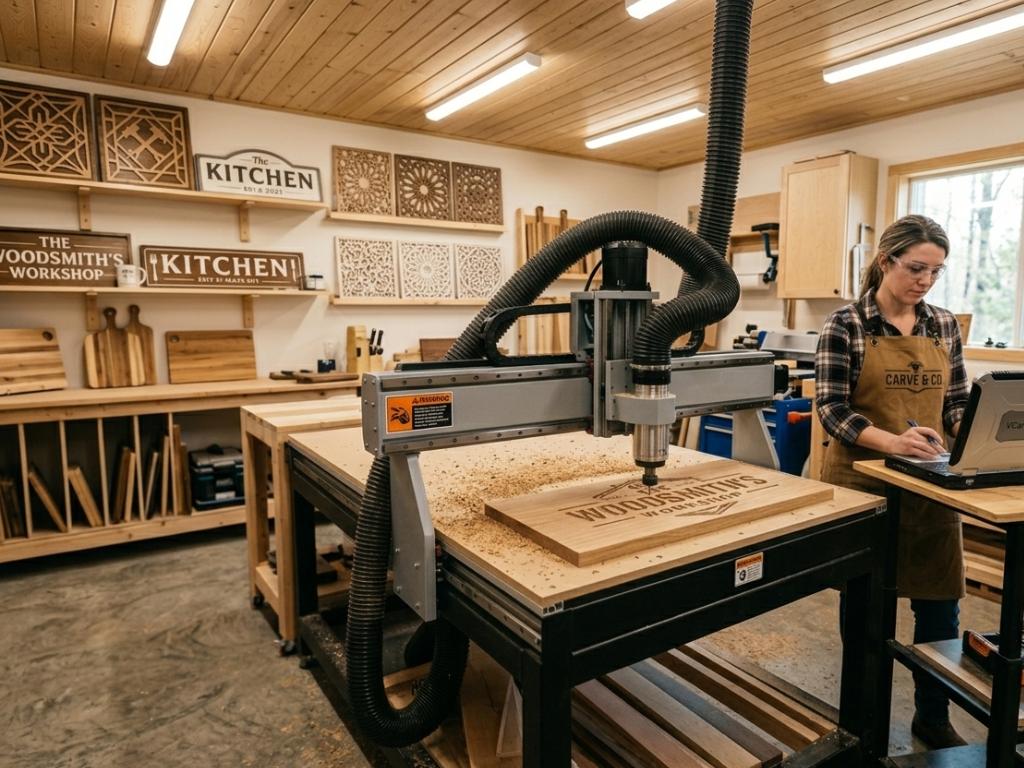
The global CNC router market reached $861 million in recent valuation and continues expanding at a compound annual growth rate exceeding 5%, driven largely by small and medium enterprises adopting precision manufacturing capabilities. Whether you are launching a custom sign shop, starting a woodworking business, or scaling a fabrication workshop, choosing the right CNC router directly impacts your production quality, operating costs, and profit margins.
This guide walks you through everything you need to know about selecting, budgeting, and operating a CNC router for small business operations. From mini desktop CNC routers for small business use to full-scale 4x8 production machines, every recommendation is grounded in real-world workshop experience, community feedback, and current industry data.
What Is a CNC Router and Why Small Businesses Need One?
A CNC (Computer Numerical Control) router is an automated cutting machine that uses computer-programmed toolpaths to carve, cut, drill, and engrave materials with repeatable precision. Unlike handheld routers that depend on operator skill, a CNC router follows digital instructions to execute complex designs accurately every single time.
For small businesses, this translates into several measurable advantages. Production speed increases dramatically because the machine runs autonomously once programmed. Material waste decreases because nesting software optimizes how parts are arranged on sheet goods. Quality consistency improves because every piece matches the digital design exactly. To understand whether a CNC router is worth the investment for your specific situation, consider both your current production volume and your growth plans over the next two to three years.
Types of CNC Routers for Small Businesses
CNC routers range from compact benchtop units to full industrial production lines. The table below compares the primary categories relevant to small business buyers.
| Router Type | Work Area | Price Range | Best For | Key Features |
|---|---|---|---|---|
| Desktop/Mini (6090) | 24" x 36" | $1,500 - $5,000 | Beginners, hobby shops | Compact footprint, low learning curve, signs and small parts |
| Benchtop (2x4) | 24" x 48" | $3,000 - $8,000 | Small workshops | Moderate rigidity, handles wood and soft metals, fits garages |
| Mid-Range (4x8) | 48" x 96" | $8,000 - $25,000 | Growing businesses | Full-sheet processing, ATC options, vacuum hold-down |
| Industrial/ATC | 48" x 96"+ | $25,000 - $80,000+ | Production shops | Auto tool changer, high spindle power, servo motors |
How to Choose the Best CNC Router for Your Small Business?
Selecting the right machine requires balancing several factors against your budget and production goals. Experienced CNC shop owners on forums like WOODWEB and CNCZone consistently emphasize one principle: buy your second machine first. In other words, plan for where your business will be in two years rather than what you need today. Before diving into specific models, review this comprehensive guide to buying your first CNC router that covers the complete evaluation process.
Work Area Size
Match the work area to your typical material dimensions. If you regularly process 4x8 sheet goods for cabinetry or furniture, a 4x8 CNC router pays for itself through full-sheet nesting efficiency. For sign makers and small-part producers, a desktop or 2x4 benchtop model handles most projects without consuming excessive floor space.
Spindle Power and Type
Spindle power determines what materials you can cut and how fast. Water-cooled spindles running 1.5kW to 3kW handle wood, MDF, acrylic, and soft metals comfortably. For hardwood furniture production or aluminum fabrication, look for 3kW to 6kW spindles with variable frequency drives. Higher spindle power also allows deeper single-pass cuts, which reduces total machining time per project.
Frame Rigidity and Build Quality
Frame construction directly affects cut quality and machine longevity. Cast iron and welded steel frames offer superior vibration damping compared to aluminum extrusion or wood frames. As seasoned users on Router Forums point out, cheaper machines with flexible frames require slower feed rates and shallower cuts, which reduces your hourly output. Investing in a rigid machine upfront saves time and money over its working life.
Software Compatibility
Your CNC router is only as capable as the software driving it. Beginner-friendly options like Easel and VCarve provide intuitive interfaces for 2D and 2.5D work. Fusion 360 and ArtCAM handle complex 3D carving and multi-axis toolpaths. Confirm that your chosen machine supports standard G-code output and works with the CAD/CAM platform you prefer before purchasing.
CNC Router Cost Breakdown for Small Businesses
Understanding the true cost of CNC ownership goes beyond the machine sticker price. For a detailed pricing analysis across categories, see the full CNC router cost guide.
| Cost Category | Entry-Level | Mid-Range |
|---|---|---|
| Machine Purchase | $1,500 - $5,000 | $8,000 - $25,000 |
| CAD/CAM Software | $0 - $500/year | $500 - $2,000/year |
| Tooling (Bits, Collets) | $100 - $300 | $300 - $1,000 |
| Dust Collection | $150 - $400 | $500 - $2,000 |
| Electrical Requirements | Standard 110V | 220V (may need upgrade) |
| Annual Maintenance | $200 - $500 | $500 - $1,500 |
| Total First-Year Cost | $2,000 - $6,700 | $10,000 - $31,500 |
Best CNC Router Materials for Beginners
Starting with forgiving materials reduces frustration and tool breakage during the learning phase. MDF is the most popular starter material because it machines cleanly without grain direction issues. Plywood, particularly Baltic birch, offers a step up in durability while remaining relatively easy to cut. Acrylic and HDPE plastic accept detailed engravings and edge-lit designs. Once you are comfortable with feeds and speeds, softwoods like pine and poplar provide affordable practice before moving to hardwoods. Choosing the right CNC router bits for woodworking is equally important, as the correct bit geometry prevents tear-out and extends tool life across different material types.
Small CNC Machine for Metal: What to Know
Cutting metal on a CNC router demands a fundamentally different approach than woodworking. Aluminum is the most common metal machined on CNC routers, and even experienced users on CNCZone recommend slow feed rates, shallow depth of cut, and flood or mist coolant to prevent heat buildup. A rigid machine frame, a minimum 1.5kW water-cooled spindle, and single-flute carbide end mills are essential for clean metal cuts. For small businesses needing occasional aluminum work, a small desktop CNC machine with adequate rigidity can handle light metal engraving and profiling, though dedicated metalworking tasks may require stepping up to a more robust platform.
How to Set Up and Start Using Your First CNC Router?
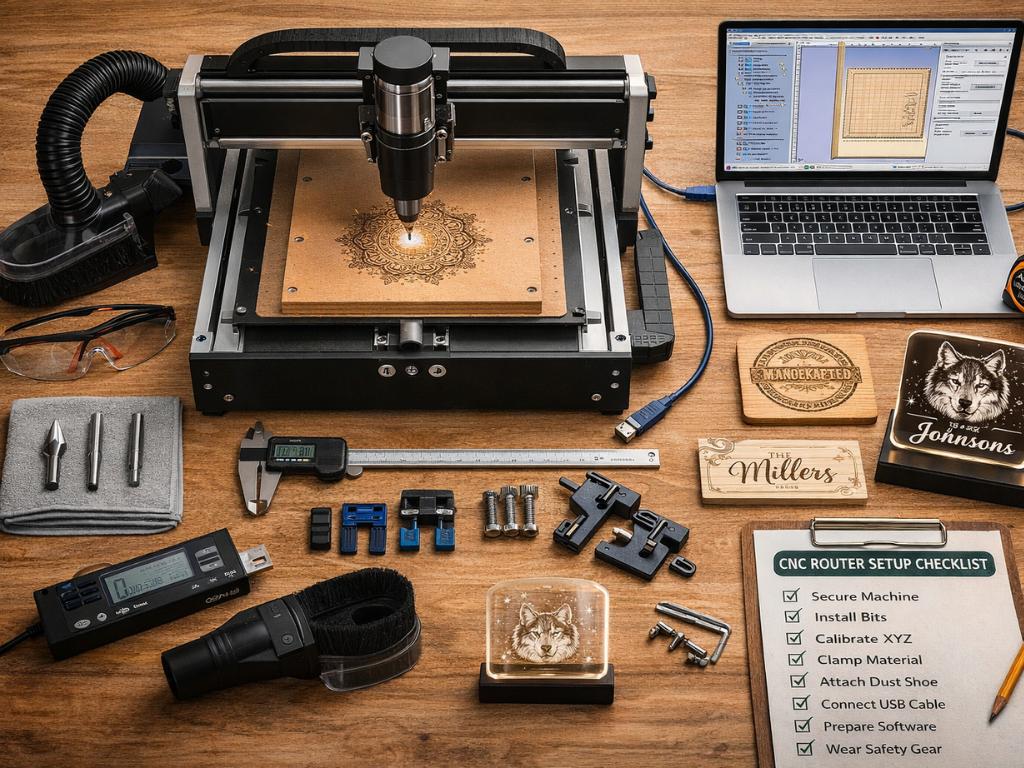
Getting your CNC router running smoothly during the first 30 days sets the foundation for long-term productivity. The CNC router operator practical guide covers detailed operational procedures, but here is a condensed setup checklist:
Step 1. Assemble the frame on a level surface, verify squareness with a machinist square, and tighten all bolts to specification.
Step 2. Connect stepper or servo motors, verify wiring to the controller, and confirm limit switch operation on all axes.
Step 3. Install your CAD/CAM software, connect the machine via USB or Ethernet, and run the homing sequence to establish machine coordinates.
Step 4. Mount a V-bit or straight bit, load a test file, and run an air cut (spindle on, no material) to verify toolpath accuracy.
Step 5. Clamp MDF to the work surface, set the Z-zero position on the material surface, and run your first test cut at conservative feed rates.
Step 6. Inspect cut quality, adjust spindle speed and feed rate based on chip formation, and document optimized settings for future reference.
Profitable CNC Router Business Ideas
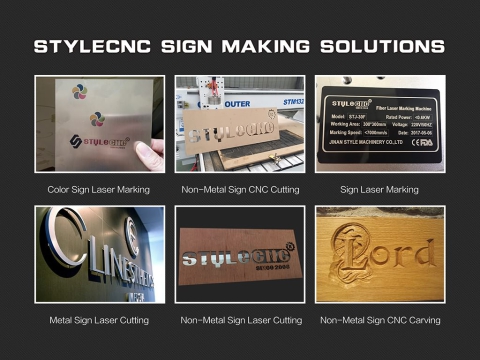
CNC routers open diverse revenue streams for small businesses. Custom sign making remains one of the fastest paths to profitability because personalized signage commands premium pricing with relatively low material costs. Custom furniture components, particularly cabinet doors and decorative panels, serve the growing consumer demand for personalized home furnishings. Specialty items like cutting boards, serving trays, and engraved gifts perform well on platforms like Etsy and at local craft markets. For operators exploring affordable CNC router tables, starting with high-margin products like custom signs and personalized gifts can generate positive ROI within the first few months of operation.
Industrial subcontracting offers another growth avenue. Small CNC shops increasingly serve aerospace, automotive, and medical prototype manufacturers who need precision parts without committing to in-house equipment. Material testing, jig fabrication, and short-run production parts all represent recurring revenue opportunities for well-equipped small shops.
CNC Router Industry Trends Driving Small Business Growth
Several macroeconomic trends are accelerating CNC adoption among small businesses. The Asia-Pacific region accounts for over 40% of global CNC router installations, with North American demand growing steadily through reshoring initiatives and domestic manufacturing expansion. Over 45,000 new CNC router units ship annually across woodworking, signage, metal fabrication, and composites processing sectors.
Technology is also lowering the barrier to entry. AI-powered nesting algorithms, IoT-enabled predictive maintenance, and cloud-based CAD/CAM platforms make precision manufacturing accessible to operators without formal engineering training. For businesses evaluating their options, exploring budget-friendly CNC router machines is a practical first step toward automation without overextending capital.
Frequently Asked Questions
Q: What is the best CNC router for a small business beginner?
A: A mid-range 3-axis CNC router with at least a 2x4 work area, 1.5kW water-cooled spindle, and ball-screw drive system offers the best balance of capability and ease of use for beginners. Look for machines with responsive customer support and active user communities.
Q: How much does a CNC router for small business cost?
A: Entry-level desktop CNC routers suitable for small businesses range from $1,500 to $5,000. Mid-range machines with automatic tool changers and vacuum tables cost $8,000 to $25,000. Total first-year ownership costs including software, tooling, and dust collection add $500 to $6,500 on top of the purchase price.
Q: Can a beginner learn to use a CNC router without formal training?
A: Yes. Most modern CNC routers ship with user-friendly software and comprehensive tutorials. Online communities on Reddit, CNCZone, and manufacturer forums provide free peer support. Most beginners achieve competent operation within 30 to 60 days of consistent practice.
Q: What is the most common mistake beginners make with CNC routers?
A: Running the spindle too fast is the most frequently cited beginner error. Excessive RPM produces dust instead of chips, burns the workpiece, and shortens tool life. The correct approach is dialing in feeds and speeds so the router produces clean wood chips rather than fine powder.
Q: Can a small CNC router cut metal?
A: Yes, but with limitations. Desktop and benchtop CNC routers can engrave and profile soft metals like aluminum and brass using slow feed rates, shallow cuts, and single-flute carbide end mills. For production metal cutting, a more rigid machine with flood coolant capability is necessary.
Q: Do I need dust collection for a CNC router?
A: Absolutely. Dust collection is not optional for CNC routing. Fine wood and MDF dust creates health hazards and accumulates in bearings, lead screws, and electronics, reducing machine life. A shop vacuum with a dust shoe attachment is the minimum requirement for any CNC operation.
Final Thoughts
Investing in a CNC router transforms a small business from manual production into precision manufacturing. The right machine matched to your workflow, materials, and growth trajectory delivers measurable returns through faster production, reduced waste, and consistent quality that builds customer loyalty. Start by defining your primary applications and budget, then narrow your options using the comparison tables and selection criteria above. For hands-on guidance on evaluating machines from a trusted manufacturer with over 20 years of experience, request a free consultation from STYLECNC to match your business requirements with the ideal CNC router configuration.