Last Updated: 2022-02-28 By 2 Min Read
STJ2060F Fiber Laser Tube Cutter is Ready to Australia

STJ2060F Fiber Laser Tube Cutter is Ready to Australia

STJ2060F fiber laser tube cutter is ready to Australia with 1000W laser power for metal tubes cutting of square tube, round tube, flat tube, rectangular tube, channel beam, flange beam, U-tube, and other shaped tubes/pipes.

STJ2060F Fiber Laser Tube Cutter Features

1. The laser tube cutter can cut lines and holes with different diameters from different directions on the tubes and cut column and crossed lines at the end of branch pipe to meet centrifugal and non-centrifugal vertical intersection condition for branch and main pipe axis.
2. The fiber laser tube cutting machine can complete a variety of cutting shapes tubes, the tube surface arbitrarily complex curve graphics processing, graphics difficulty without restrictions. After cutting the tube section does not require secondary processing, it can be welded directly, greatly reducing the production period, creating enormous value for the enterprise.
3. The fiber laser pipe cutter can cut branch pipe intersected with the main circular pipe.
4. The laser pipe cutter can cut inclined with the main circular pipe.
5. The fiber laser tube cutter can realize angle groove face, square hole, waist-shaped holes cutting.
6. Two rotary tables use double driver synchronous drive, metal tubes are not easily destroyed when processing, with high precision and high processing efficiency.
7. The fiber laser pipe cutting machine adopts very thin laser beam which can be used on small part cutting and complicated patterns and reach to a polished effect.

Laser Tube Cutter

Laser Tube Cutting Machine

Laser Tube Cutting

Laser Tube Cutting Projects

Further Reading

5 Axis CNC Router Inspection & Testing for US Clients

2019-09-02Prev Post

Fiber Laser Cutter for Sheet Metal Fabrication in USA

2019-10-15Next Post

Related Stories

Materials You Should Never Laser Cut (Use These Instead)
2026-08-216 Min Read

Materials You Should Never Laser Cut (Use These Instead)

Never laser cut: PVC and vinyl (release chlorine gas that becomes hydrochloric acid), ABS (emits hydrogen cyanide), HDPE (catches fire and melts), thick polycarbonate (discolors and burns), PTFE/Teflon (toxic fluorine compounds), fiberglass and epoxy composites (toxic resin fumes), chrome-tanned leather (carcinogenic chromium fumes), and any unidentified plastic. Safe swaps exist for every one, led by cast acrylic and vegetable-tanned leather.

How Does A Laser Cutting Machine Work?
2022-05-303 Min Read

How Does A Laser Cutting Machine Work?

What should you consider before buying, operating, or building a laser cutting machine? Let's start to learn the working principle in this article.

9 Best Industrial Laser Cutters In Modern Manufacturing
2025-06-127 Min Read

9 Best Industrial Laser Cutters In Modern Manufacturing

Are you looking for an affordable industrial laser cutting machine for commercial use in modern manufacturing? Review the 9 best industrial laser cutters to start or upgrade your business.

Is Laser Cutting Acrylic Toxic?
2024-06-285 Min Read

Is Laser Cutting Acrylic Toxic?

This article explains the chemicals released during laser cutting, health risks associated with acrylic fumes, and safety precautions for laser acrylic cutting.

Laser Cutting Aluminum: Problems, Fixes & Thickness Limits
2026-08-087 Min Read

Laser Cutting Aluminum: Problems, Fixes & Thickness Limits

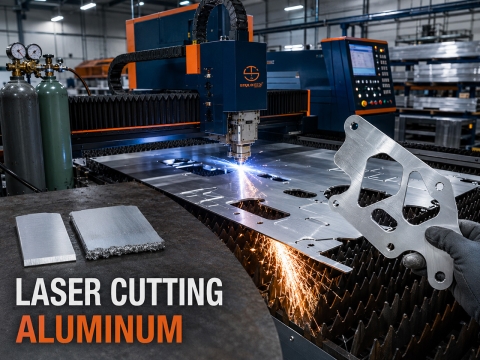
Aluminum is simultaneously one of the most laser-cut metals in industry and the one that generates the most troubleshooting threads. It reflects the beam that is supposed to melt it, pulls heat away from the cut faster than almost any other engineering metal, and produces a clingy bottom-edge dross that steel cutters never have to think about. This guide explains why aluminum fights the laser, walks through the four problems that account for nearly every bad aluminum cut, and gives the thickness-by-wattage numbers that separate marketing claims from what a machine cuts cleanly in production.

In-House Fiber Laser vs Outsourcing: Payback Guide
2026-10-315 Min Read

In-House Fiber Laser vs Outsourcing: Payback Guide

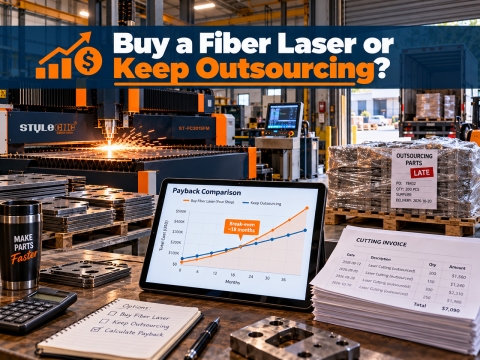
Bringing laser cutting in-house usually pays off once a shop spends about $5,000 or more a month on outsourced cutting. At that level, a fiber laser installed for around $90,000 typically pays back in one to two and a half years, because in-house running costs are often a quarter of what laser cutting services charge per hour. Below about $2,000 a month, outsourcing usually stays cheaper.

Post A Review

1 to 5-star rating

Share Your Thoughts And Feelings With Others

Click To Change Captcha