Why Fiber Laser Cutting Is a High-Value Side Business
Metal fabrication demand continues to grow across construction, automotive, agriculture, and interior design sectors. Local shops need custom brackets, panels, and prototypes faster than traditional plasma or waterjet methods can deliver. The global precision metal fabrication market is projected to grow at over 4% annually through the next decade, driven by reshoring trends and rising demand for custom manufacturing.
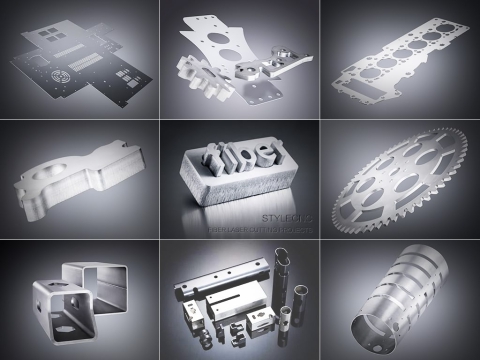
Fiber laser cutters fill that gap. They cut mild steel, stainless steel, aluminum, brass, and copper with precision that eliminates secondary finishing on most jobs. That speed-to-quality ratio is what creates the margin.
A single fiber laser cutter replaces plasma tables, shears, and manual cutting stations while delivering cleaner edges, tighter tolerances, and faster cycle times. For side-business operators, that means fewer machines, less floor space, and lower labor overhead.
Choosing the Right Power Level for Your Business Model
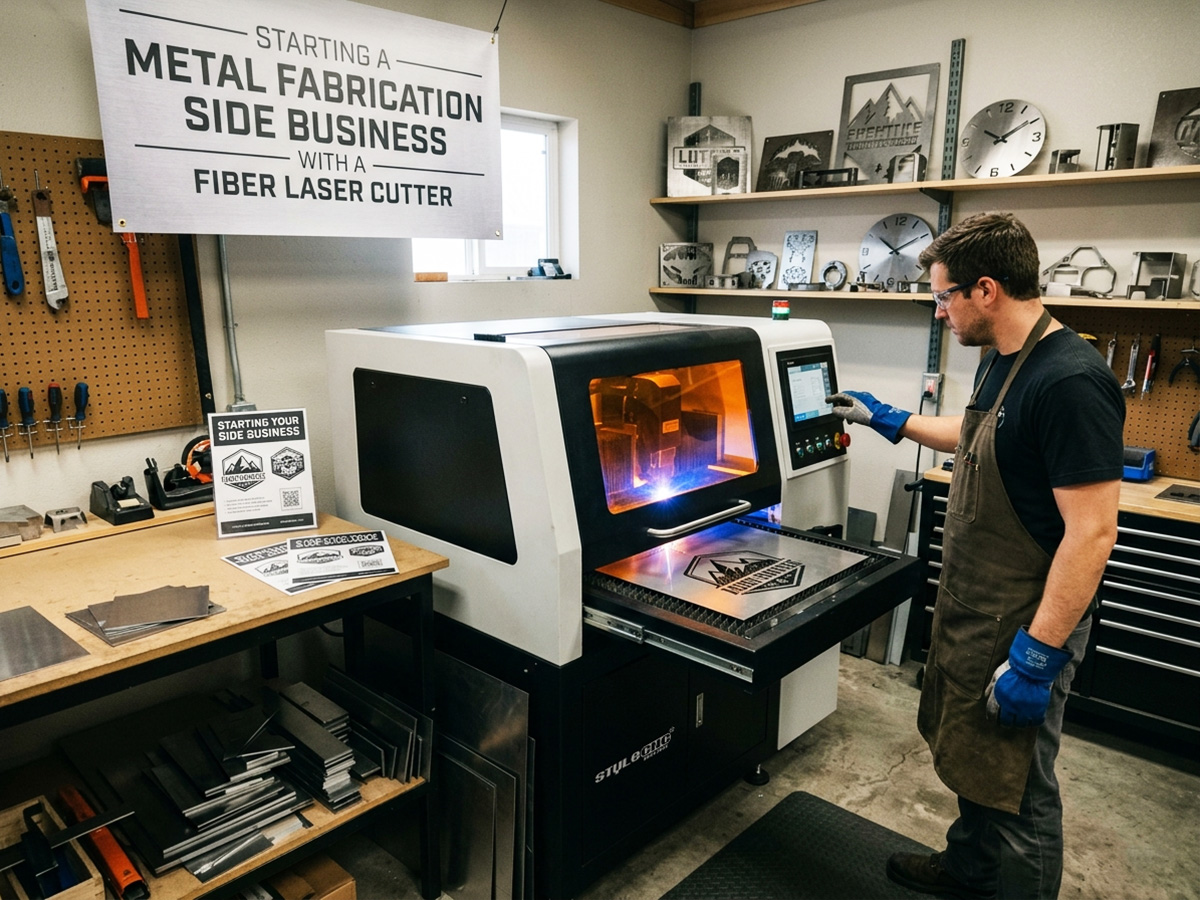
Laser wattage determines what materials and thicknesses you can process profitably. Choosing too low wastes time on thick stock. Choosing too high inflates your startup cost beyond what early revenue can support.
| Measurement | 1kW–2kW | 3kW–6kW | 6kW–12kW | 12kW+ |
|---|---|---|---|---|
| Machine Cost | $15,000–$30,000 | $25,000–$50,000 | $45,000–$80,000 | $80,000–$200,000+ |
| Mild Steel Max | 6–8mm | 12–20mm | 20–30mm | 30–50mm+ |
| Stainless Max | 4–6mm | 8–14mm | 14–25mm | 25–40mm |
| Aluminum Max | 3–5mm | 6–12mm | 12–20mm | 20–30mm |
| Cutting Speed (1mm steel) | Moderate | Fast | Very fast | Ultra fast |
| Best For | Thin sheet, signage, art | General fab, job shop | Heavy production, thick plate | High-volume industrial |
| ROI Timeline | 3–6 months | 4–8 months | 6–12 months | 12–18 months |
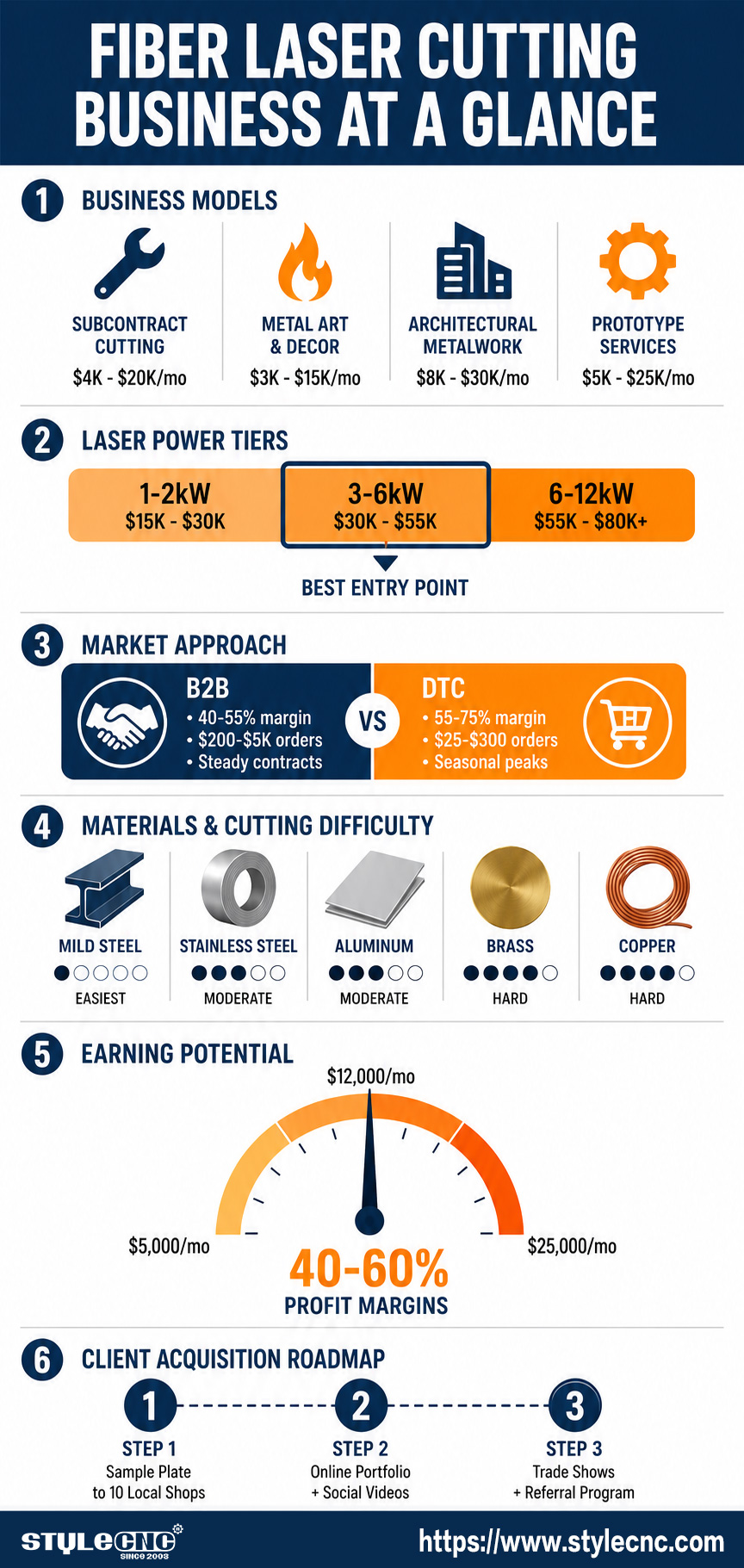
For most side-business operators, a 3kW to 6kW fiber laser offers the best balance of capability and return. It handles 90% of common job shop requests without overextending your capital. For detailed speed and thickness data by wattage, review the full guide on fiber laser cutting thickness, speed, and power settings.
Four Profitable Business Models for Fiber Laser Operators
1. Subcontract Cutting for Local Shops
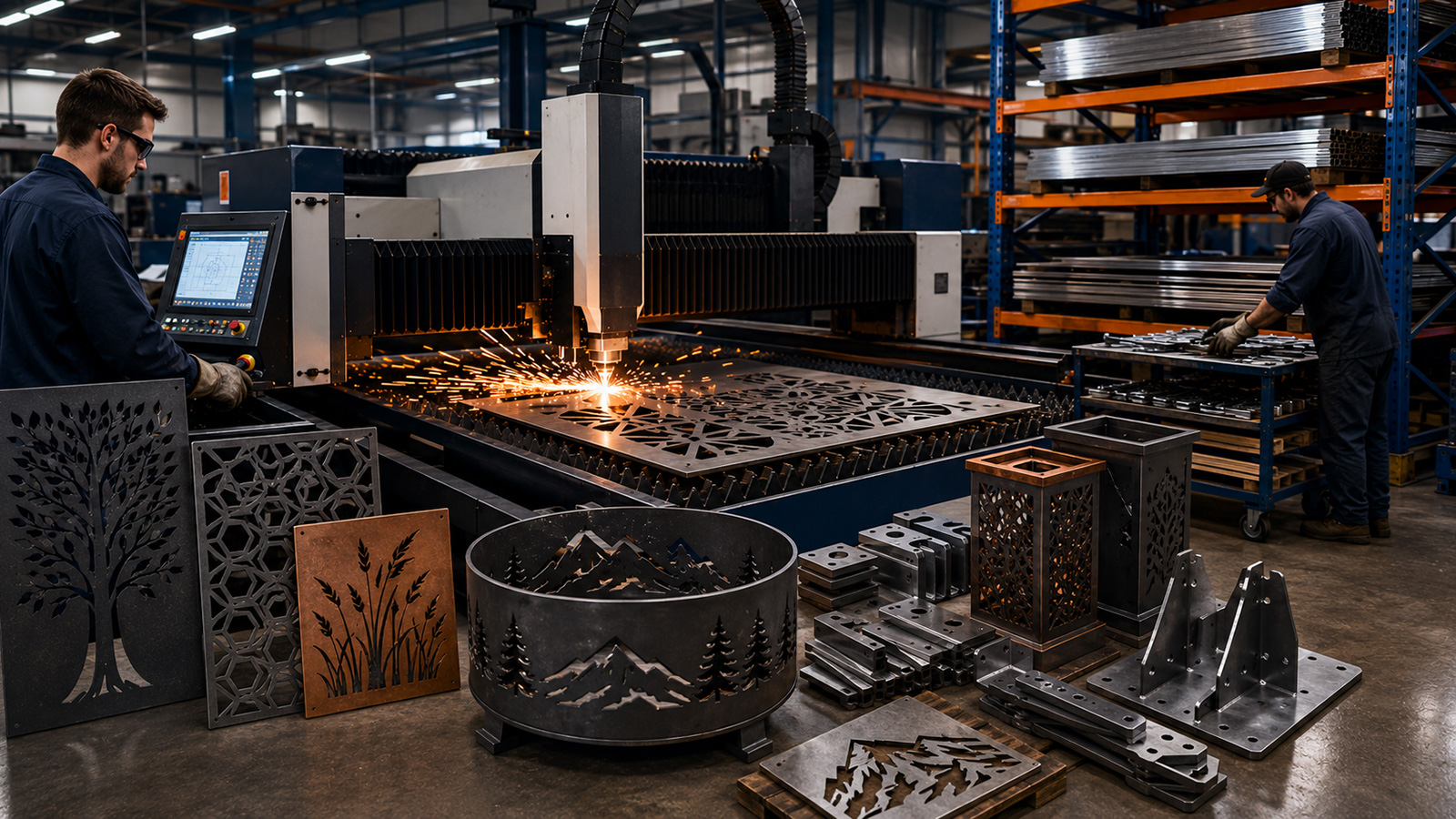
Welding shops, machine shops, and HVAC contractors constantly need flat parts cut to spec. They lack cutting capacity or their plasma tables produce edges that require grinding. Offer same-week turnaround on DXF files they supply, and charge per cut inch or per sheet.
• Typical rate: $75–$150/hour of laser time, or $0.15–$0.50 per cut inch depending on material and thickness.
• Win strategy: walk into 10 local shops with sample parts cut from their industry (brackets, flanges, mounting plates) and offer a trial order at cost.
2. Decorative Metal Art and Home Products
Metal wall art, garden privacy screens, fire pit rings, address signs, and decorative panels sell for $50 to $500+ per piece on Etsy, Shopify, and at craft markets. Material cost per piece is often under $10 for thin gauge steel.
• Highest-margin products: custom family name signs ($15–$80 margin), fire pit rings ($40–$120 margin), garden screens ($80–$300 margin).
• Finishing adds value: powder coating, patina treatments, and clear-coat rust protection command 30–50% price premiums over raw steel.
3. Architectural Metalwork for Contractors
Real estate developers, restaurant build-outs, and commercial renovators need custom railings, room dividers, facade panels, and signage brackets. These are higher-ticket B2B jobs with repeat potential.
• Average order value: $500–$5,000+ per project.
• Relationship-driven: one general contractor relationship can generate $3,000–$10,000/month in steady work.
4. Prototype and Small-Batch Manufacturing
Startups, product designers, and engineers need 5 to 50 metal parts for prototyping before committing to production runs. Laser cutting delivers prototype-quality parts in hours, not weeks.
For operations that include tube and pipe work alongside sheet cutting, a metal pipe and tube laser cutting machine expands your service menu into structural fabrication and furniture frames.
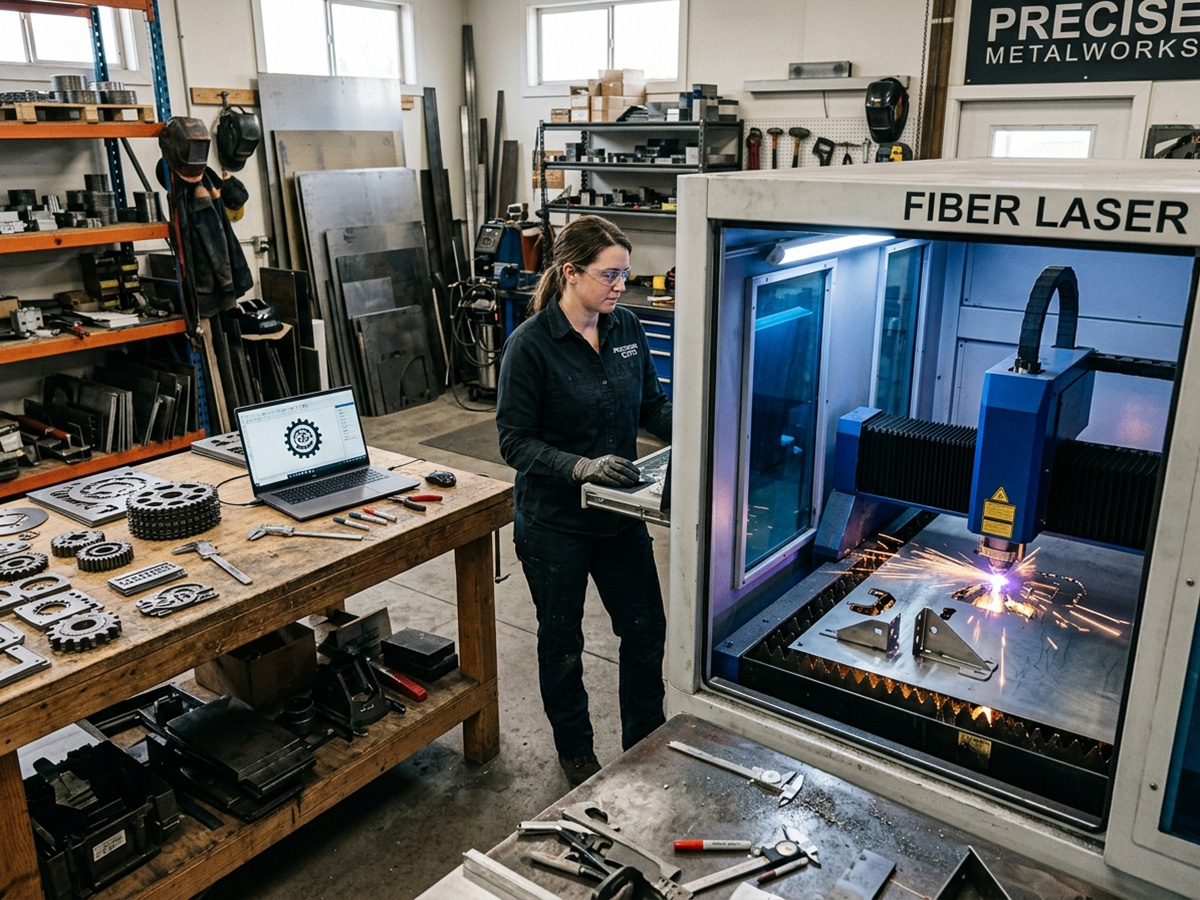
B2B vs Direct-to-Consumer: Which Model Fits You?
| Measurement | B2B (Subcontract/Commercial) | DTC (Etsy/Shopify/Markets) |
|---|---|---|
| Average Order Value | $200–$5,000+ | $25–$300 |
| Order Volume | Fewer, larger orders | Many small orders |
| Customer Acquisition | Cold outreach, referrals, trade shows | SEO, social media, craft fairs |
| Design Work | Customer supplies DXF/CAD files | You create and own all designs |
| Profit Margin | 40–55% | 55–75% |
| Revenue Stability | Steady with contracts | Seasonal, trend-dependent |
| Scaling Path | Add shifts, hire operator | Add product lines, automate listings |
| Best Entry Point | Established metalworkers | Creatives with design skills |
Most successful operators combine both models. B2B subcontracting provides stable baseline income, while DTC product sales capture higher margins during peak seasons. Run B2B during weekdays and batch DTC product runs on evenings or weekends. As your client roster grows, the B2B work alone can justify the machine payment, turning DTC sales into pure profit margin.
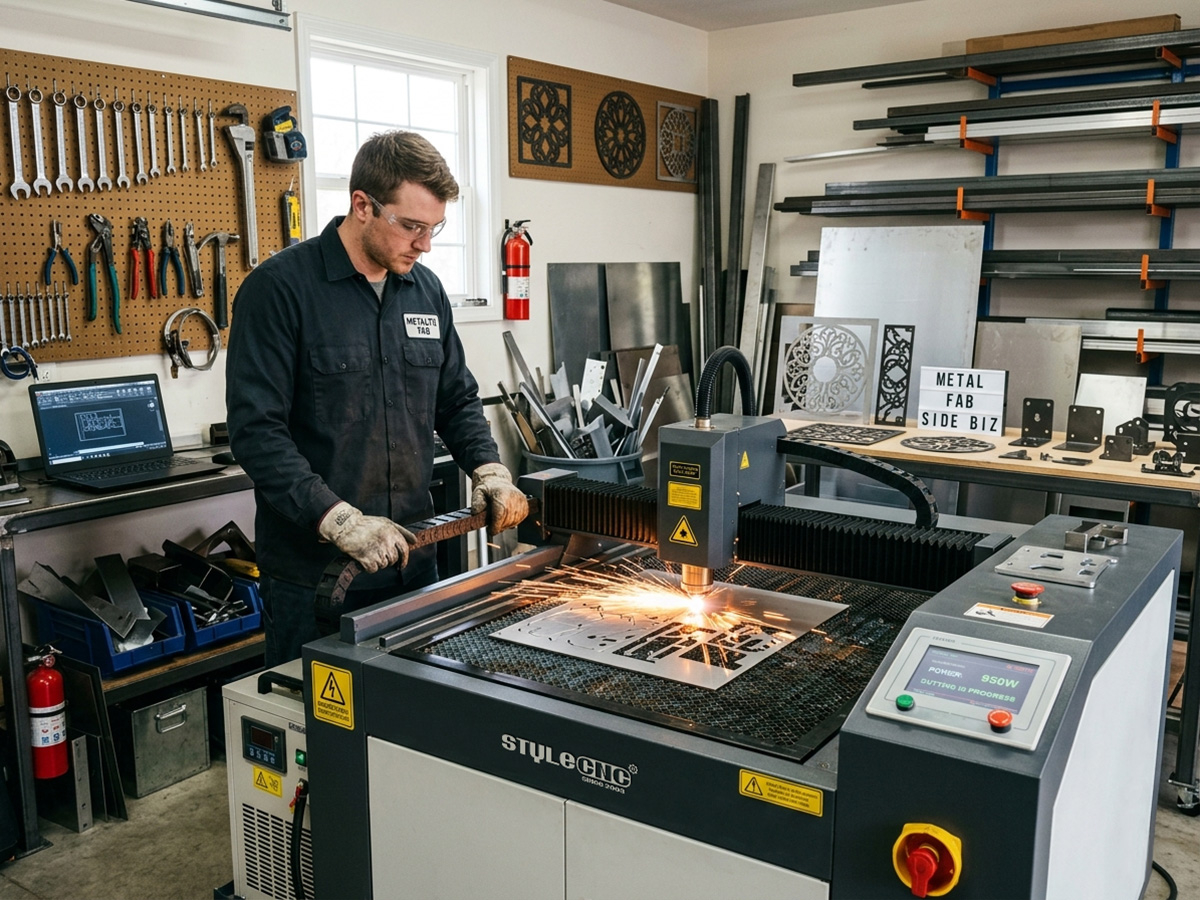
Startup Cost Breakdown by Investment Tier
| Expense | Entry ($15K–$30K) | Mid-Range ($30K–$55K) | Professional ($55K–$80K+) |
|---|---|---|---|
| Fiber Laser Machine | $12,000–$22,000 | $22,000–$40,000 | $40,000–$65,000 |
| Exhaust/Filtration | $500–$1,000 | $1,000–$2,500 | $2,000–$5,000 |
| Assist Gas Setup (N2/O2) | $800–$1,500 | $1,500–$3,000 | $3,000–$6,000 |
| Material Stock (initial) | $500–$1,500 | $1,500–$3,000 | $3,000–$5,000 |
| Software/Nesting | $0–$500 | $500–$1,500 | $1,500–$3,000 |
| Shop Setup/Electrical | $500–$2,000 | $2,000–$4,000 | $3,000–$6,000 |
| Insurance/Legal | $300–$800 | $500–$1,500 | $1,000–$2,500 |
| Measurement | |||
| Total Range | $14,600–$29,300 | $29,000–$55,500 | $53,500–$92,500 |
Compare machines across all power levels and bed sizes in the full best fiber laser cutters for metal roundup before committing to a specific model.
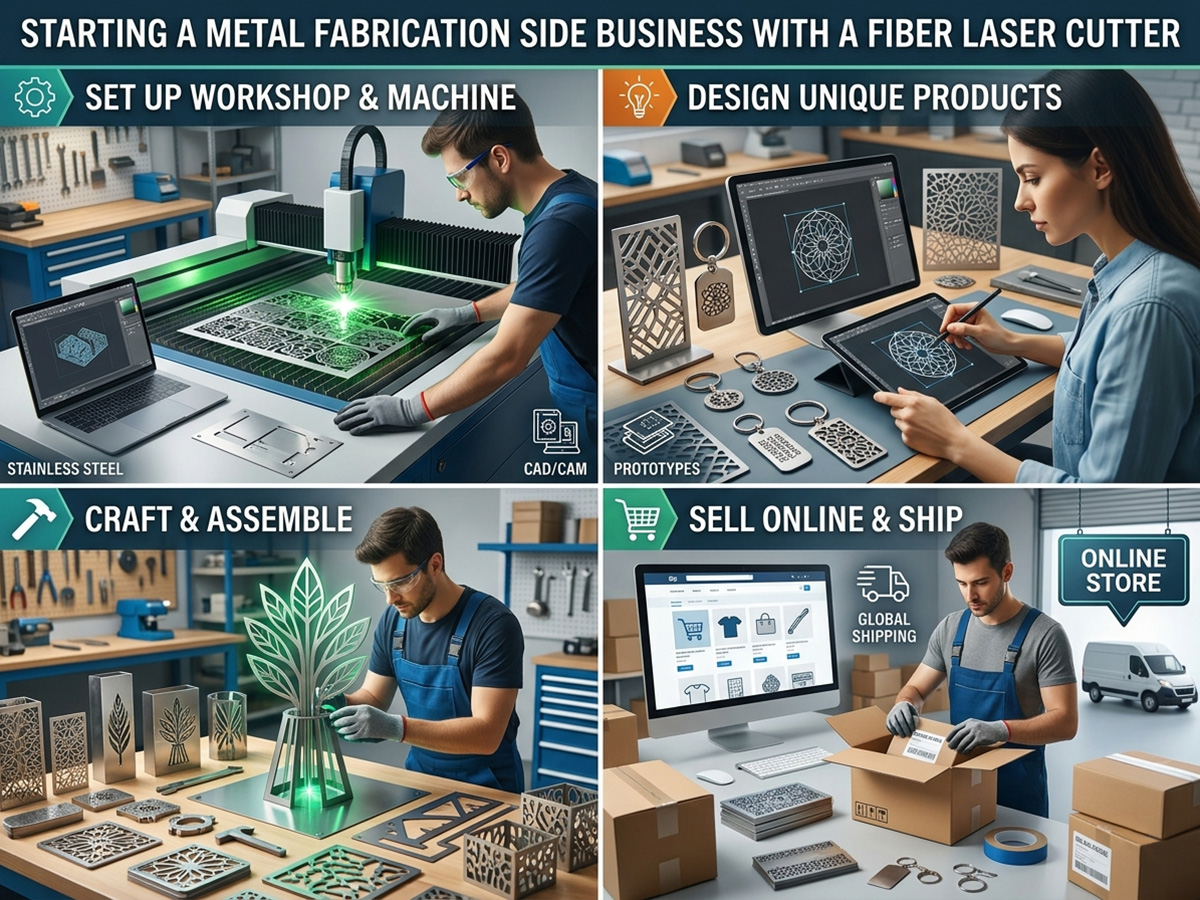
Metal Material Guide for New Operators
| Measurement | Mild Steel | Stainless Steel | Aluminum | Brass | Copper |
|---|---|---|---|---|---|
| Cost per Sheet (4x8) | $40–$120 | $100–$350 | $80–$250 | $150–$400 | $200–$500+ |
| Cutting Difficulty | Easy | Moderate | Moderate | Hard | Hard |
| Assist Gas | Oxygen | Nitrogen | Nitrogen | Nitrogen | Nitrogen |
| Finishing Needed | Rust protection required | Minimal | Minimal | Polish optional | Polish optional |
| Best Applications | Brackets, signs, art, structural | Food equip, medical, marine | Lightweight parts, enclosures | Decor, hardware | Electrical, premium decor |
| Demand Level | Very high | High | High | Moderate | Niche |
Start with mild steel. It is the cheapest, easiest to cut, and covers the widest range of customer requests. Add stainless and aluminum once you have consistent demand and optimized cut settings.
Source sheet metal from local steel service centers (Metal Supermarkets, Ryerson, local distributors) for small quantities. As volume grows, negotiate direct-from-mill pricing for full bundles of commonly used gauges.
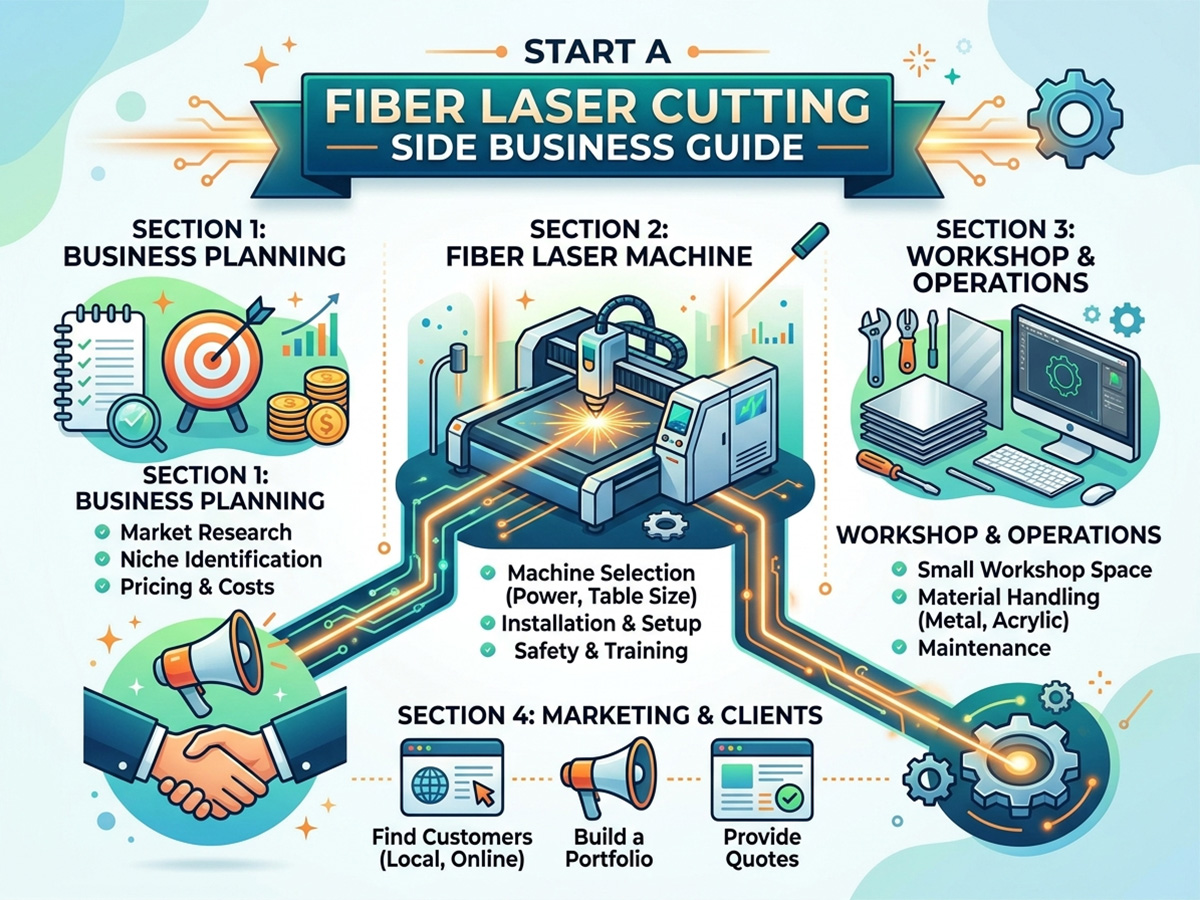
How to Quote and Price Fabrication Work
Inconsistent pricing kills margins faster than any other operational mistake. Establish a quoting formula before taking your first order, and apply it consistently across every job.
Per-Hour Shop Rate Method
Calculate your fully loaded hourly cost: machine payment + electricity + gas + consumables + rent/overhead + labor. Add a 40 to 60% profit margin on top. Most fiber laser shops charge $75 to $200 per laser hour, depending on machine capability and local market rates.
Per-Part Quoting for Repeat Work
For recurring orders, quote per-part pricing that factors in setup time, material cost per nested sheet, and cutting time. This gives clients predictable budgets and locks in your margin. Always include a minimum order value ($50 to $100) to cover file prep and machine startup.
Material Markup
Mark up raw material 15 to 30% when you supply the stock. This covers waste, storage, and procurement time. Clearly separate material cost from cutting cost on invoices so clients see value in both.
• Simple quoting formula: (Material Cost x 1.2) + (Laser Minutes x Per-Minute Rate) + Setup Fee = Quote.
• Add 25 to 50% surcharge for rush orders (under 48 hours).
• Add 15 to 20% for complex geometry, tight tolerances, or specialty metals.
• Offer 10 to 15% discount on contracts exceeding $2,000/month to lock in steady clients.
Workspace and Infrastructure Requirements
A fiber laser demands more infrastructure than a CO2 desktop unit. Plan for these requirements before purchasing.
✔ Electrical: 220V/30A single-phase minimum for entry-level machines, 380V/60A three-phase for 6kW+ systems.
✔ Floor space: minimum 400 sq ft for a 4x8 laser cutter machine with material loading clearance on both sides.
✔ Ventilation: industrial fume extraction system with spark-arresting filtration, vented outdoors.
✔ Assist gas: nitrogen and oxygen cylinder storage with regulators, or a nitrogen generator for high-volume operations.
✔ Compressed air: clean, dry air supply (minimum 8 bar) for lens purge and pneumatic components.
✔ Safety: Class 4 laser enclosure, safety interlocks, protective eyewear (OD5+ at 1,070nm), fire extinguisher.
If your current shop lacks three-phase power, budget $2,000 to $5,000 for an electrician to run a dedicated circuit. This is a non-negotiable cost that surprises many first-time buyers.
Common Mistakes That Drain Profit
• Buying more wattage than your order book supports, resulting in monthly payments that outpace revenue.
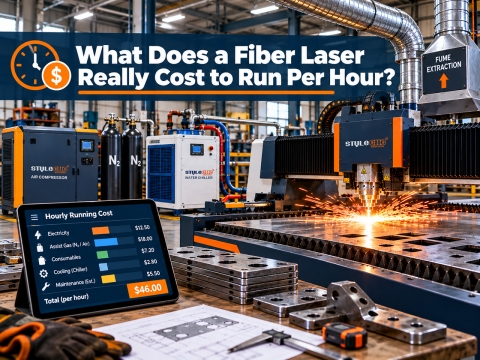
• Quoting jobs without accounting for assist gas consumption, which adds $5 to $30+ per hour depending on material and gas type.
• Ignoring nesting optimization, which wastes 15 to 25% of raw material on poorly laid-out cut files.
• Skipping edge quality checks before delivery. Dross, burn marks, and taper on thick cuts trigger rework and refund requests.
• Underpricing to win early jobs, then being unable to raise rates once clients anchor to low expectations.
• Neglecting preventive maintenance on the cutting head, lens, and nozzle, which degrades cut quality gradually before causing a costly failure.
• Not securing general liability and product liability insurance before taking on commercial contracts.
How to Get Your First Five Clients
Your first clients are not online. They are within a 30-minute drive. Visit welding shops, HVAC contractors, and small machine shops with a sample plate showing your cut quality on 3 to 5 material types. Offer a trial job at cost. Once they see the edge quality from a sheet metal laser cutter compared to their plasma or shear output, repeat orders follow.
Your sample plate is your most powerful sales tool. Cut a 12-inch square piece of mild steel featuring a company logo, fine text, small holes, and tight curves. Hand it to the shop owner with your business card attached. Let the cut quality speak for itself.
Online presence matters for credibility, even if most early work comes from local outreach. A simple one-page website with a portfolio of cut samples, material capabilities, and a contact form is enough to convert referrals into paying clients.
Client Acquisition Checklist
✔ Walk into 10 local fab shops with a sample plate this week.
✔ List your services on Thomasnet, MFG.com, and local business directories.
✔ Post laser cutting process videos on Instagram, TikTok, and YouTube Shorts weekly.
✔ Attend one regional trade show or metal industry meetup per quarter.
✔ Offer a referral discount: 10% off next order for every new client referred.
✔ Contact local makerspaces, community colleges, and vocational programs about partnership cutting services.
✔ Join local contractor and builder associations where architects and developers source fabrication partners.
Frequently Asked Questions
What is the minimum investment to start a fiber laser cutting side business?
A functional entry-level setup with a 1kW to 2kW fiber laser, basic exhaust, assist gas, and starter material stock costs $15,000 to $30,000. This handles thin sheet work, signage, and decorative art. Thicker fabrication work requires 3kW+ machines starting closer to $30,000.
How fast can a fiber laser cutting business reach break-even?
Most operators reach break-even within 4 to 8 months when running 20+ hours per week of billable work. Subcontract cutting at $75 to $150 per laser hour generates $6,000 to $12,000 per month at moderate utilization. Higher-margin DTC products accelerate the timeline further.
Do I need a dedicated commercial space or can I run from a home garage?
A two-car garage or larger outbuilding works for entry-level machines with proper electrical (220V/30A minimum), ventilation, and fire suppression. Larger machines with shuttle tables require 800+ square feet of clear floor space plus material storage. Check local zoning for commercial equipment restrictions.
What ongoing costs should I budget for beyond the machine payment?
Assist gas (nitrogen and oxygen) runs $200 to $800 per month depending on volume. Consumables like nozzles, lenses, and protective windows cost $50 to $200 per month. Electricity adds $100 to $400 per month. Insurance, material restocking, and software subscriptions round out the operating budget.
Is subcontracting for other shops more profitable than selling finished products?
Subcontracting delivers steadier income with lower marketing overhead, at 40 to 55% margins. Finished DTC products carry higher margins (55 to 75%) but require design work, finishing, packaging, and active marketing. The most profitable operators run both models in parallel.
Can I cut tube and pipe with a flatbed fiber laser?
Standard flatbed lasers cut sheet material only. Tube and pipe cutting requires a rotary chuck attachment or a dedicated tube laser system. If structural fabrication is part of your business plan, invest in a combo sheet-and-tube machine or add tube capability as a second unit.
What software do I need for nesting and file preparation?
Most machines ship with basic nesting software. For production efficiency, upgrade to dedicated nesting tools like SigmaNest, ProNest, or DeepNest (free). CAD files from customers arrive as DXF or DWG. You need at least basic AutoCAD or FreeCAD proficiency to verify and clean files before cutting.
Ready to Launch Your Metal Fabrication Business?
STYLECNC manufactures fiber laser cutting machines from 1kW to 40kW+ for startups, job shops, and industrial fabricators in 180+ countries. Every system ships with lifetime technical support, operator training, and a dedicated after-sales engineering team.
Explore the full range of metal laser cutting machines or compare high power fiber laser cutting machines for heavy fabrication. Request your free quote at STYLECNC