Up-Keeping Your Laser Cutter
Laser cutters are very expensive piece of equipment - chances are you spent over $5,000 on yours which means its important to keep the machine in good condition. There is nothing worse than having a multi-thousand dollar machine destroyed because of a few minutes' negligence.
You don't even need to do that much, to keep everything in top condition!
Always Maintenance for Laser Cutter
Never let the laser machine run unattended especially when its cutting.
Acrylic is extremely flammable and it goes without saying that wood, paper, mylar, delrin and other materials are as well.
We know of two three four five people who have had to essentially replace their laser cutting machine because it caught on fire unattended. One person had their entire shop burned down because they cut acrylic and left it.
Never let the laser machine run unattended especially when its cutting.
Its simply not worth it! Adafruit has never had a fire that damaged the machine because we keep an eye on it and make sure someone is within 3 feet at all times. There have been times when material caught but we quickly put it out.
Never let the laser machine run unattended especially when its cutting.
Daily Maintenance for Laser Cutter
Every day, or after 8 hours of solid laser cutting, be sure to check the lens and clean it if necessary. The top lens and mirror are right above the laser beam which means they are exposed to a lot of dirt, fumes, smoke and debris. If the lens gets dirty a few things happen.
1. The laser cutter won't cut nearly as well, requiring lower speeds or higher power, to cut.
2. The laser cutter won't engrave nearly as well, with uneven results and blurry images.
3. Eventually, the dirt on the lens/mirror can catch on fire and melt the lens/mirror permanently damaging it.
You can keep the lens and mirror clean by removing it and gently cleaning both sides using a qtip or (better yet) lens paper. Use the fluid that comes with the machine, do not use anything like alcohol or acetone or other cleaner. Only use the lens cleaner fluid provided!
Weekly Maintenance for Laser Cutter
We find that if we keep the laser cutting machine cleaned on the inside the only other maintenance we need to do is on the filter. The filter we have (the Electrocorp RSU-CCHR12 now supported by AllerAir) has multiple stages and each one has some maintenance needs.
Once a week (sometimes more or less, depending on how often its used and what we're cutting/engraving) we have to change the inner 'pad' pre-filter and clean out the foam dustcollector. Here are some hints that will indicate that you need to replace the filter.
1. Smoke is collecting in the laser bay, not being sucked away.
2. There are small fire/flares in the bay.
3. There is more odor emanating from the machine.
4. The filter is dirty on both sides.
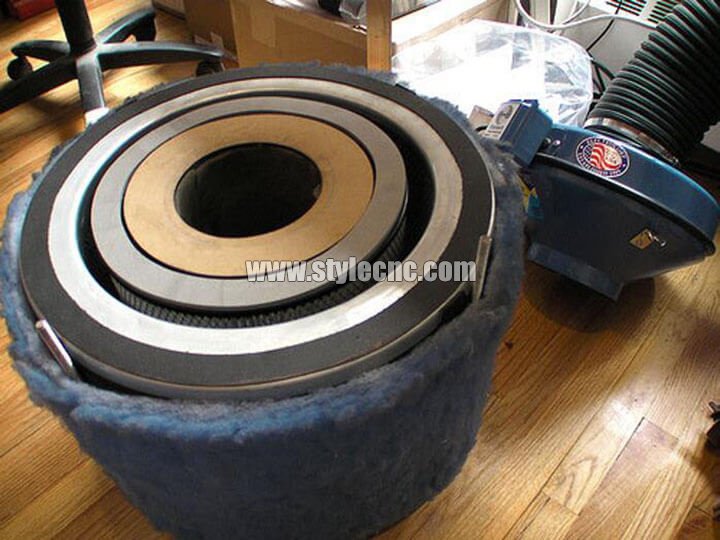
To replace the inner pad filter and the foam dust collector, open up the machine.
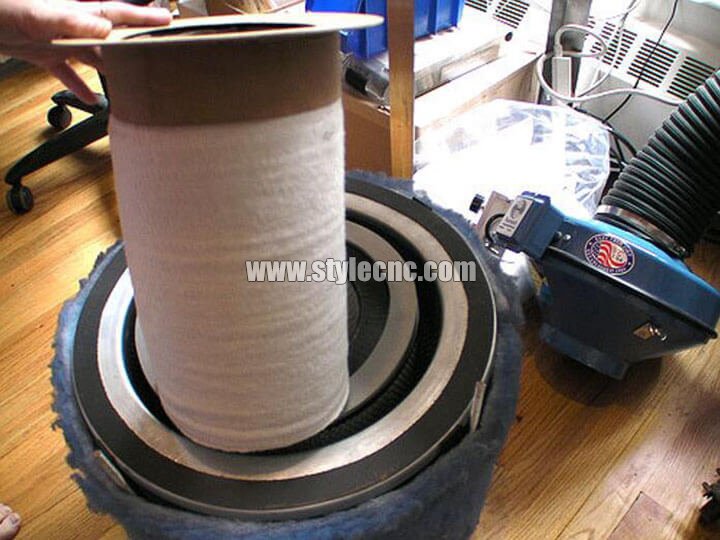
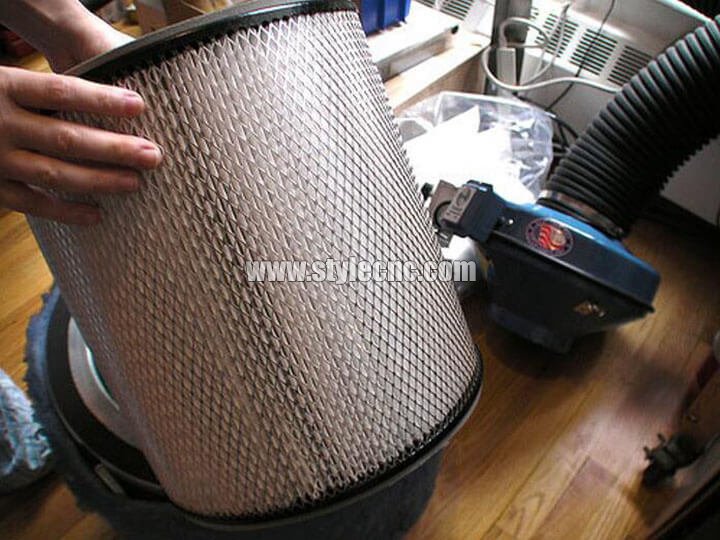
Inside you will see the inner filtration assembly. On the inside of the metal mess is a foam dust collector filter. The foam catches the big dust particles. We just rinse this out in the sink and dry it out before replacing.
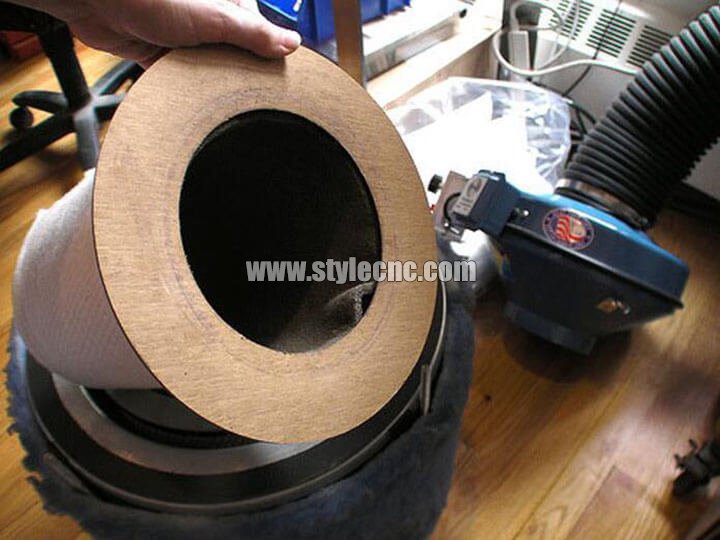
On the outside is a wrapped pad pre-filter.
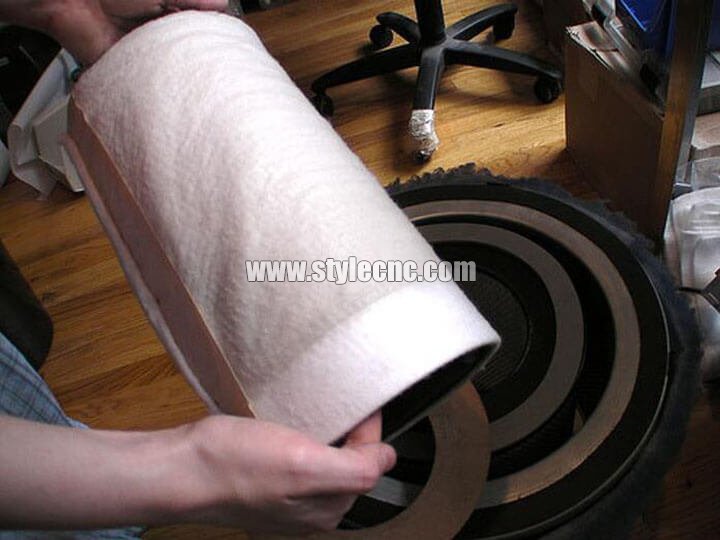
When the filter is used up, its dirty on both sides (it will always be dirtier on the inside, of course).
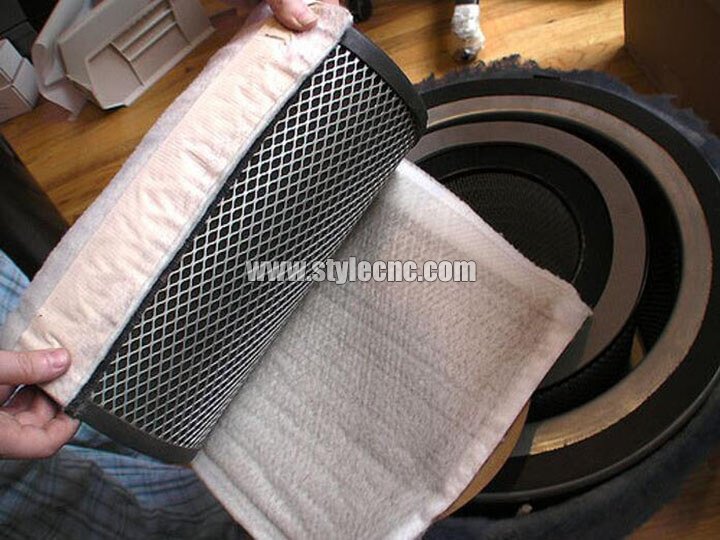
Normally it should be bright white. You can remove the cardboard holder to see the difference.
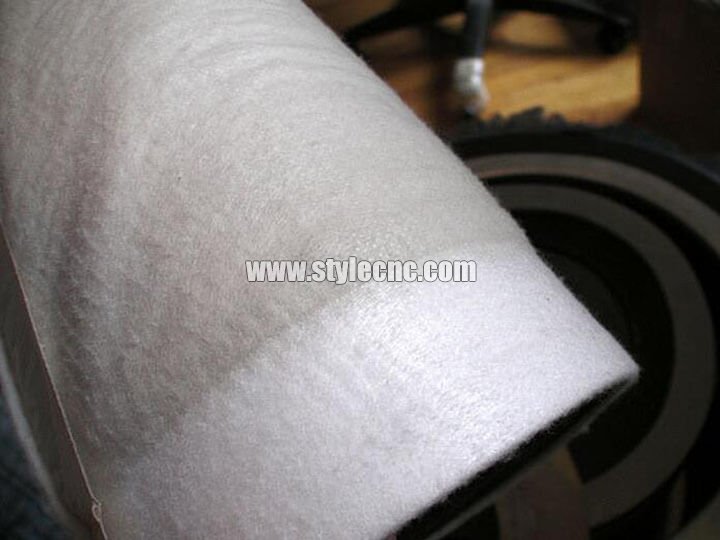
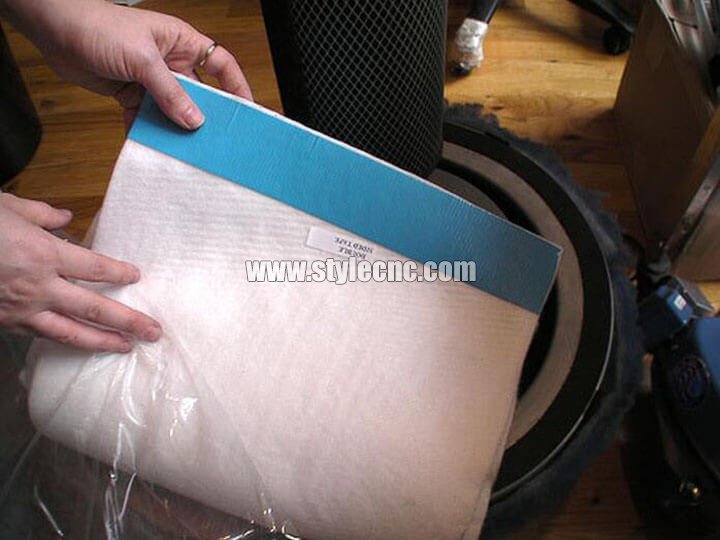
You can simply buy new pre-filters from your filter-seller and wrap them around. Ours has double sided tape (or velcro) to keep it in place.
Semi-Annual Maintenance for Laser Cutter
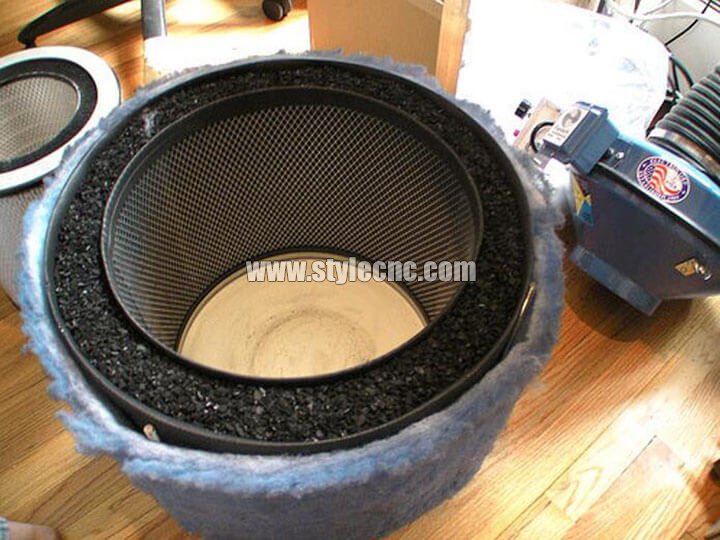
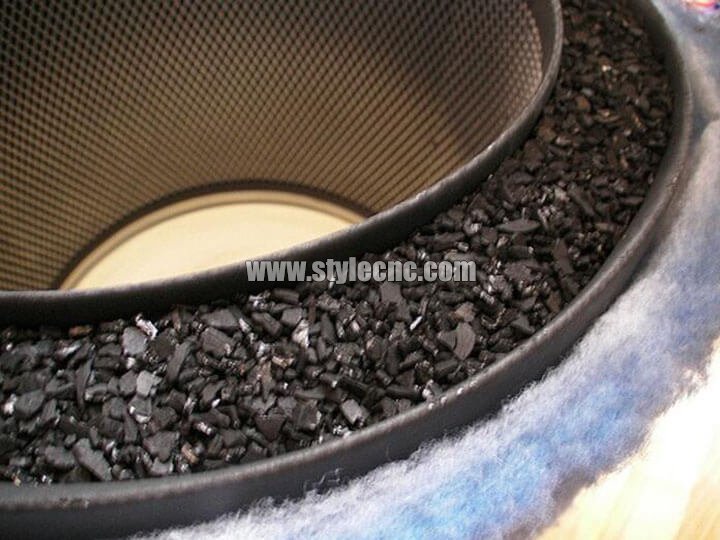
The pre-filter and HEPA do their best to get rid of particle matter. However, there is also odors that come from cutting, especially plastics. For this reason, the Electrocorp also has 20 lbs of carbon granules. These absorb the nasty smell that is made from plastic cutting. Eventually, however, the charcoal gets 'full' and no longer absorbs fumes.
Here are some hints that will indicate that you need to replace the charcoal:
1. The odor of burning plastic/wood is very strong.
2. Smoke is being sucked away just fine.
3. The filter is clean and the problem doesn't go away.
4. The charcoal smells of fumes when the machine is off.
You can buy charcoal granules from the company and replace the machine. First pour out and throw out the old charcoal. Then pour in cup-fulls of fresh charcoal while tamping down with a rubber mallet or a wooden dowel to make sure you have packed charcoal. While the machine manual implies there is '20 lbs' of charcoal in there, we bought a '30 lb box' and it filled it twice.
Annual Maintenance for Laser Cutter
Finally, the only thing left that can be replaced in the machine is the HEPA filter, which does the fine-size filtration. Because its expensive ($200 or so) you'll want to make sure to change the prefilters as soon as they get dirty or you will end up clogging the HEPA prematurely.
1. Smoke is collecting in the laser bay, not being sucked away.
2. There are small fire/flares in the bay.
3. There is more odor emanating from the laser cutting machine.
4. The filter is clean/replaced.