Why Laser Cleaning Is an Underserved Market Opportunity
Traditional surface cleaning methods like sandblasting, chemical stripping, and dry ice blasting have dominated industrial maintenance for decades. They work, but they come with serious drawbacks: hazardous waste, environmental permits, media costs, cleanup time, and damage to substrate materials.
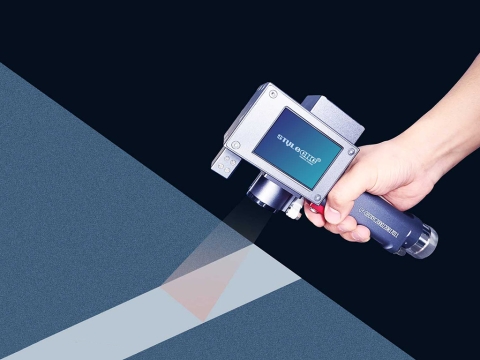
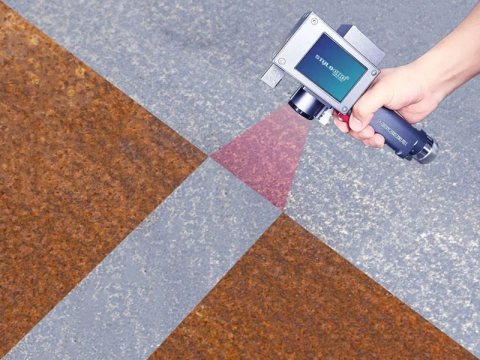
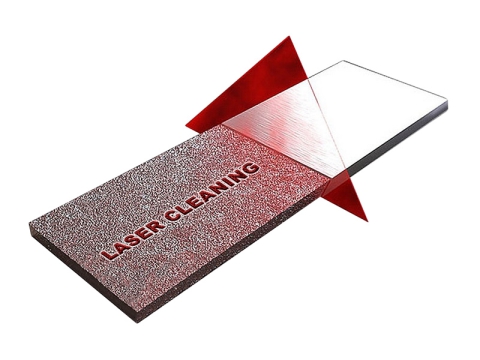
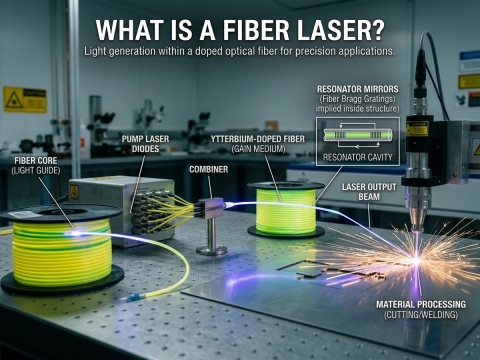
Laser cleaning eliminates every one of those problems. A focused fiber laser beam vaporizes rust, paint, oxide layers, and contaminants without touching the base metal. No media. No chemicals. No secondary waste. The surface underneath remains undamaged and ready for coating or welding.
Despite these advantages, most local markets have zero mobile laser cleaning providers. The technology has been available in industrial settings for years, but the drop in equipment prices to the $8,000 to $30,000 range has now made it accessible to independent service operators. That gap between rising demand and low competition is the opportunity.
For a side-by-side breakdown of how laser cleaning compares to traditional methods on cost, speed, and environmental impact, review the detailed comparison of laser cleaning vs sandblasting vs dry ice blasting.
How the Mobile Service Model Works
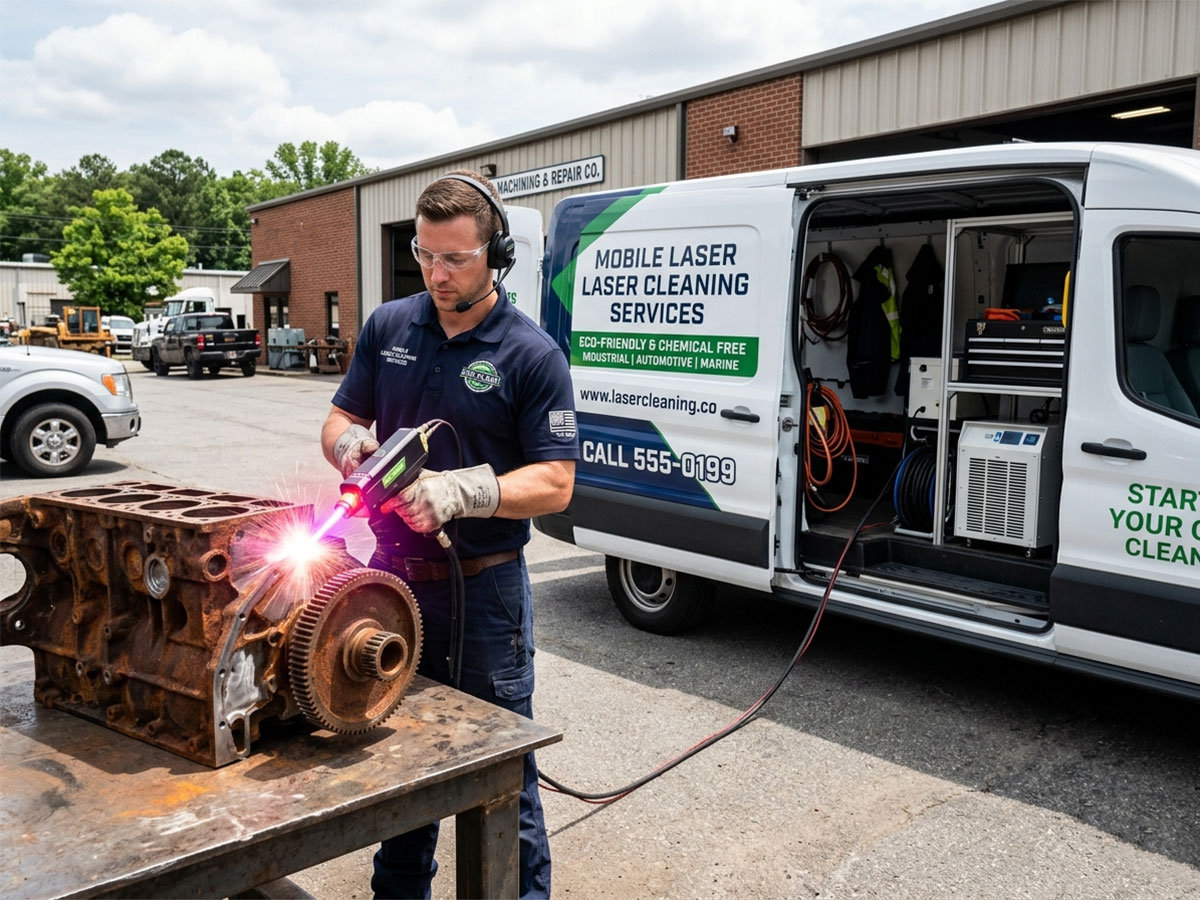
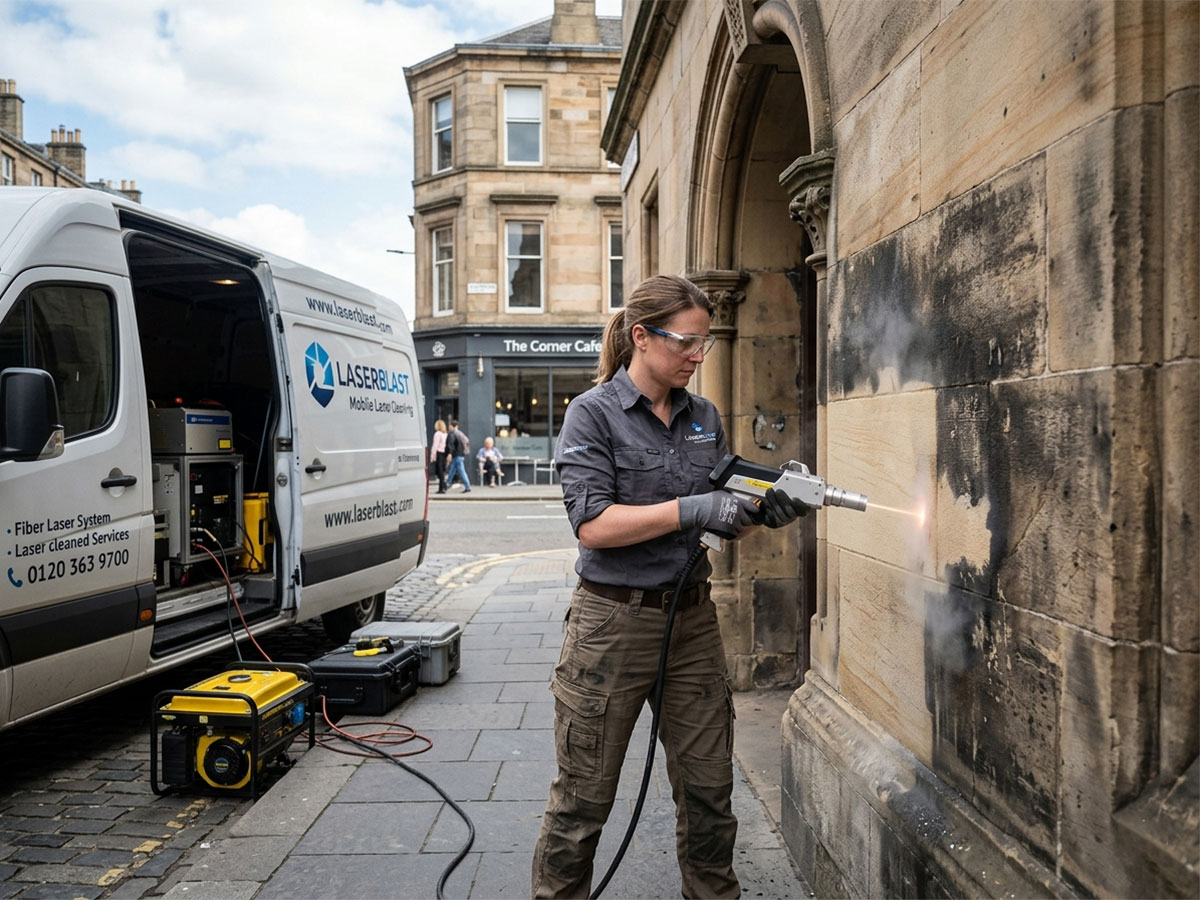
The business model is simple: you bring a portable laser cleaning system to the client's location, clean the surface to spec, and bill by the hour or by the project. No shop overhead. No material hauling. No waste disposal permits.
What You Bring to the Job Site
• Portable fiber laser cleaning unit (15 to 50 kg depending on power level).
• Handheld cleaning head with adjustable beam width.
• Laser safety glasses (OD5+ at 1,064nm) for operator and any nearby workers.
• Small generator or access to client's 220V power supply.
• Service vehicle: van, SUV with cargo area, or trailer-mounted setup.
What You Leave Behind
Nothing. That is the entire selling point. No blast media scattered across the floor. No chemical residue. No contaminated waste requiring special disposal. The removed material vaporizes into micro-particles captured by the machine's integrated extraction system or a portable fume extractor. Clients pay a premium specifically because laser cleaning leaves their facility cleaner than you found it.
Equipment Options: Handheld vs Backpack vs Stationary
Choosing the right equipment depends on your target clients and the types of jobs you plan to take. Understanding the differences between pulsed vs continuous wave laser technology is the first decision, as it determines cleaning precision, speed, and material safety.
| Measurement | Handheld Pulsed | Backpack Pulsed | Handheld CW | Stationary System |
|---|---|---|---|---|
| Price Range | $8,000–$15,000 | $10,000–$18,000 | $5,000–$10,000 | $15,000–$30,000+ |
| Power | 100–300W | 100–200W | 1,000–2,000W | 200–1,000W |
| Weight | 15–30 kg | 10–18 kg | 30–50 kg | 50–200 kg |
| Mobility | High (van/SUV) | Very high (one-person carry) | Moderate (cart/van) | Low (fixed location) |
| Best Applications | Rust, paint, oxides on flat/curved | Tight access, fieldwork, remote sites | Heavy rust, thick coatings, fast stripping | Production cleaning, mold cleaning |
| Substrate Safety | Excellent (no heat damage) | Excellent | Moderate (heat input on thin metals) | Excellent |
| Consumables | Zero | Zero | Zero | Zero |
| Best For Mobile | Primary workhorse | Remote/confined jobs | Heavy industrial contracts | Shop-based add-on service |
For most mobile operators starting out, a pulsed laser cleaning machine in the 100 to 300W range offers the best combination of portability, substrate safety, and cleaning precision. Pulsed systems prevent heat buildup that can warp thin metals, making them safe for automotive panels, precision parts, and historical artifacts.
Operators who need maximum mobility for remote job sites, scaffolding, or confined spaces should consider a backpack laser cleaner that frees both hands and eliminates the need to position a cart or machine near the work surface.
Target Industries and Client Types
Auto Shops and Restoration Garages
Classic car restoration requires precise rust removal without damaging original sheet metal. Body shops need clean, bare metal surfaces before primer application. Laser cleaning delivers both without warping panels or removing good metal.
• Average job: $200–$800 per vehicle (partial to full frame cleaning).
• Repeat potential: restoration shops send 2 to 5 vehicles per month.
Shipyards and Marine Maintenance
Hull cleaning, deck hardware restoration, and weld preparation on vessels require surface treatment without introducing blast media into waterways. Environmental regulations increasingly restrict sandblasting near water, creating a regulatory-driven demand for laser cleaning.
• Average job: $500–$5,000+ per vessel depending on scope.
• Competitive advantage: zero environmental permits required for laser cleaning vs. extensive permitting for sandblasting near water.
Construction and Infrastructure Contractors
Bridge maintenance crews, structural steel contractors, and building renovators need rust removal and surface preparation before protective coatings. Laser cleaning works at height, in confined spaces, and on complex geometries without scaffolding cleanup.
• Average job: $1,000–$10,000+ for bridge and structural projects.
• Government and municipal contracts often specify non-abrasive cleaning methods, which positions laser cleaning as the compliant option.
Historical Restoration and Conservation
Museums, historical societies, and preservation contractors need gentle cleaning of stone, metal, and wood artifacts without material loss. Laser cleaning parameters can be tuned to remove surface contaminants while preserving patina and original finishes.
• Average job: $300–$3,000 depending on artifact size and sensitivity.
• Premium pricing: historical clients pay 30 to 50% more than industrial clients for the precision and non-destructive guarantee.
Manufacturing and Mold Cleaning
Injection mold cleaning, weld preparation in production lines, and pre-coating surface preparation are high-value, recurring services. A laser paint stripping machine handles coating removal applications where chemical strippers are restricted or where substrate preservation is critical.
• Average contract: $2,000–$8,000/month for recurring maintenance agreements.
Pricing Your Mobile Laser Cleaning Services
| Measurement | Standard Rate | Premium Rate | Contract Rate |
|---|---|---|---|
| Hourly Rate | $150–$250/hr | $250–$500/hr | $125–$200/hr |
| Job Type | General rust removal, surface prep | Precision restoration, marine, historical | Recurring monthly maintenance |
| Minimum Charge | $200 per visit | $300 per visit | Waived with contract |
| Travel Fee | $50–$100 within 50 miles | $100–$200 beyond 50 miles | Included in contract |
| Margin | 70–80% | 80–85% | 65–75% |
| Best Client | Auto shops, small fab shops | Shipyards, museums, government | Manufacturers, fleet operators |
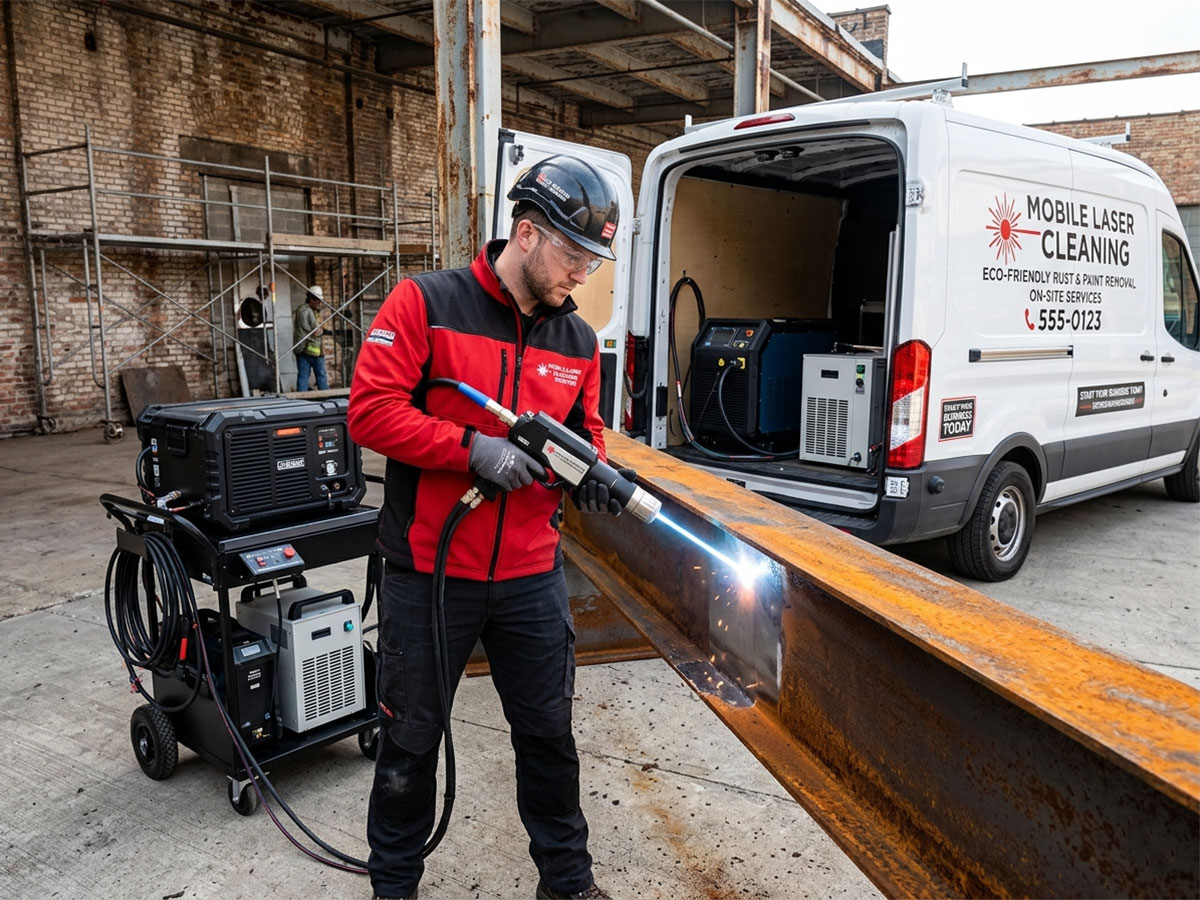
Always charge a minimum per visit to cover travel and setup time. A $200 minimum ensures you are not losing money on small jobs. For larger projects, switch to per-square-foot pricing ($2 to $8/sq ft depending on contamination level) when it produces a higher total than hourly billing.
Maintenance contracts are the most valuable pricing model. Offer monthly or quarterly cleaning at a 15 to 20% discount over one-time rates in exchange for a 6 to 12 month commitment. Contracts stabilize cash flow and reduce client acquisition costs.
Startup Cost Breakdown
| Expense Category | Budget Entry ($8K–$15K) | Professional ($15K–$30K) |
|---|---|---|
| Laser Cleaning Machine | $5,000–$10,000 | $10,000–$22,000 |
| Safety Equipment (glasses, signage, barriers) | $200–$500 | $500–$1,000 |
| Portable Fume Extractor | $300–$800 | $800–$2,000 |
| Vehicle Setup (shelving, power inverter) | $500–$1,500 | $1,500–$3,000 |
| Generator (if needed) | $500–$1,500 | $1,000–$2,500 |
| Insurance (GL + professional) | $500–$1,000/yr | $1,000–$2,000/yr |
| Marketing and Website | $200–$500 | $500–$1,500 |
| Business Registration | $50–$200 | $100–$300 |
| Measurement | ||
| Total | $7,250–$16,000 | $15,400–$34,300 |
Browse the full range of fiber laser cleaning machines to compare power levels, portability options, and pricing across all models before selecting your equipment.
Advantages Over Traditional Cleaning Methods
• Zero consumables: no sand, chemicals, dry ice, or abrasive media to purchase, transport, or dispose of.
• Zero waste permits: sandblasting near waterways or in urban areas requires environmental permits that laser cleaning does not.
• Substrate preservation: laser cleaning removes contaminants without removing base material, critical for thin panels and historical artifacts.
• Speed: laser cleaning processes 1 to 15 sq ft per hour depending on contamination and power level, comparable to sandblasting on light rust and faster on precision work.
• Portability: a 15 kg handheld unit goes anywhere a person can, including confined spaces, elevated platforms, and inside tanks.
• Safety: no silica dust exposure (a leading cause of occupational lung disease in sandblasting), no chemical splash risk, no flying media.
• Noise: laser cleaning operates at 60 to 75 dB vs. 100 to 120 dB for sandblasting, allowing work in noise-sensitive environments.
Common Mistakes That Cost New Operators Money
• Buying a continuous wave (CW) laser for precision work where a pulsed laser is required, resulting in heat damage on thin metals and lost client trust.
• Underpricing services to match sandblasting rates instead of charging for the premium (no waste, no damage, no permits) that laser cleaning delivers.
• Skipping laser safety training and proper signage, which creates liability exposure and violates ANSI Z136 standards.
• Targeting only one industry instead of diversifying across 3 to 4 client types to stabilize revenue across seasonal cycles.
• Not offering maintenance contracts, which means starting from zero every month instead of building recurring revenue.
• Neglecting online presence: most clients search for 'laser rust removal near me' before calling, so a basic website with before/after photos is essential.
• Failing to carry adequate insurance, particularly if working on client-owned vehicles, vessels, or historical artifacts.
Getting Started: Your First 60-Day Roadmap
New to laser cleaning technology? The laser cleaning machine guide for beginners covers operating principles, safety requirements, and material settings to get you productive from day one.
Days 1 to 30: Setup
✔ Purchase a pulsed laser cleaning system (100 to 300W) and complete operator training.
✔ Register your business, obtain liability insurance, and set up a business bank account.
✔ Build a simple one-page website with service descriptions, pricing ranges, and a quote request form.
✔ Practice on sample materials: rusted steel, painted metal, oxidized aluminum, and coated surfaces.
✔ Create a before/after photo portfolio with at least 10 sample cleanings.
Days 31 to 60: Client Acquisition
✔ Visit 10 auto body shops, 5 welding/fab shops, and 3 marine service providers with sample demonstrations.
✔ Offer a free 30-minute demonstration on one piece of client-owned equipment to show results firsthand.
✔ List your services on Google Business Profile, Thumbtack, and industry-specific directories.
✔ Post before/after videos on Instagram, TikTok, and YouTube weekly (laser cleaning videos perform extremely well on social media).
✔ Pitch one municipal or government contact about bridge/infrastructure cleaning contracts.
✔ Propose a monthly maintenance contract to your first repeat client.
Frequently Asked Questions
How much can a mobile laser cleaning business earn per month?
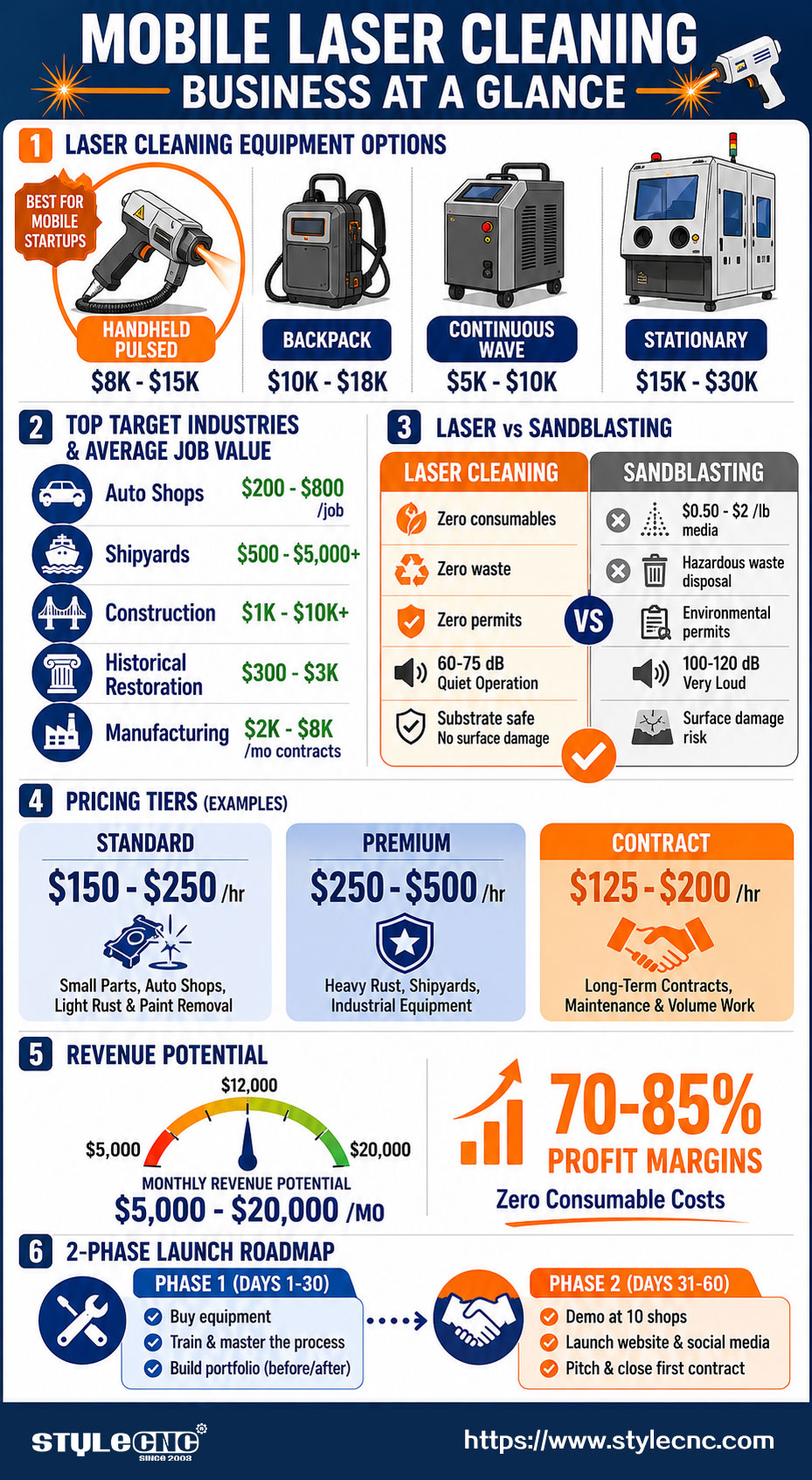
Most operators billing 20 to 30 hours per week at $150 to $300 per hour generate $12,000 to $36,000 in monthly gross revenue. After operating costs (fuel, insurance, vehicle maintenance), net income typically falls between $5,000 and $20,000 per month depending on utilization and pricing.
What is the difference between pulsed and continuous wave laser cleaners?
Pulsed lasers deliver energy in short, high-intensity bursts that remove contaminants without heating the substrate. They are safer for thin metals, precision parts, and historical artifacts. Continuous wave lasers deliver constant energy and clean faster but generate more heat, making them better suited for heavy industrial rust removal on thick, heat-tolerant surfaces.
Do I need special certifications or licenses to operate a laser cleaning business?
No federal license is required to operate a laser cleaning business in the U.S. However, ANSI Z136.1 standards require that any facility or job site using a Class 4 laser designate a Laser Safety Officer (LSO). For a one-person operation, that is you. LSO training courses cost $300 to $600 and are available from the Laser Institute of America.
Is laser cleaning safe for all types of metal surfaces?
Pulsed laser cleaning is safe for virtually all metals including steel, stainless steel, aluminum, copper, brass, and cast iron. It is also effective on stone, concrete, and wood for restoration applications. The only limitation is highly reflective surfaces at certain angles, which can redirect the beam. Proper training and beam management eliminate this risk.
How does laser cleaning compare to sandblasting on cost per job?
Laser cleaning has a higher hourly rate ($150 to $500) compared to sandblasting ($75 to $150). However, laser cleaning eliminates media costs ($0.50 to $2/lb of sand), cleanup labor (1 to 3 hours per job), waste disposal fees ($200 to $1,000 per dumpster), and permitting costs. On a total-cost basis, laser cleaning often matches or beats sandblasting while delivering a cleaner, more precise result.
Can I operate this business part-time as a side hustle?
Yes. The equipment is portable and requires no permanent shop space. Many operators start with 2 to 3 jobs per week while maintaining full-time employment. Weekends and evenings work well for auto restoration and small fabrication shops. Scale to full-time once weekly billings consistently exceed your employment income.
What ongoing costs should I budget for after the initial equipment purchase?
Laser cleaning has the lowest operating costs of any surface cleaning method. Electricity costs $1 to $3 per hour of operation. Insurance runs $500 to $2,000 per year. Vehicle fuel and maintenance depend on travel distance. There are no consumable media costs, no chemical refills, and no waste disposal fees. Total monthly operating costs for a mobile operator typically range from $300 to $800 excluding vehicle payments.
What power level should I start with for a mobile cleaning business?
A 100 to 200W pulsed laser handles 80% of mobile service work including automotive rust, light industrial cleaning, and restoration projects. For heavy industrial contracts involving thick rust or large surface areas, step up to 300W or higher. Review the full range of laser rust removal machines to match power level to your target client mix.
Ready to Launch Your Mobile Laser Cleaning Business?
STYLECNC manufactures portable, backpack, and industrial fiber laser cleaning systems from 100W to 2,000W for mobile service operators and industrial maintenance teams in 180+ countries. Every machine ships with lifetime technical support, operator training, and a dedicated after-sales engineering team.
Explore the complete fiber laser cleaning machine collection or compare backpack laser cleaners for maximum field mobility. Request a free quote at STYLECNC