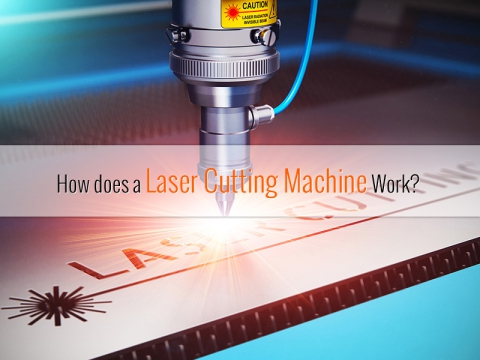
Which Assist Gas Should You Use?
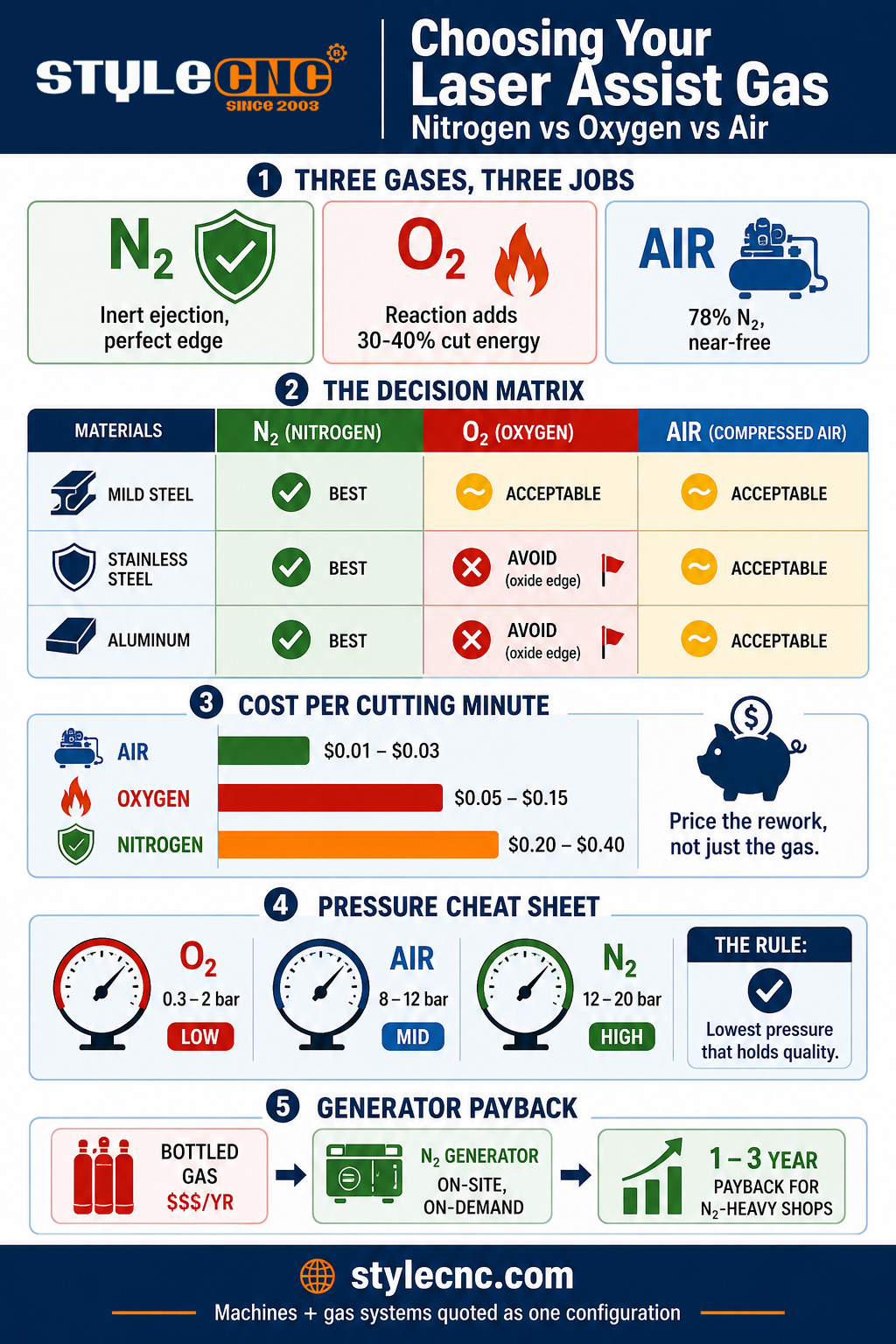
Use oxygen for carbon steel over 6 mm, where its exothermic reaction adds cutting energy at low pressure and low cost. Use nitrogen for stainless steel, aluminum, and any edge that must be oxide-free and weld-ready, at 12 to 20 bar. Use dried, oil-free compressed air for thin-to-medium mild steel and non-cosmetic work, where its near-zero cost beats its slightly oxidized edge.
Assist gas does two jobs. Mechanically, it blasts molten metal out of the kerf before it re-solidifies, which is what edge quality mostly depends on. Chemically, it either feeds the cut or protects it: oxygen reacts with hot iron and contributes roughly 30 to 40 percent of the total cutting energy on carbon steel, while nitrogen stays inert and leaves the cut face exactly as the beam made it. Air, being 78 percent nitrogen and 21 percent oxygen, does a diluted version of both at once. Every selection decision is a trade between those chemistries and their very different costs.
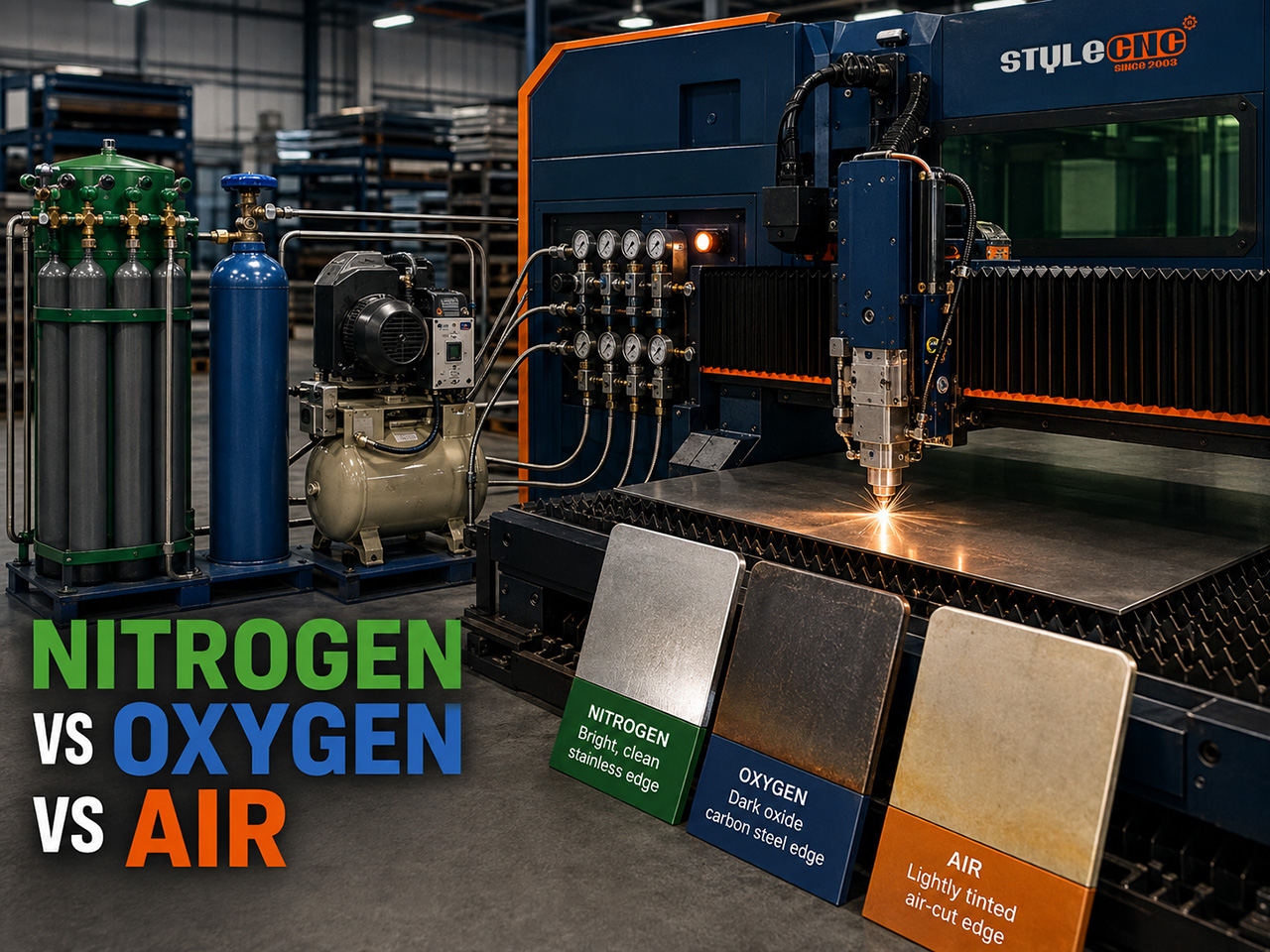
The Comparison: Edge Quality, Speed, Pressure, and Cost
The table below compares the three gases across the factors that decide real purchasing and quoting. The Measurement row states the basis so the numbers are comparable rather than brochure-vague.
| Factor | Nitrogen | Oxygen | Compressed Air |
|---|---|---|---|
| Measurement | Typical 1 to 6 kW fiber, 1 to 12 mm sheet, production settings | Same basis, carbon steel focus | Same basis, oil-free dried air |
| Cutting mechanism | Inert melt ejection only | Exothermic reaction adds 30 to 40% of cut energy | Diluted both (78% N2, 21% O2) |
| Operating pressure | 12 to 20 bar | 0.3 to 2 bar | 8 to 12 bar (boosted to ~17) |
| Gas flow | 300 to 500+ L/min | 20 to 60 L/min | Compressor-supplied, high volume |
| Cost per cutting minute | USD 0.20 to 0.40 (0.60+ high-pressure) | USD 0.05 to 0.15 | USD 0.01 to 0.03 (electricity) |
| Mild steel edge | Bright, oxide-free, weld-ready | Fast cut, dark oxide layer | Light oxide tint, good for its price |
| Stainless steel edge | Bright, paint- and weld-ready (the standard) | Contaminated chromium oxide edge; avoid | Slight yellowing; acceptable non-cosmetic |
| Aluminum edge | Clean, anodize-ready (the standard) | Hard oxide, rough edge; avoid | Acceptable thin sheet with gray tint |
| Speed character | Fastest on thin sheet, power-limited on thick | Fastest on thick carbon steel | Near-nitrogen on thin gauges |
| Best for | Stainless, aluminum, cosmetic and weld-prep work | Carbon steel 6 mm and up | Thin-to-medium mild steel, high-volume budget work |
The stainless row deserves its own warning. At cutting temperature, even trace oxygen reacts with the chromium in stainless steel and leaves a contaminated oxide edge that rejects paint and compromises welds. That is why nitrogen is not a preference on stainless but the standard, and why the honest cost comparison includes rework: expensive nitrogen is cheap next to fabricators grinding oxidation off a thousand brackets.
The Cost-per-Part Math
Work the numbers on a concrete part: a bracket with 60 seconds of cut time in 2 mm sheet, quoted at 1,000 pieces.
✓ Oxygen: At USD 0.05 to 0.15 per cutting minute, gas adds about USD 0.05 to 0.15 per part, or USD 50 to 150 across the run. The edge carries an oxide layer that must be cleaned before welding or powder coat.
✓ Nitrogen: At USD 0.20 to 0.40 per minute, gas adds USD 0.20 to 0.40 per part, USD 200 to 400 per run. The edge is finished as cut: no deburr-and-degrease step, straight to weld or coat. If oxide removal would cost even 20 seconds of labor per part, nitrogen wins the total math despite the higher gas line.
✓ Compressed air: At USD 0.01 to 0.03 per minute of compressor electricity, gas adds USD 0.01 to 0.03 per part, USD 10 to 30 per run, after a one-time USD 5,000 to 20,000 investment in an oil-free compressor, dryer, and filtration train. For mild steel parts that get painted anyway, this is the cost floor of the industry.
Scale changes the answer again. A two-shift operation cutting nitrogen-heavy work can burn six figures annually in bottled or bulk gas, which is the classic justification for an on-site nitrogen generator; payback commonly lands in 1 to 3 years at that consumption. And avoid the purity trap while you are at it: assist gas does not need laboratory five-nines purity for mild steel work, and paying for it is money vented through the nozzle.
Assist Gas Pressure by Thickness
Pressure setting follows the material and gas, rising with thickness for nitrogen and falling with thickness for oxygen. Starting windows for fiber laser work:
| Material and Thickness | Gas | Starting Pressure |
|---|---|---|
| Mild steel 1 to 6 mm | Air or nitrogen | 8 to 12 bar (air) / 10 to 14 bar (N2) |
| Mild steel 6 to 20 mm | Oxygen | 0.5 to 2 bar, falling as thickness rises |
| Stainless 1 to 6 mm | Nitrogen | 10 to 16 bar |
| Stainless 6 to 12 mm | Nitrogen | 16 to 20 bar, larger nozzle |
| Aluminum 1 to 6 mm | Nitrogen (or air, thin) | 12 to 16 bar |
| Aluminum 6 to 12 mm | Nitrogen | 16 to 20 bar, negative focus |
Two consumption habits protect the budget. Use the lowest pressure that holds edge quality, because flow and cost rise steeply with pressure and nozzle diameter. And keep nozzles centered and matched to thickness: a misaligned or oversized nozzle can vent double-digit dollars per hour without improving the cut at all.
Gas is one input among several that set final cut quality; the fiber laser performance factors guide covers how pressure interacts with focus, nozzle standoff, and speed, and the CO2 laser cutting parameters reference carries the settings-level detail for CO2 platforms, where the same three gases apply.
Matching the Gas System to the Machine
Gas strategy is a configuration decision, not an afterthought. Nitrogen-heavy stainless work needs the high-pressure gas circuit, proportional valve, and nozzle library that the stainless steel laser cutting machine configuration is built around. Air-primary shops need the compressor, dryer, and filtration specified with the machine rather than bolted on later. Tell the STYLECNC team your material mix and monthly cutting hours, and the gas system, generator-vs-bottled recommendation, and machine configuration come back as one matched quote.
Frequently Asked Questions
What is the difference between nitrogen and oxygen in laser cutting?
Oxygen participates in the cut: it reacts exothermically with hot iron, contributing 30 to 40 percent of the cutting energy on carbon steel, which is why it cuts thick mild steel fast at only 0.3 to 2 bar. The price is a dark oxide layer on the edge. Nitrogen is inert and works purely by ejecting melt at 12 to 20 bar, leaving a bright, oxide-free, weld-ready edge at several times the gas cost. Oxygen buys speed on carbon steel; nitrogen buys edge quality everywhere.
Can you laser cut with compressed air?
Yes, and modern shops increasingly do. Dried, oil-free compressed air at 8 to 12 bar (often boosted toward 17 bar) cuts thin-to-medium mild steel, galvanized, and thin aluminum at roughly USD 0.01 to 0.03 per cutting minute in electricity, versus USD 0.20 to 0.40 for nitrogen. Being 21 percent oxygen, air leaves a light oxide tint, so it suits painted and non-cosmetic parts rather than weld-prep stainless. The entry ticket is a properly specified compressor, dryer, and filtration train, typically USD 5,000 to 20,000.
Why is nitrogen required for stainless steel?
Because oxygen contaminates the edge chemically. At cutting temperature, even trace oxygen reacts with the chromium in stainless and leaves an oxide layer that rejects paint and undermines weld integrity, turning every part into a grinding job. Nitrogen keeps the cut face inert and bright, finished as cut. The higher gas line is almost always cheaper than the rework line it eliminates, which is why nitrogen is the industry standard on stainless rather than a premium option.
What assist gas pressure should I use?
By material and gas: oxygen on carbon steel runs low, 0.3 to 2 bar, falling as thickness rises because the reaction does the work. Nitrogen runs high and climbs with thickness, roughly 10 to 16 bar on thin stainless and aluminum, up to 16 to 20 bar with larger nozzles from 6 mm up. Air sits at 8 to 12 bar for light mild steel. Start in the window, then tune to the lowest pressure that holds edge quality, because consumption and cost rise steeply with every extra bar.
When does a nitrogen generator pay off?
When consumption is steady and high. Bottled and bulk nitrogen carry per-volume cost plus tank rental, delivery, and boil-off losses; heavy two-shift nitrogen cutting can exceed six figures annually in gas alone. On-site membrane or PSA generators trade that for a capital purchase and electricity, with payback commonly quoted at 1 to 3 years for shops running nitrogen as the primary gas. Single-shift or oxygen-primary shops usually stay on delivered gas.
The Bottom Line
Assist gas selection reduces to three sentences. Oxygen for thick carbon steel, where the reaction is free cutting power and the oxide edge is acceptable. Nitrogen wherever the edge must be finished as cut: stainless, aluminum, weld-prep, and cosmetic work. Air wherever the part forgives a faint oxide tint and the volume rewards the cheapest gas in the shop. Price the rework, not just the gas, and the right answer usually falls out of the parts list.
STYLECNC configures fiber laser cutters with the gas circuit matched to the work, from air-primary sheet cutters to high-pressure nitrogen stainless steel cutting systems. Send your material mix and volumes for a machine-plus-gas recommendation built on the math above.