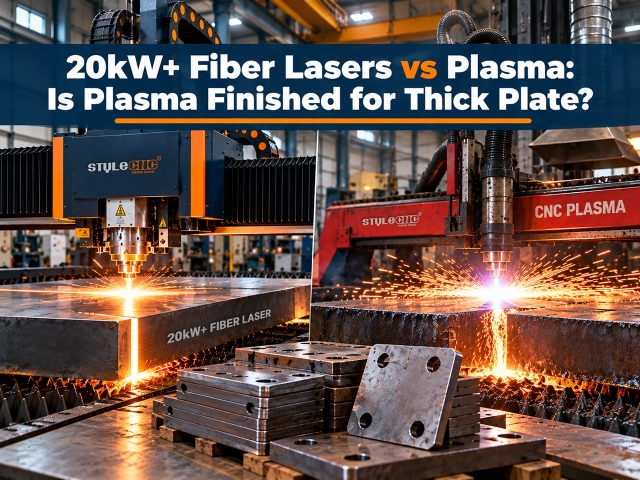
20kW+ Fiber Laser vs Plasma for Thick Metal Sheets
2026-11-046 Min ReadBy Charles

20kW+ Fiber Laser vs Plasma for Thick Metal Sheets

Plasma is not finished, but its territory has shrunk. A 20 kW fiber laser now outcuts a 300 A plasma system on carbon and stainless steel up to about 20 mm, and 30 to 40 kW lasers are closing the gap in the 20 to 50 mm range with cleaner edges and less secondary work. Plasma still wins on capital cost, on very thick plate, and in shops where rough structural cutting and low upfront investment matter more than precision.
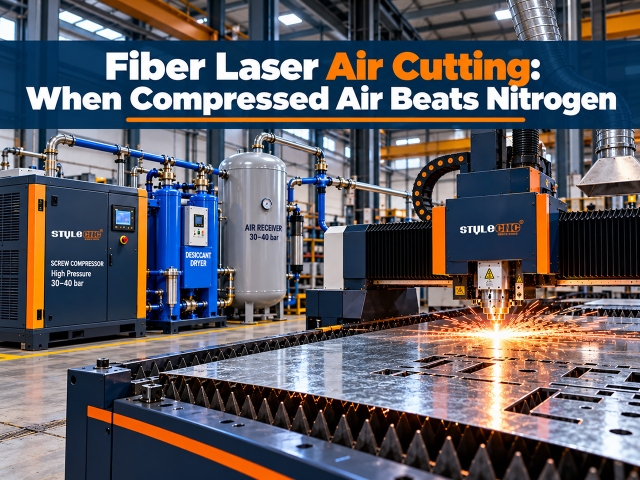
Fiber Laser Air Cutting vs Nitrogen: Costs & Setup
2026-11-026 Min ReadBy Jimmy

Fiber Laser Air Cutting vs Nitrogen: Costs & Setup

Fiber laser air cutting uses dried, filtered compressed air, typically supplied at up to 16 bar, as the assist gas instead of bottled nitrogen. It cuts thin to medium mild steel, galvanized sheet, and thin aluminum at a gas cost of roughly $0.01 to $0.03 per cutting minute versus $0.20 to $0.40 for nitrogen. The trade-off is a slight oxide tint on stainless edges, so air wins on cost and nitrogen still wins where a bright, weld-ready edge is required.

In-House Fiber Laser vs Outsourcing: Payback Guide
2026-10-315 Min ReadBy Charles

In-House Fiber Laser vs Outsourcing: Payback Guide

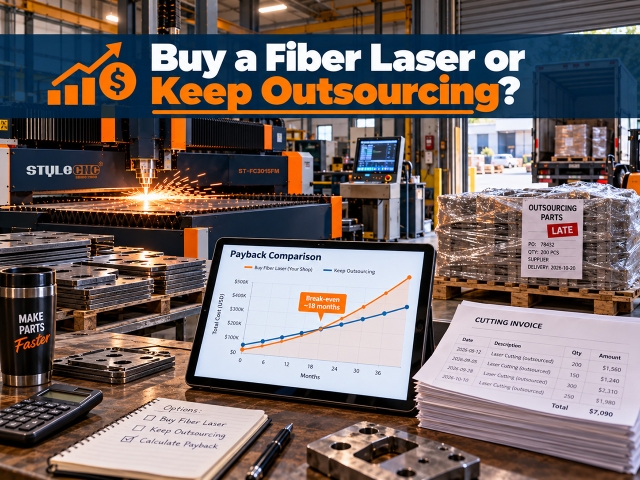
Bringing laser cutting in-house usually pays off once a shop spends about $5,000 or more a month on outsourced cutting. At that level, a fiber laser installed for around $90,000 typically pays back in one to two and a half years, because in-house running costs are often a quarter of what laser cutting services charge per hour. Below about $2,000 a month, outsourcing usually stays cheaper.

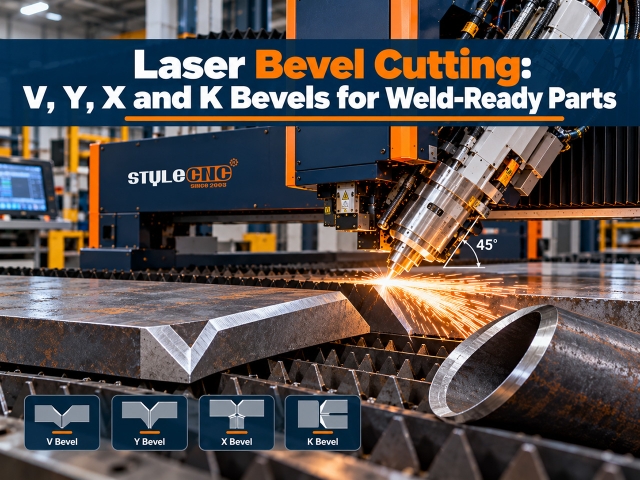
Laser Bevel Cutting: V, Y, X and K Bevels Explained
2026-10-296 Min ReadBy Jimmy

Laser Bevel Cutting: V, Y, X and K Bevels Explained

Laser bevel cutting tilts the laser beam, usually up to ±45 degrees, so the edge of a part is cut at an angle ready for welding. A 3D bevel head can produce V, Y, X and K bevels in the same operation as the contour cut, which removes the separate grinding or milling step normally used for weld preparation. It works best on plate up to roughly 25 to 40 mm thick and on tube ends for pipe and structural joints.

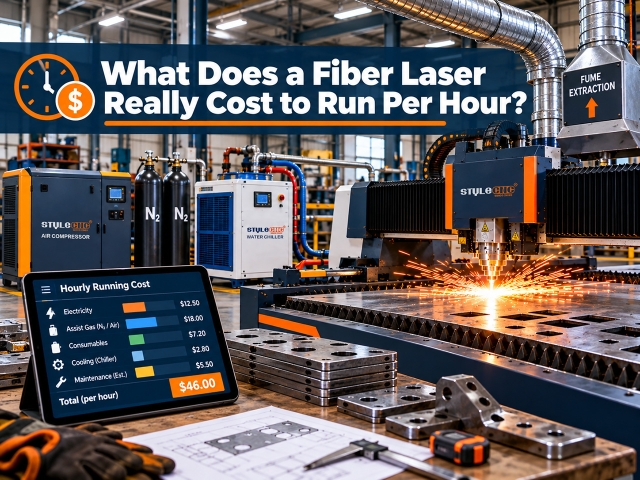
Fiber Laser Cutting Cost Per Hour: Real Operating Costs
2026-10-296 Min ReadBy Hattie

Fiber Laser Cutting Cost Per Hour: Real Operating Costs

A fiber laser cutting machine typically costs about $30 to $65 per beam-on hour to run, including an operator. Without labor, electricity, assist gas, consumables, and maintenance come to roughly $6 to $40 per hour depending on laser power and gas. Electricity is the smallest line, often $2 to $7 an hour; nitrogen and labor are the largest.

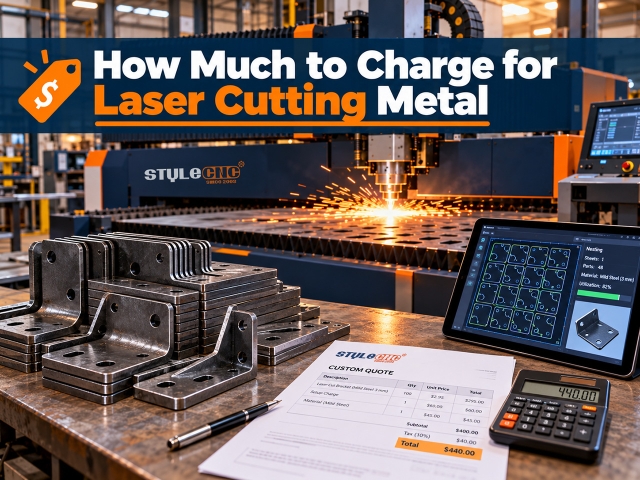
How Much to Charge for Laser Cutting Metal
2026-11-026 Min ReadBy Stephen

How Much to Charge for Laser Cutting Metal

To price laser cutting metal, charge: (machine time × your shop rate) + (material cost × markup) + setup fee, with a minimum order charge as the floor. Build the shop rate from your own costs rather than copying a competitor: a typical small fiber laser shop breaks even somewhere around $60 to $70 per machine hour and quotes $90 or more once margin is added.

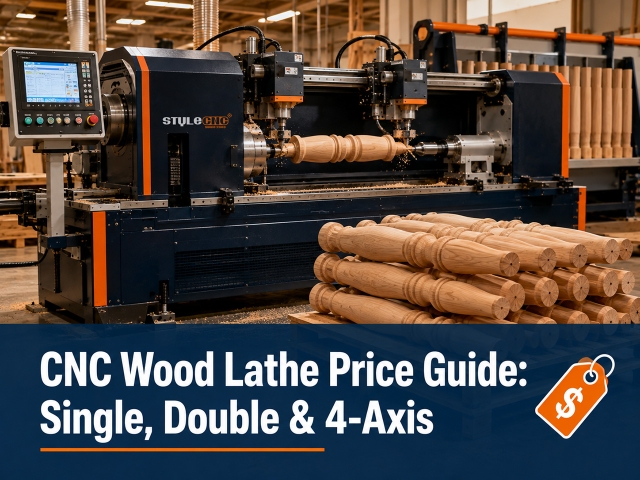
CNC Wood Lathe Prices: Single, Double & 4-Axis
2026-10-295 Min ReadBy Jimmy

CNC Wood Lathe Prices: Single, Double & 4-Axis

CNC wood lathe prices run from around $200 for mini hobby machines and $1,200 to $3,600 for midi lathes to $2,800 to $11,180 for automatic single and double axis production machines, with full-size 4-axis carving models reaching $13,000. The price follows axis count, bed capacity, and automation, and the right band follows your daily part count.

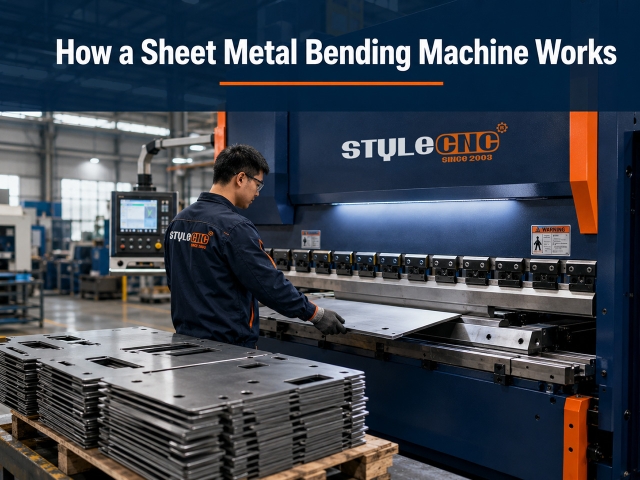
How a Sheet Metal Bending Machine Works
2026-10-295 Min ReadBy Hattie

How a Sheet Metal Bending Machine Works

A sheet metal bending machine forms flat metal into angled profiles by pressing a punch into a die or folding the sheet around a clamped edge. In production, bending is the second half of a cut-then-bend workflow: a laser or plasma machine cuts accurate flat blanks first, then the bending machine forms them into finished parts.

Table Leg Turning Machine Guide: Legs at Volume
2026-10-295 Min ReadBy Nicole

Table Leg Turning Machine Guide: Legs at Volume

A table leg turning machine is a CNC wood lathe configured for furniture leg production: it turns square hardwood blanks into matching tapered, profiled, or carved legs from a drawn outline, producing a leg every few minutes with every leg in the set identical. Plain tapers run on single axis machines, turned profiles on single or double axis, and fluted or rope twist legs need a 4-axis machine with a carving spindle.

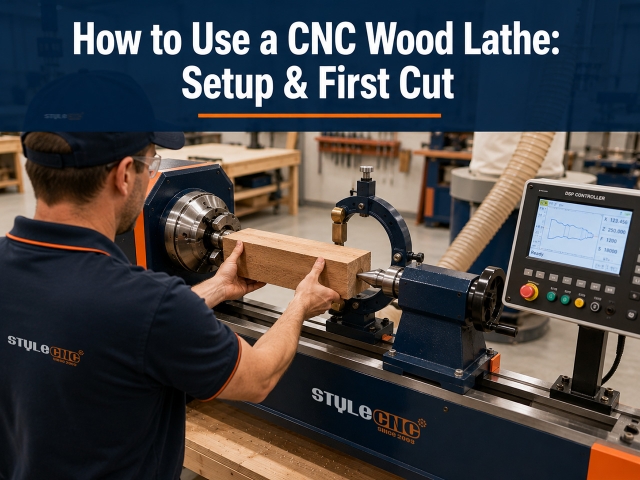
How to Use a CNC Wood Lathe: Setup & First Cut
2026-10-295 Min ReadBy Christina

How to Use a CNC Wood Lathe: Setup & First Cut

To use a CNC wood lathe: prepare a straight, square blank slightly longer than the part, clamp it between the drive chuck and tailstock center, position the steady rest under any slender section, load or draw the half-profile in the controller, run a roughing pass to round the blank, then a finishing pass along the programmed curve. Most problems trace back to blank quality, support, or blade condition rather than the program.

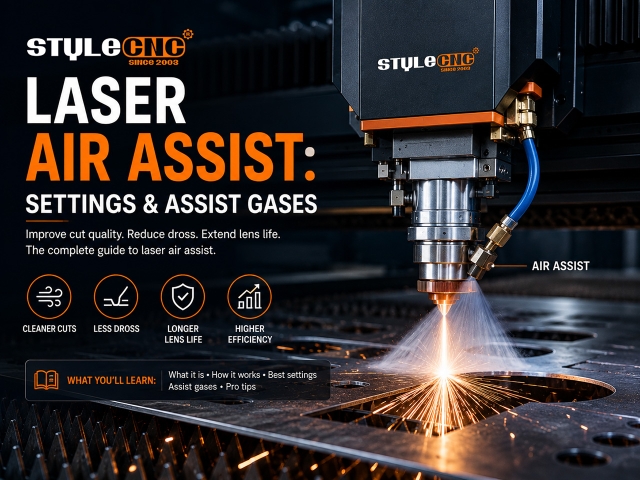
Laser Air Assist Guide: What It Is, Settings & Assist Gases
2026-09-075 Min ReadBy Carrie

Laser Air Assist Guide: What It Is, Settings & Assist Gases

Air assist pushes a gas stream through the laser nozzle onto the cut point. It clears smoke and molten debris, protects the lens, suppresses flames, and sharpens edge quality. Typical starting pressures: 0.2 to 1 bar for engraving, 1 to 3 bar for CO2 cutting, and 6 to 16 bar for fiber metal cutting gases.

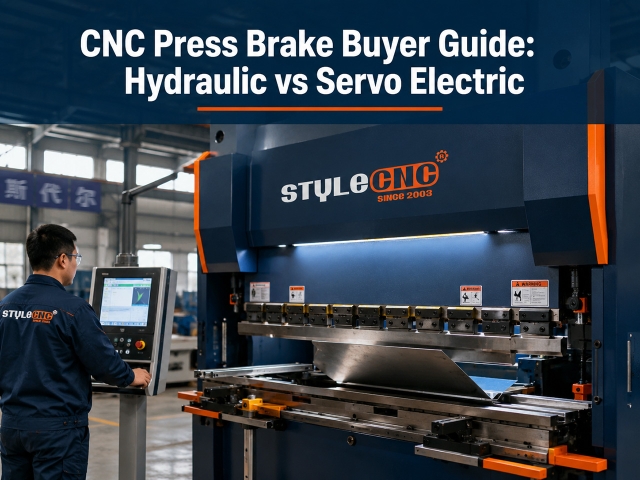
CNC Press Brake Guide: Hydraulic vs Servo Electric
2026-10-296 Min ReadBy Stephen

CNC Press Brake Guide: Hydraulic vs Servo Electric

A CNC press brake bends sheet metal by pressing an upper punch into a lower die under computer control. Hydraulic models suit thick plate and high tonnage, while servo electric models deliver higher accuracy and 50 to 70 percent lower energy use on thin sheet. Match the drive type to your material thickness, part tolerance, and daily bending volume.

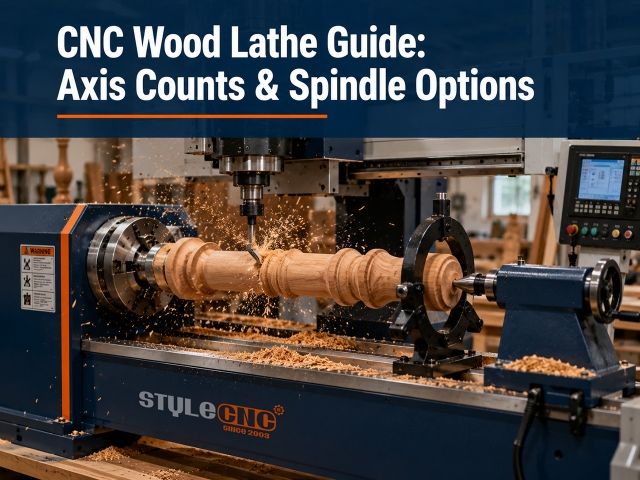
CNC Wood Lathe Guide: Axis Counts & Spindle Options
2026-10-296 Min ReadBy Jimmy

CNC Wood Lathe Guide: Axis Counts & Spindle Options

A CNC wood lathe turns square or round stock into finished profiles automatically, tracing a CAD drawing instead of a hand-held gouge or physical template. Axis count decides capability: single and double axis machines produce round spindles fast, while 4-axis machines with a carving spindle add flutes, spirals, and surface carving in the same cycle.

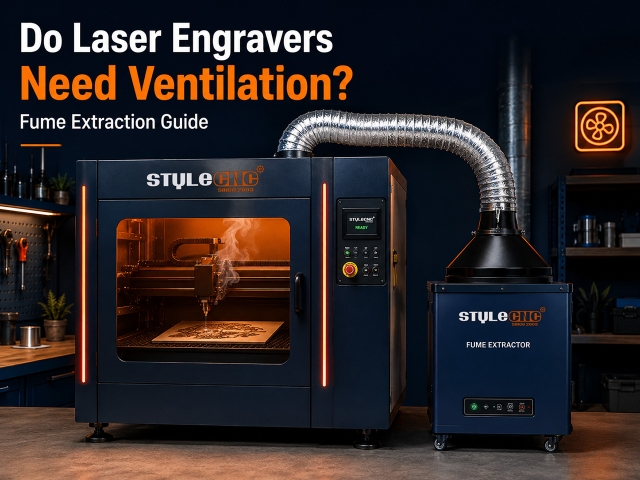
Do Laser Engravers Need Ventilation? Fume Extraction Guide
2026-08-265 Min ReadBy Evelyn

Do Laser Engravers Need Ventilation? Fume Extraction Guide

Yes. Every laser job releases fine particulate and gases, so ventilation is mandatory, not optional. Either duct the enclosure outdoors through a sealed run or recirculate through a filtered fume extractor with HEPA and activated carbon stages. Size the airflow from enclosure volume: roughly 150 CFM for desktops and 300 to 500 CFM for cabinet CO2 machines.

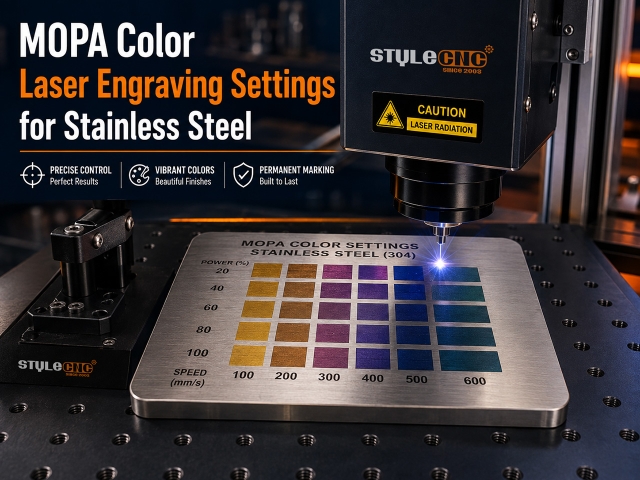
MOPA Color Laser Engraving Settings for Stainless Steel
2026-08-245 Min ReadBy Charles

MOPA Color Laser Engraving Settings for Stainless Steel

MOPA fiber lasers color stainless steel by growing a thin oxide film whose thickness bends light into a hue. On a 20W source, gold starts near 550 mm/s at 230 kHz with short pulses, while deep blue sits near 250 mm/s at 80 kHz with long pulses. Exact values are machine specific, so run a color test matrix first.

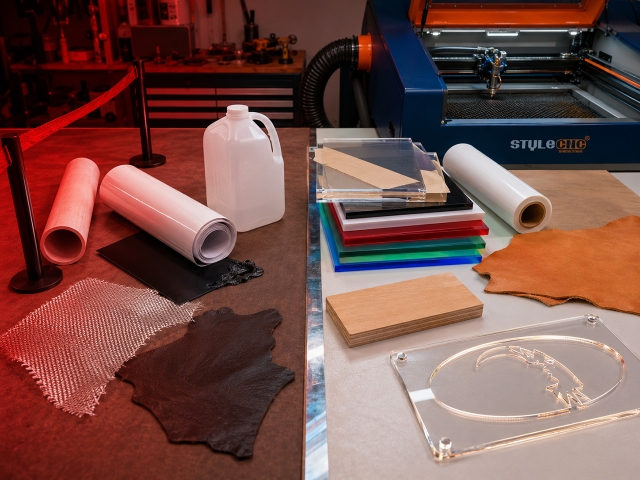
Materials You Should Never Laser Cut (Use These Instead)
2026-08-216 Min ReadBy Charles

Materials You Should Never Laser Cut (Use These Instead)

Never laser cut: PVC and vinyl (release chlorine gas that becomes hydrochloric acid), ABS (emits hydrogen cyanide), HDPE (catches fire and melts), thick polycarbonate (discolors and burns), PTFE/Teflon (toxic fluorine compounds), fiberglass and epoxy composites (toxic resin fumes), chrome-tanned leather (carcinogenic chromium fumes), and any unidentified plastic. Safe swaps exist for every one, led by cast acrylic and vegetable-tanned leather.

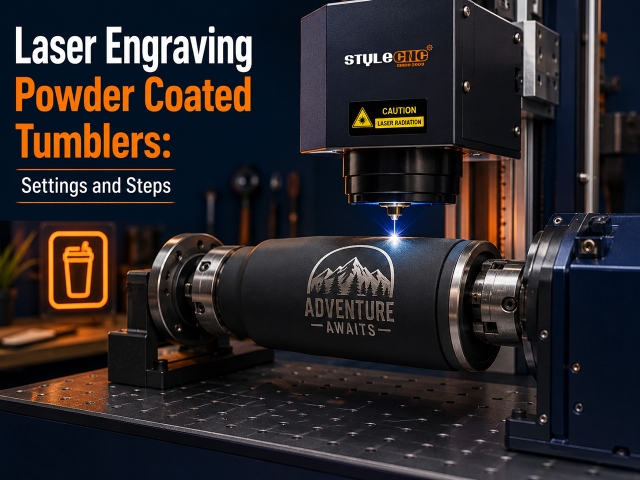
Laser Engraving Powder Coated Tumblers: Settings and Steps
2026-08-215 Min ReadBy Stephen

Laser Engraving Powder Coated Tumblers: Settings and Steps

Powder coated tumblers engrave by ablating the coating to reveal bright stainless underneath. Starting points: a 30W fiber runs 600 to 900 mm/s at 50 to 70 percent, a 60W CO2 runs 300 to 400 mm/s at 20 to 35 percent, always on a rotary axis with focus set at the apex of the curve.

Laser Annealing vs Engraving on Stainless Steel
2026-08-215 Min ReadBy Carrie

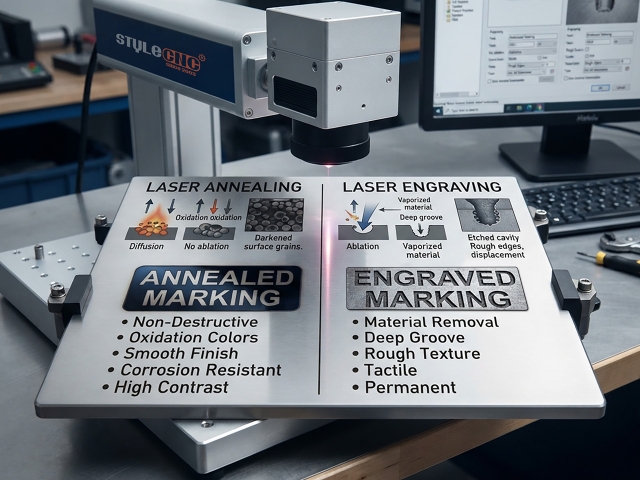
Laser Annealing vs Engraving on Stainless Steel

Laser annealing heats stainless steel until a smooth dark oxide forms, removing nothing and leaving corrosion resistance intact, while engraving cuts measurable depth and etching sits between. On a 30W fiber source, annealing starts near 150 mm/s at 50 to 70 percent, 40 to 60 kHz, with the beam defocused 1 to 3 mm.

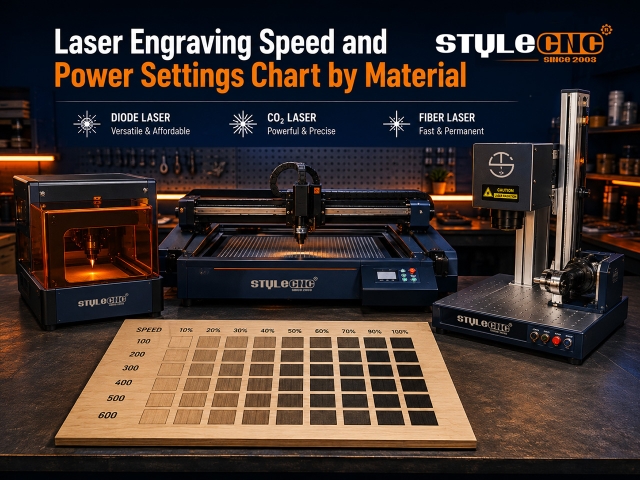
Laser Engraving Speed and Power Settings Chart by Material
2026-08-205 Min ReadBy Evelyn

Laser Engraving Speed and Power Settings Chart by Material

Laser engraving settings depend on laser type, rated power, and material. Typical starting points: diode lasers engrave wood at 3000 to 6000 mm/min and 40 to 70 percent power, CO2 lasers run 300 to 500 mm/s at 12 to 25 percent, and fiber lasers mark metal at 300 to 900 mm/s. Always confirm values with a small test grid before production.

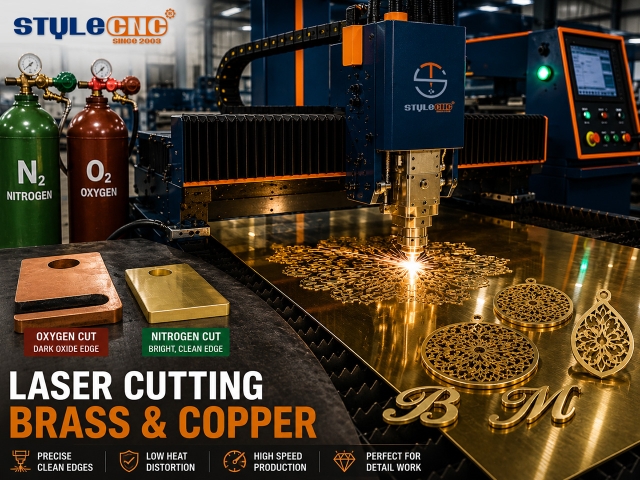
Can You Laser Cut Brass and Copper? Reflective Metals Guide
2026-08-185 Min ReadBy Jimmy

Can You Laser Cut Brass and Copper? Reflective Metals Guide

Brass and copper sit at the top of every list of metals that fight the laser. Solid copper reflects roughly 95 percent of a fiber laser's beam, brass is not far behind, and both once carried warnings in laser source manuals. Yet jewelry studios cut brass sheet daily, and busbar factories cut copper by the ton. This guide explains what changed, where the real risk lives, the minimum power that makes each metal practical, and the counterintuitive gas strategy that splits the two.

  • 1
  • 2
  • 3
  • >
  • Showing 221 Items On 12 Pages