Memorial industry stats every laser shop should know:
• Standard granite headstone inscriptions typically bill at $500–$2,000, with laser-etched portraits adding another $300–$3,000.
• Adding a death date to an existing headstone runs $175–$400 - a quick, repeatable job that keeps shop hours filled.
• Per-character pricing on granite ranges from $8 to $35 per character, depending on font, depth, and region.
• Hand etching by a skilled artisan costs $1,500–$4,000+ - laser etching delivers comparable visual quality at a fraction of the labor.
• Pet memorials, cremation urns, and small grave markers represent a growing segment with 60–75% gross margins on direct-to-consumer sales.
Why the Memorial Industry Is Overlooked by Laser Operators?
Most new laser engraving entrepreneurs gravitate toward visible, social-media-friendly niches wedding signs, custom drinkware, gamer accessories. Memorial work doesn't trend on Pinterest, and that's exactly why it stays profitable.
The funeral and memorial industry is fragmented, regional, and built on long-term professional relationships. A monument dealer who finds a reliable laser engraver doesn't switch every six months chasing a $20 discount. They send work for years.
There's also a quiet structural reason this niche stays open. Demand is non-cyclical: families don't postpone memorial purchases when the economy slows. End-of-life services represent one of the most recession-resistant categories in personal spending.
What this niche rewards
✓ Quiet competence over flashy marketing - funeral directors recommend on trust, not Instagram followers.
✓ Material expertise knowing how black granite responds differently from gray marble is a moat new operators take months to build.
✓ Reliability - a 48-hour turnaround on a date addition is more valuable to a monument dealer than a 10% lower price.
Materials and Product Types in the Memorial Space
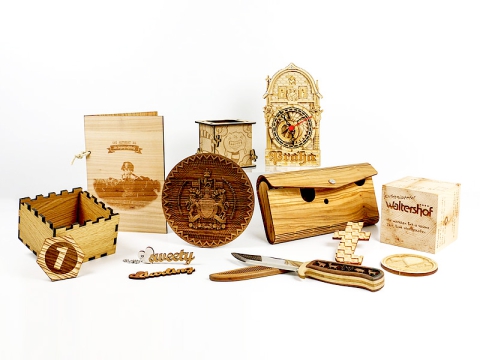
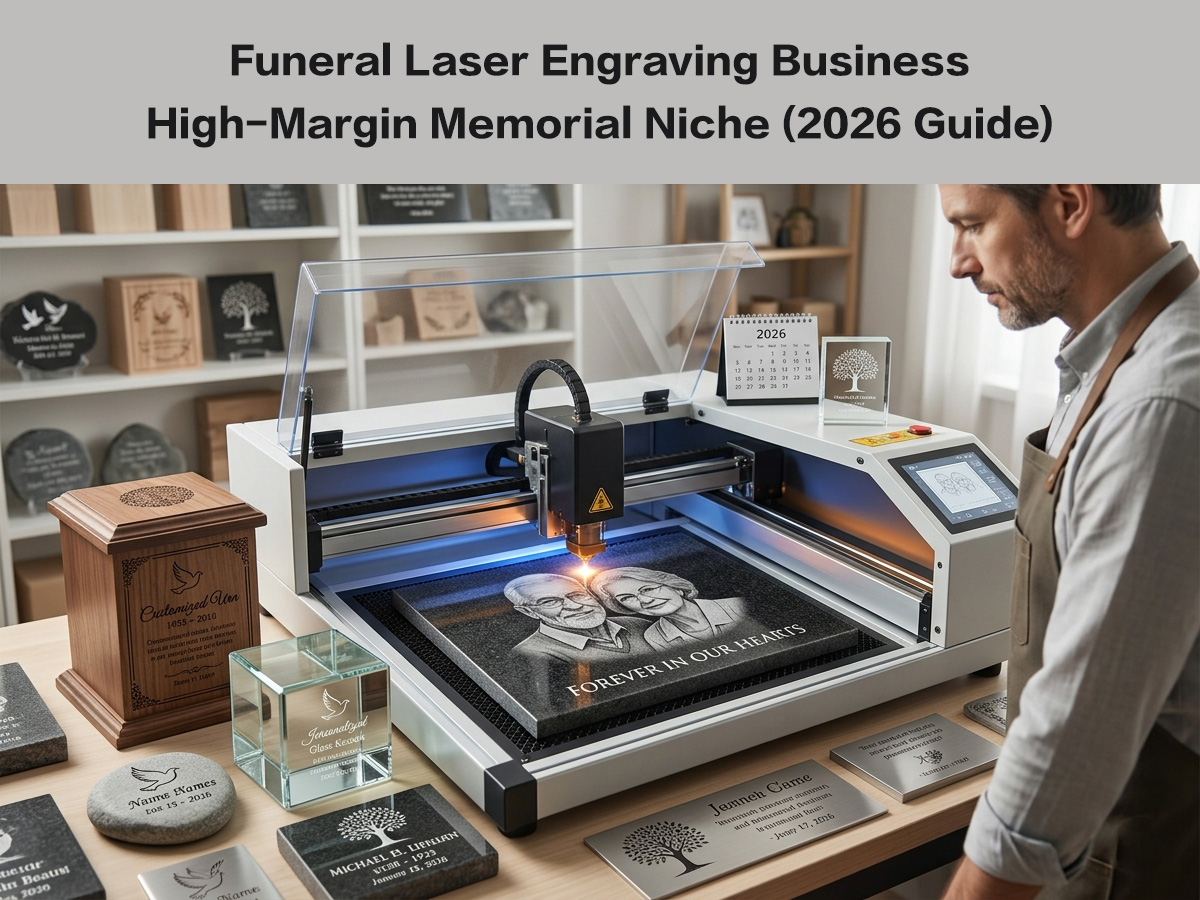
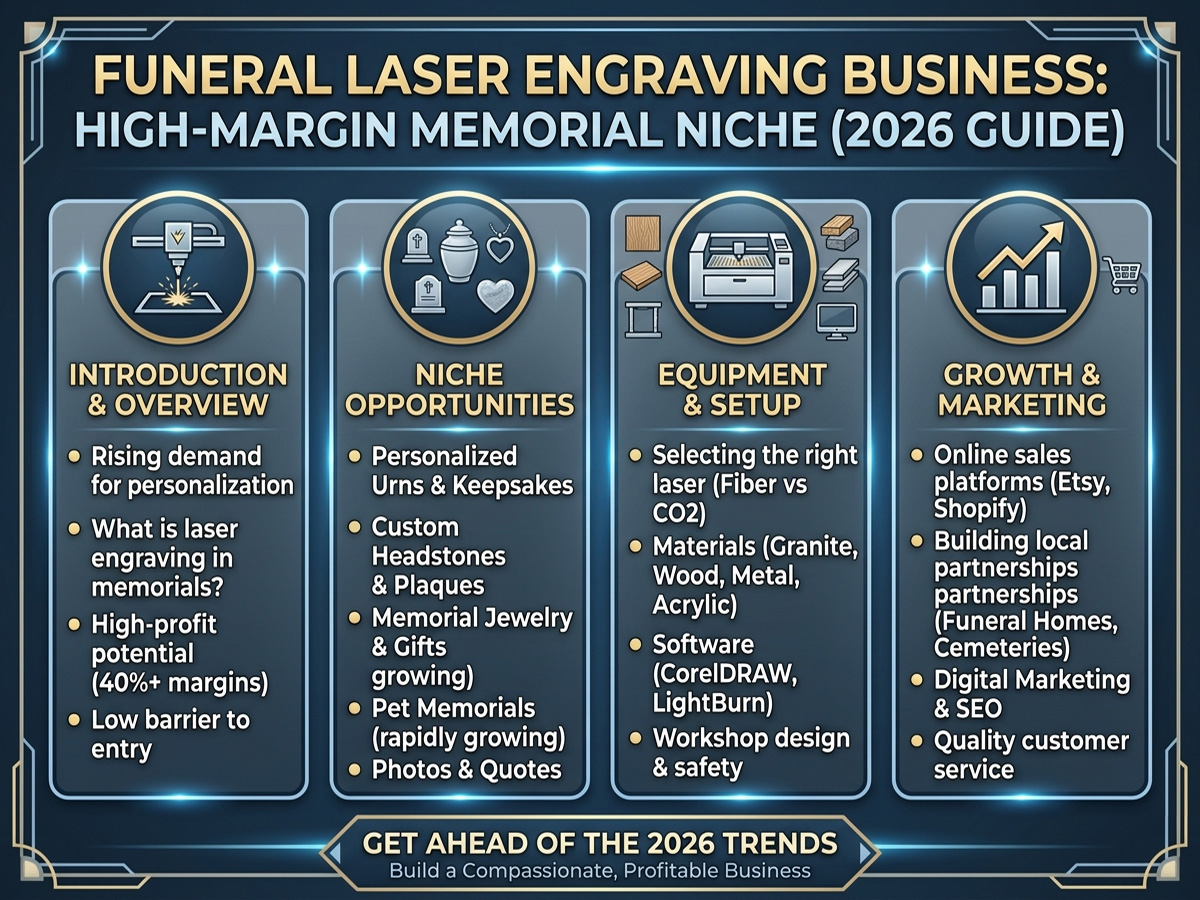
Memorial laser engraving spans more product categories than most operators realize. The category isn't just headstones, it includes plaques, urns, pet markers, garden stones, and personalized keepsake items, each with different price points and customer pipelines.
Where laser engraving works best
Dark, polished granite (jet black, academy black, India black) produces the highest-contrast laser portraits and is the gold standard for memorial photo etching. Lighter granites and marbles work well for lettering, line art, and decorative motifs.
Bronze plaques are typically cast rather than engraved at the manufacturing stage, but laser engraving still has a role for retrofit nameplates, replacement date inserts, and personalized add-ons.
For shops focused on stone work specifically, the dedicated stone laser engraving machine application page shows the surface-finish quality realistic for portraits and decorative panels the visual benchmark customers will compare your work against.
Memorial product comparison: pricing and opportunity
| Product | Avg. Price | Material Cost | Gross Margin | Measurement (volume potential) |
|---|---|---|---|---|
| Full headstone inscription | $500–$2,000 | Stone supplied | 60–75% | Steady — B2B with monument dealers |
| Laser-etched memorial portrait | $300–$3,000 | $0 (add-on) | 70–85% | Highest margin per hour |
| Date addition (existing stone) | $175–$400 | Minimal | 65–80% | Frequent, fast-turn jobs |
| Cremation urns (engraved) | $80–$350 | $25–$120 | 55–70% | Strong DTC potential |
| Pet memorial markers | $45–$180 | $10–$30 | 65–80% | Growing year over year |
| Garden / keepsake stones | $50–$150 | $8–$25 | 70–85% | Etsy and gift-driven |
Figures reflect typical North American market rates for established operators; new entrants generally start at the lower end of each range.
Equipment Requirements: What Memorial Work Demands?
Memorial laser engraving has more demanding equipment requirements than most general engraving niches. The materials are heavier, the surfaces are less forgiving, and the customer expects results that will last decades, not months.
Three technical capabilities that matter most
• Sufficient power for stone. CO2 lasers in the 80W–150W range handle granite and marble cleanly; lower-wattage hobby lasers struggle with depth consistency on hard stone.
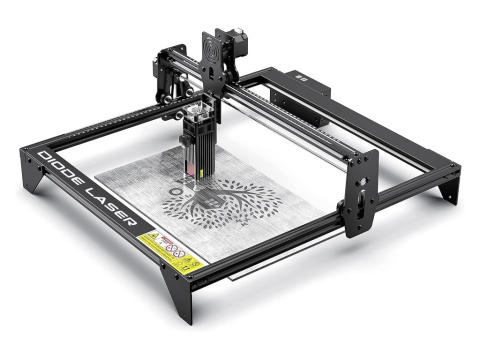
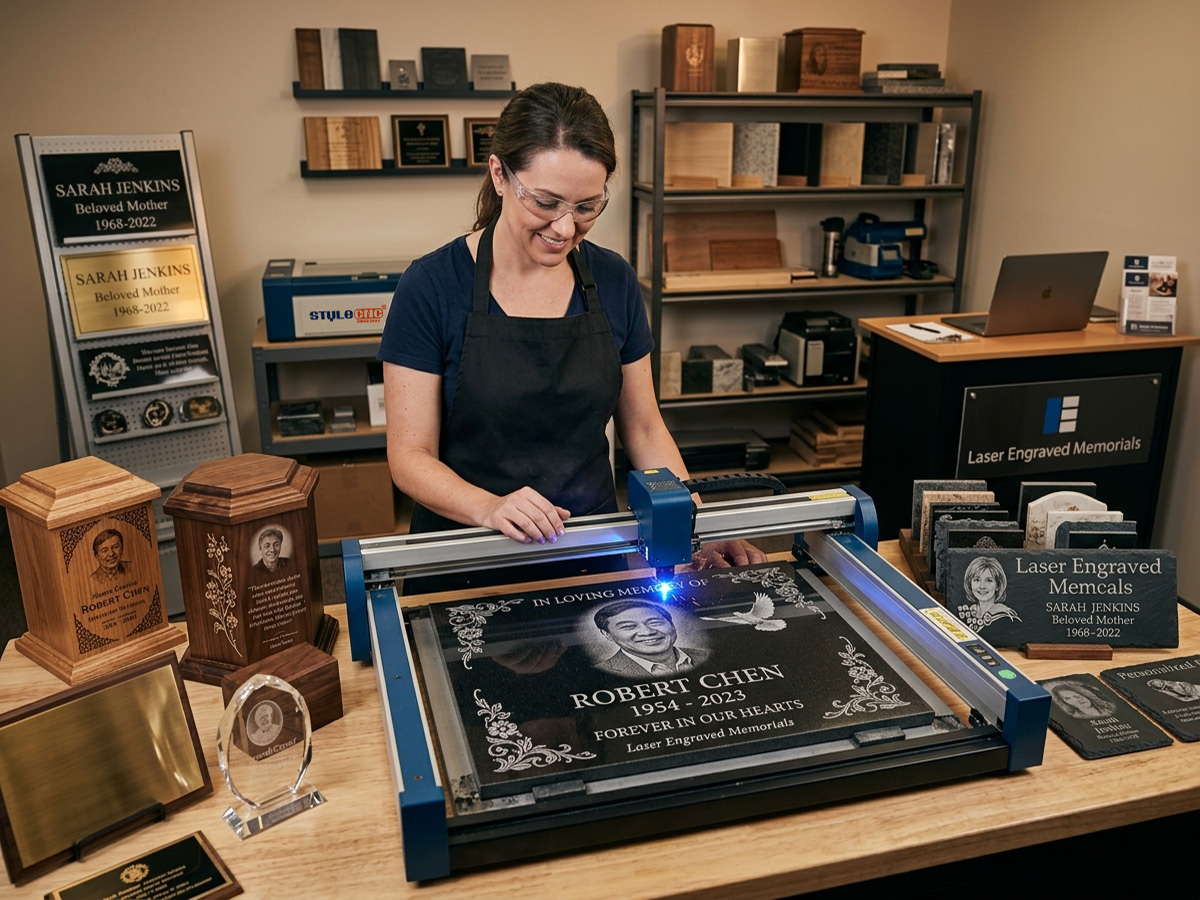
• Large bed or open-architecture design. Full-size memorial stones can weigh several hundred pounds. A traditional sealed cabinet won't fit; open-frame and gantry-style machines are standard for serious memorial work.
• Photo-etching software with grayscale dithering. Memorial portraits depend on translating photographs into laser-burnable dot patterns. The software pipeline matters as much as the laser itself.
There's also a common point of confusion worth resolving early: laser engraving and laser marking are not the same process. The comparison of laser engraving vs. laser marking machines lays out the technical differences - engraving removes material to create depth, while marking alters the surface chemically. Memorial work almost always requires the former.
Operators evaluating equipment specifically for stone work will find the marble, granite, and stone laser engraving machine product page useful for matching bed size and laser power to expected memorial dimensions, especially for upright headstones in the 24-by-36-inch to 48-by-60-inch range.
Building the Customer Pipeline
Unlike most laser businesses, memorial work isn't built primarily on consumer marketing. The most reliable revenue comes from B2B referral relationships with the small number of professionals who already serve grieving families.
Three customer pipelines to develop
| Pipeline | How It Works | Order Frequency |
|---|---|---|
| Monument dealers | Local stone retailers subcontract laser etching when they don't have in-house equipment. Build samples, walk in, leave a portfolio. | Weekly to monthly |
| Funeral homes & cremation services | Funeral directors recommend memorial vendors. They value reliability and discretion above all else. | Bi-weekly |
| Direct-to-consumer (DTC) | Etsy, Shopify, and local search drive sales of urns, pet markers, garden stones. Typically smaller orders but higher per-unit margin. | Daily |
DTC sales of personalized memorial products are growing alongside cremation rates. The same operational principles from the guide to making money with a portable fiber laser engraver apply directly to small memorial keepsakes pet tags, urn nameplates, jewelry pendants, where mobility lets a single operator serve multiple funeral homes and pet cemeteries from one base.
How to approach a monument dealer for the first time
✓ Bring three physical samples in different stone colors, with different style treatments (lettering only, portrait only, combined).
✓ Have a single-page rate card showing your per-character pricing, portrait pricing, and turnaround windows.
✓ Offer to do their first job at break-even cost, once they see the quality and turnaround, the relationship typically continues at full rates.
✓ Ask what their current pain points are with their existing engraver. Most will tell you, and most pain points are about communication, not pricing.
Common Mistakes Operators Make in Memorial Work
✗ Quoting on photographs without seeing the original print or high-resolution file low-resolution sources produce muddy etchings that families reject.
✗ Treating memorial work like a craft-fair side hustle, funeral directors will spot the unprofessional approach immediately and won't refer.
✗ Underpricing portrait etching to win volume. Memorial families are not price-shopping the way wedding-sign customers do.
✗ Ignoring stone preparation, surface cleaning, leveling, and protective masking determines whether the engraving holds for decades.
✗ Promising next-day turnaround on every job. Memorial work has its own emotional rhythm; reliability matters more than raw speed.
✗ Overlooking the cremation urn category, it now represents a faster-growing segment than traditional headstones in many markets.
Conversational Questions Operators Actually Ask
"Is there enough volume in my area to support a memorial-focused laser business?"
Most metro areas of 250,000+ people support at least 3–6 monument dealers and 15–40 funeral homes. Capturing the work from even 2–3 of those relationships typically produces $4,000–$10,000 per month in steady B2B revenue.
"Do I need to specialize, or can I add memorial work to an existing laser business?"
You can absolutely add it on, provided your equipment can handle stone. Many operators run memorial work as a secondary B2B revenue stream alongside DTC sales of signs, drinkware, and gifts - the two pipelines balance each other through seasonal swings.
"How do I learn the technical side of stone engraving?"
Practice on small black granite tiles ($15–$25 each) before quoting any paid work. The memorial photo laser engraving on granite and marble video shows the parameters and pacing expected for portrait-quality results.
"Is the memorial industry sensitive about marketing?"
Yes, and rightly so. Aggressive consumer-style advertising backfires. Quiet professionalism, sample portfolios, and direct relationships with industry professionals work; loud sales tactics do not.
FAQ
What's the realistic startup cost to enter memorial laser engraving?
A capable stone-focused setup runs $8,000–$25,000 for the laser machine itself, plus $1,500–$3,000 for software, sample materials, and basic lifting equipment. Many operators recover the investment within 9–14 months once they have two or three steady B2B relationships in place.
How long does a typical memorial portrait take to engrave?
A 9-by-12-inch black granite portrait at photo-quality resolution typically takes 60–120 minutes of laser time, plus 30–45 minutes of file preparation and surface cleaning. At a $400–$800 selling price, that's a strong hourly return relative to most laser applications.
Can I work on existing headstones already installed in cemeteries?
Yes, but it requires a portable setup and cooperation with the cemetery. On-site work for date additions is common and typically bills $175–$400. Most cemeteries charge a $50–$200 permit or supervision fee, which you build into your customer quote.
What's the most profitable single product type in memorial laser engraving?
Memorial portrait etching on dark granite consistently delivers the highest margin per shop hour. The material is supplied by the customer or monument dealer, the work is purely your skill and laser time, and pricing of $300–$3,000 per portrait reflects perceived value, not material cost.
How do I price a memorial job for a customer who's grieving?
Use a published rate card so pricing feels structural, not negotiated. Per-character pricing ($8–$35) for lettering, flat-rate pricing for portraits and standard motifs, and a clearly stated setup fee. Families appreciate the dignity of a transparent quote over a custom-feeling one.
The Quiet Opportunity
Memorial laser engraving doesn't trend, and that's its strength. It's a service industry built on craftsmanship, reliability, and discretion, three things that compound into long, durable client relationships once you've earned them.
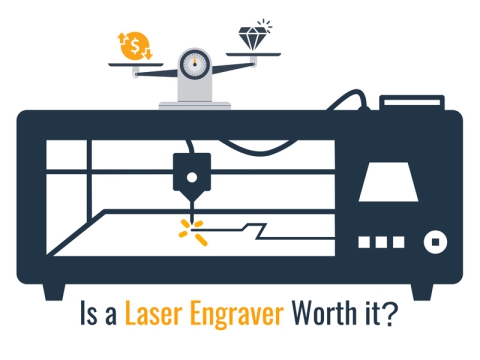
For laser operators evaluating where to focus next, the math is unusual: a niche where competition is genuinely scarce, demand is structurally stable, margins routinely exceed 60%, and a single relationship with a monument dealer can replace months of marketing spend. The relevant cost analysis of laser engraver costs, benefits, and profit potential makes that breakdown more concrete by laser type and shop scale.
STYLECNC has supported stone-engraving operators, monument dealers, and memorial-focused small businesses across 180+ countries since 2003. Whether the goal is a single-machine local shop or a multi-unit production floor serving regional funeral home networks, the equipment quietly does the work that families will see for generations.