Fiber Laser Cutter Machine for Trailer Sheet Metal & Tubing
This is a video of Mr. Mark from Utah, USA, conducting on-site training at STYLECNC on CNC laser sheet metal & pipe cutting machine and fiber laser tube cutter.
Here are our collection of popular aluminum milling, cutting, engraving, marking projects for laser and CNC machines to make custom molds, tubes, crafts, signs.

Aluminum cutting projects are made by STM2040-R1 CNC router machine with 6KW spindle, and the aluminum cutting edge is very smooth.

Small 5 axis CNC machine is widely used in aluminum mould making such as impeller making, golf mould making, and human mould making.

Review the high quality aluminium carving, cutting and milling projects by 4x8 CNC router machine, you'll get an idea to realize CNC aluminum machining plans.

Review the CNC aluminum cutting samples & projects by ATC CNC router with 9KW air-cooling spindle. You will understand what a CNC metal cutting machine can do.

Find free iPhone logo and IMEI laser engraving projects, which will be a good reference to buy a suitable iPhone laser engraving machine.

You will find all kinds of metal shoe mold making projects with CNC milling machine equipped with automatic tool changer for shoe mold making plans and ideas.

Find free laptop engraving projects by MOPA fiber laser marking machine from STYLECNC, which will be a good idea to buy a fiber laser etching system.

Explore STYLECNC's picks of the popular CNC milling aluminum mold projects, from simple, one-off designs to complex molds requiring intricate surface finishes.
The projects on this page come from quite different machines, and the choice follows the shape of the part rather than the material. Flat profiles cut from sheet belong on a sheet metal fiber laser, which cuts outlines quickly with no tool to wear out. Thick letters, plate parts, and anything with pockets or steps belong on a router or mill, since a spinning cutter removes depth cheaply while a laser only cuts through. Mould work and contoured surfaces need milling, and three or five axes depending on how far the shape wraps around. Marking a logo, a serial number, or an IMEI code is a different process again, adding no depth at all. And aluminum composite panel is not solid aluminum: it is two thin skins over a plastic core, usually V-grooved on an ACP cutting router so the sheet folds into a box rather than being cut into pieces.
Aluminum machines easily right up to the moment it does not, and the culprit is almost always chips. The metal is soft and sticky, so chips that stay in the cut get re-cut, heat up, and weld themselves to the cutting edge, after which the finish tears and the bit snaps. Everything about aluminum practice follows from that one problem. Use a single-flute cutter so each chip has room to escape, take shallow passes rather than deep ones, keep the feed moving so the tool cuts instead of rubbing, and blow the chips away with an air blast or a light mist of lubricant. Hold-down matters just as much, because a vacuum table grips porous board far better than a smooth metal sheet, so clamps, tabs, or a fixture are the safe answer. An aluminum router with a tapping head is built around these needs from the start.
Most aluminum parts are visible parts, so the finish is the product. Leave the protective film on the sheet while cutting and routing, since it costs nothing and prevents the scratches that chips cause as they skate across the surface, and peel it only at the end. Anodised stock deserves more care again, because the coloured layer is thin and any scuff is permanent. That same layer is what makes marking work so well: a MOPA fiber marker removes a precise amount of anodising to leave crisp white text, which is exactly how laptop lids and phone housings in these projects are marked. Deburr edges before handling, keep finished parts off bare steel benches, and remember that aluminum picks up fingerprints and swarf marks far more readily than steel.
Matching method to the part:
| Aluminum Job | Best Method | Why |
|---|---|---|
| Flat profiles from sheet | Fiber laser | Fast, no tool wear, clean edges |
| Thick letters and plate | Router or mill | Depth no laser matches cheaply |
| Moulds and 3D shapes | Milling or 5 axis | Contoured surfaces, not outlines |
| Logos, serials, IMEI | Fiber marker | Permanent, no depth needed |
| Composite panel (ACP) | Router with V-groove | Grooved to fold, not cut through |
Aluminum machining checklist:
✔ Pick the method by part geometry, not habit.
✔ Leave the protective film on while cutting.
✔ Take shallow passes with a single-flute cutter.
✔ Blow or mist the chips clear of the cut.
✔ Clamp aluminum down, never trust vacuum alone.
Yes. Modern fiber sources include back-reflection protection and cut aluminum routinely, though it needs more power than steel of the same thickness and is usually cut with nitrogen for a clean, oxide-free edge.
Routers and mills handle plate as thick as the cutter can reach, often tens of millimetres in several passes. Fiber lasers manage sheet and light plate depending on power, and waterjet suits very thick or heat-sensitive work.
The cut is too hot and too crowded. Reduce the depth of each pass, keep the feed rate up so the tool shears rather than rubs, switch to fewer flutes, and add air or mist so chips leave instead of being cut twice.
Rarely on a router. An air blast clears chips well, and a fine mist of cutting lubricant handles anything heavier. Flood coolant belongs on enclosed milling machines where the mess can be contained and recirculated.
Treat vacuum as assistance rather than the whole answer. A smooth metal sheet seals unevenly, so add clamps at the edges, leave tabs connecting parts to the surrounding sheet, or build a simple fixture for repeat work.
No. ACP is two thin aluminum skins bonded to a plastic core, so it is usually V-grooved to a fold line rather than cut through, and it needs far less power than solid stock of the same thickness.
Anodised gives the strongest contrast, since removing the coloured layer exposes bright metal beneath. Bare aluminum can be marked dark with a pulsed source, and finishes vary with alloy, so test on offcuts before running a batch.

This is a video of Mr. Mark from Utah, USA, conducting on-site training at STYLECNC on CNC laser sheet metal & pipe cutting machine and fiber laser tube cutter.
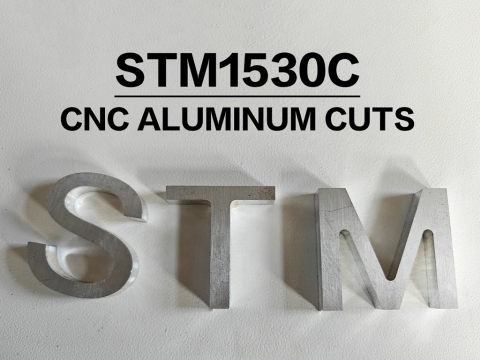
This video shows how STYLECNC's ATC CNC router with automatic tool changer spindle kit cuts aluminum letters (up to 15mm) at high speed with high precision.
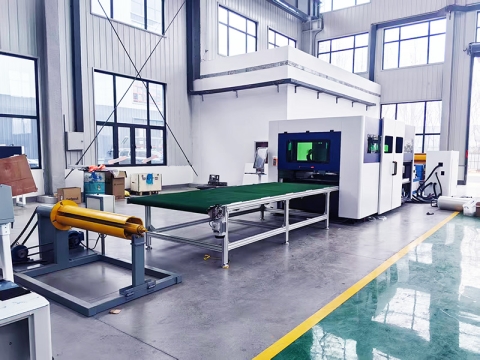
This coil-fed laser blanking system allows metal manufacturers to continuously cut parts from coil metal with auto feeder, enabling flexible metal fabrication.