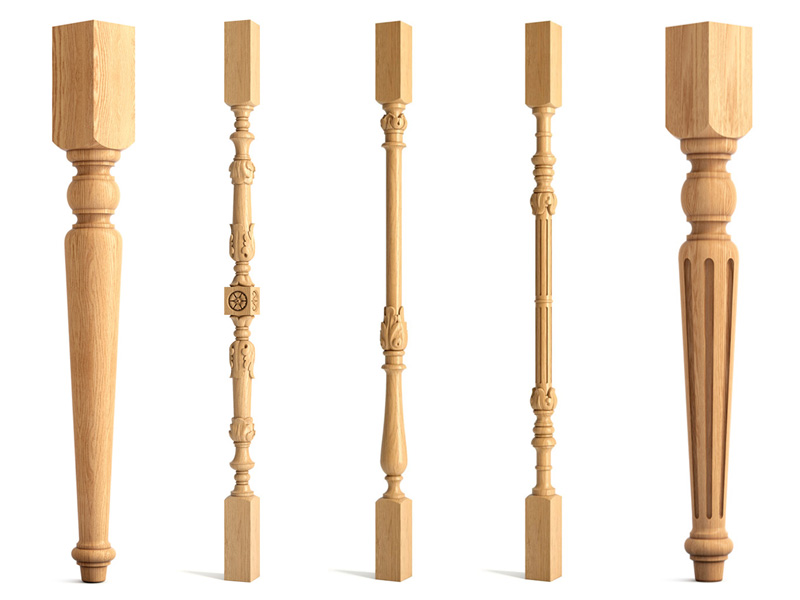
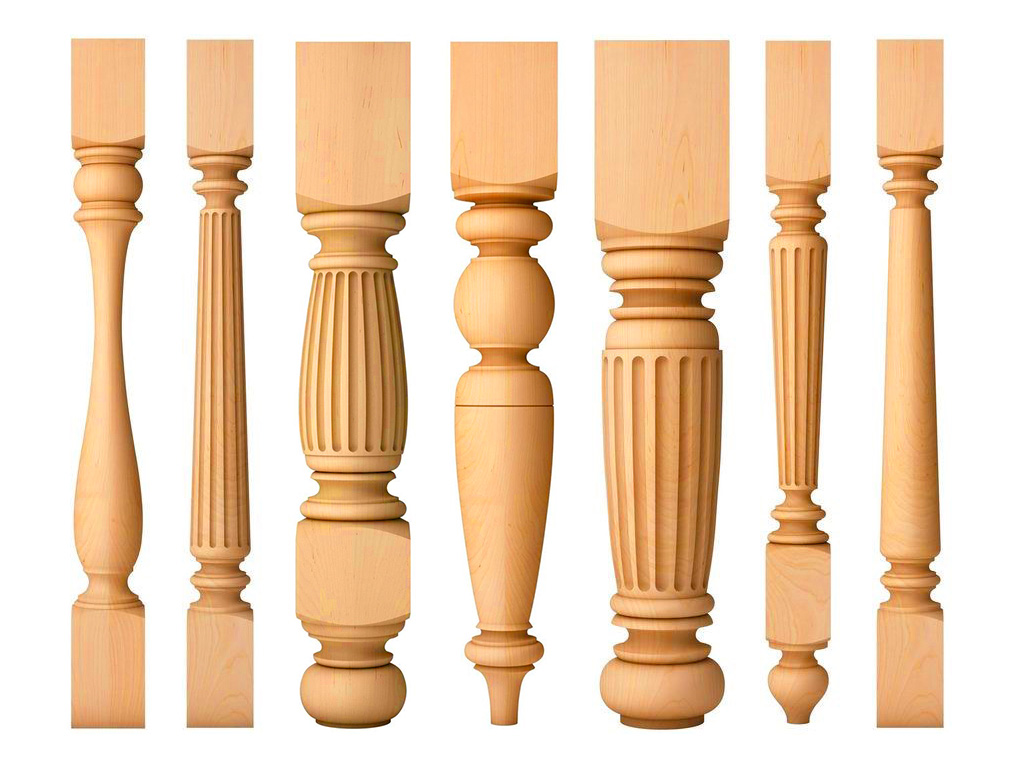
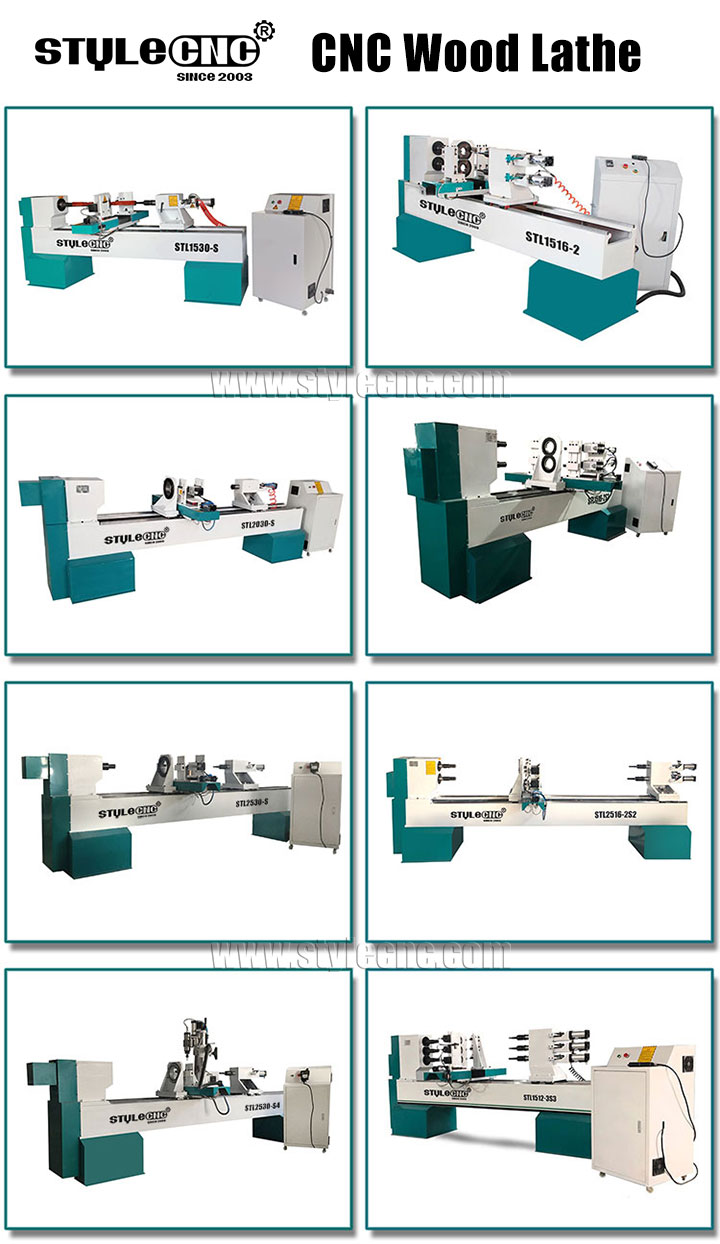
Are you still looking forward to how to make personalized table legs? Are you struggling with what tools to choose for making stair railings? A wood lathe makes it easy to make modern furniture legs, stair spindles, and newel posts. A CNC lathe even automates the manufacturing of wooden table legs and stair balusters.
What is a CNC Wood Lathe?
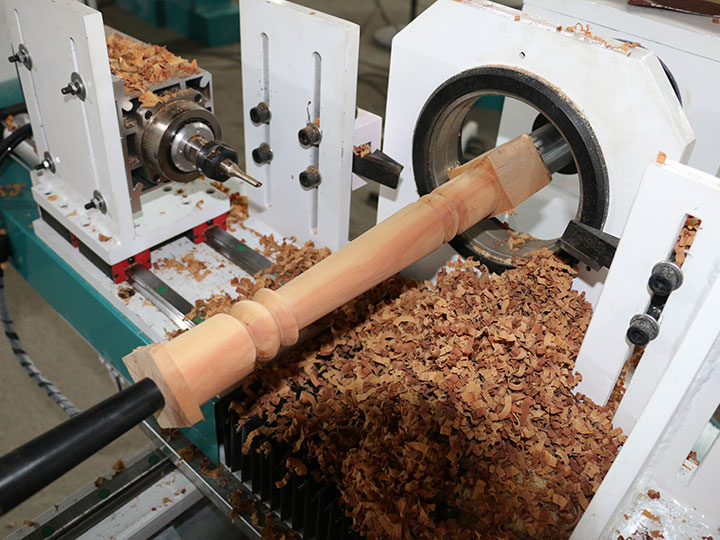
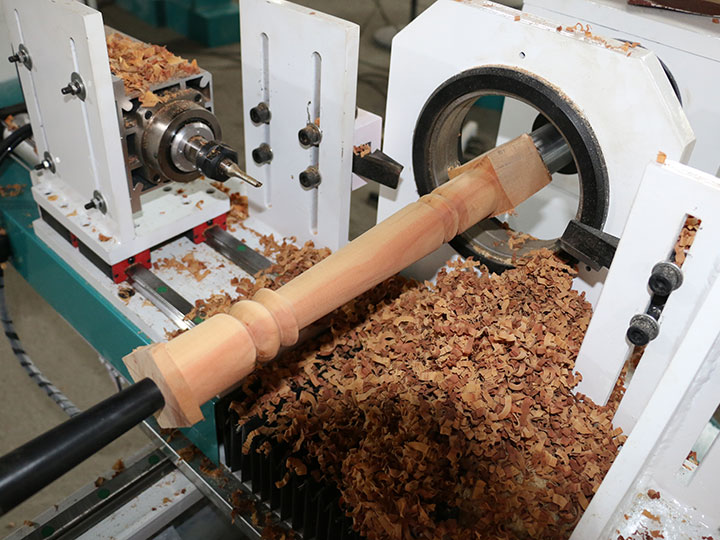
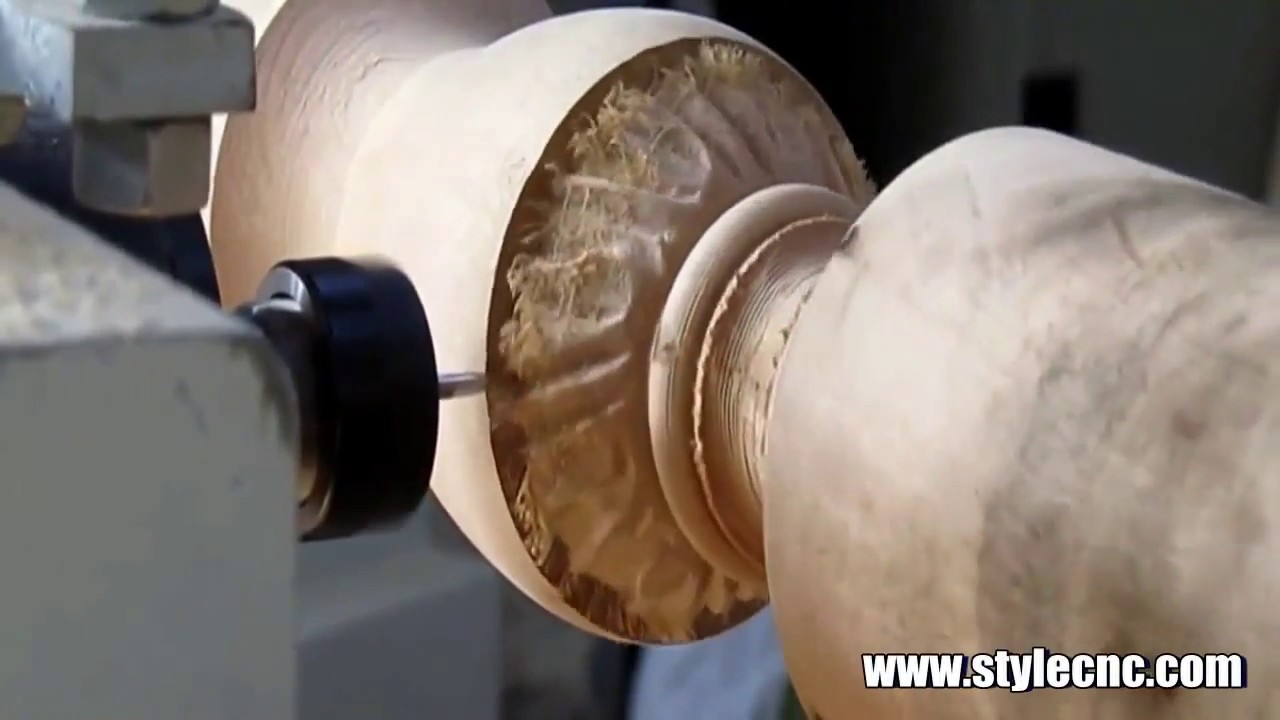
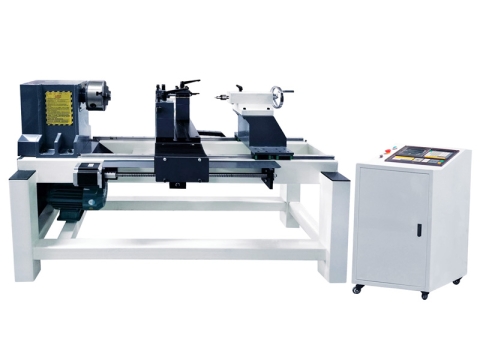
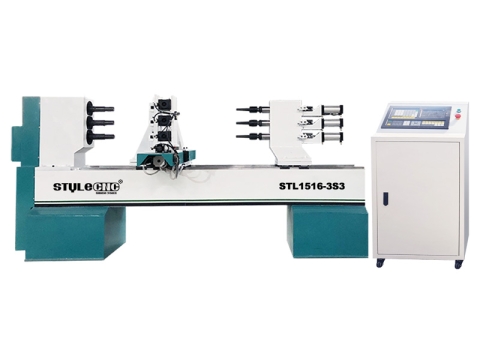
A CNC wood lathe is an automatic turning machine capable of shaping various styles of timber furniture legs such as table legs, sofa legs and feet and chair legs, as well as wood balusters, stair spindles, stair railing posts, newel posts, pillars and banisters made of hardwoods such as ash, hemlock, oak, maple, pine, mahogany, walnut, and cherry. It's user-friendly and easy to use for beginners and professionals. Just need to design a template, and you can start turning your lumber of choice with an automatic lathe, you can get a fine turning of table leg or stair baluster in minutes.
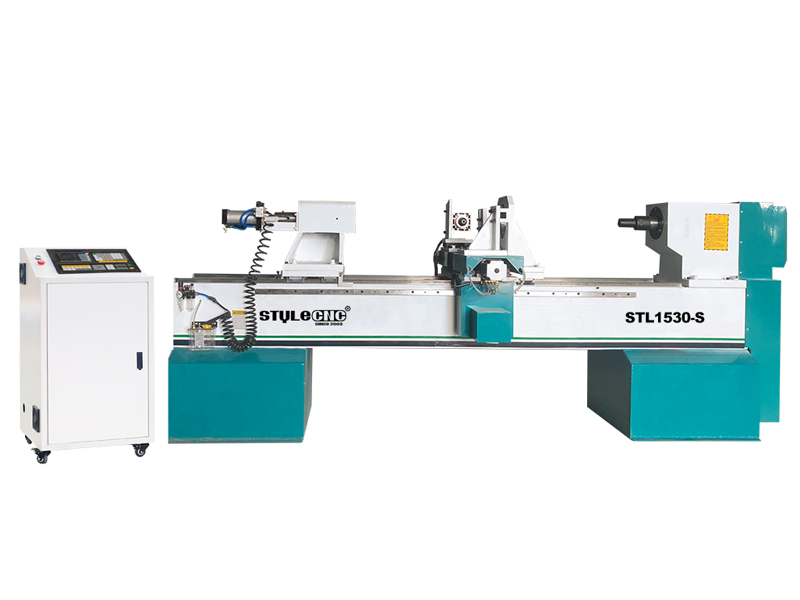
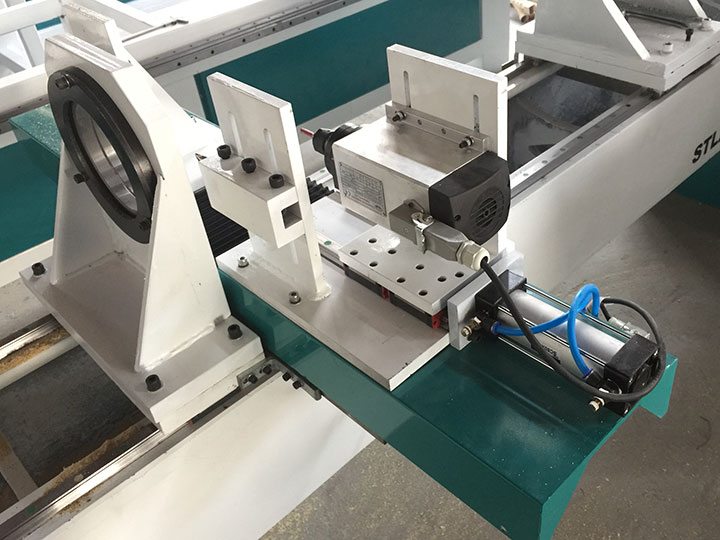
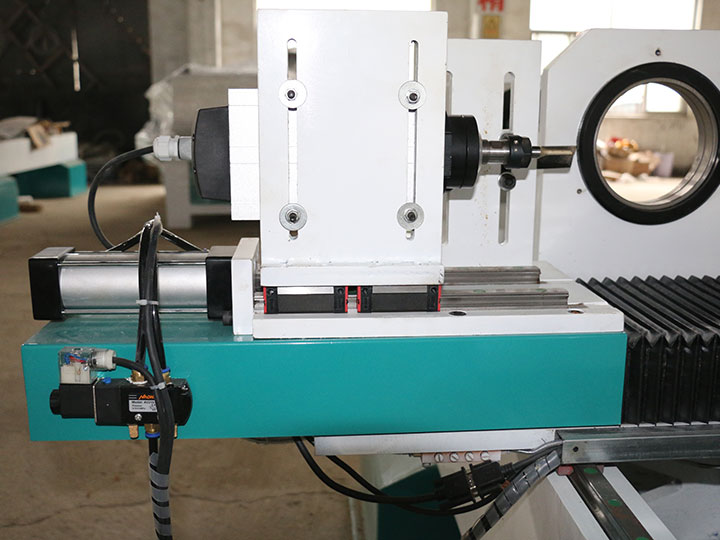
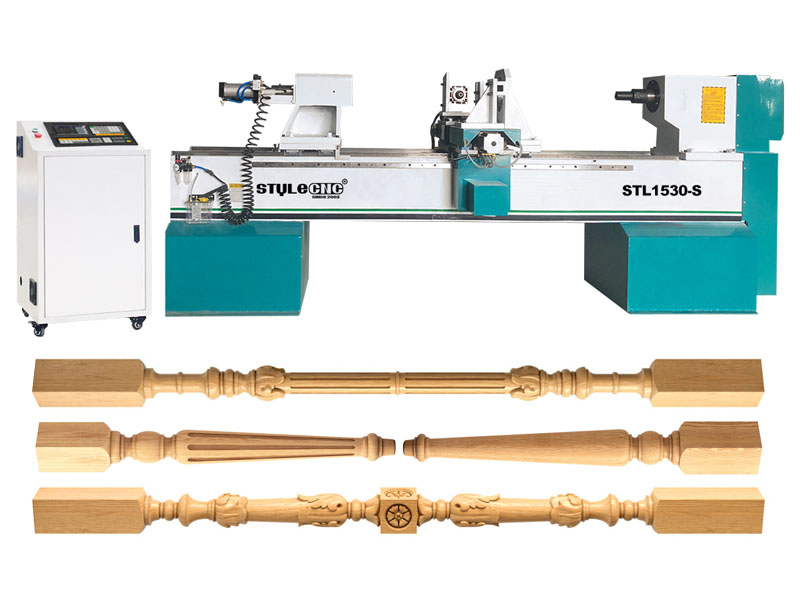
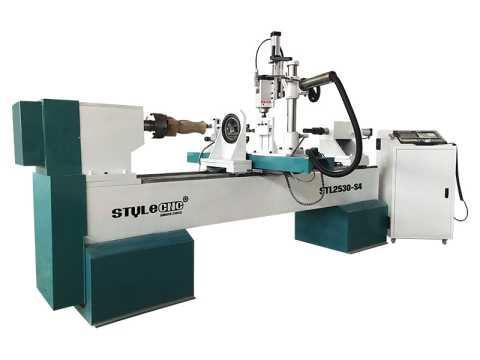
In addition, the STL1530-S automatic wood lathe comes with an additional feature of milling & carving wooden balusters and furniture legs with decorative elements, which can be personalized with traditional and contemporary patterns to fit your home decor style.
Applications of Industrial CNC Lathe for Wood Stair Spindles and Table Legs
The STL1530-S industrial CNC wood lathe is ideal for crafting high-quality, detailed wood products, particularly in furniture and staircase manufacturing. Its precision and versatility make it a go-to machine for turning wooden components like table legs, spindles, and decorative posts.
For furniture production, the CNC lathe creates various types of legs—dining table legs, end table legs, chair legs, and bar stool legs. This ability allows furniture makers to achieve consistent, accurate designs for any style or aesthetic. Beyond table and chair legs, the machine can also shape sofa feet, bun feet, and complex chair stretchers.
In staircase production, the CNC lathe efficiently turns staircase columns, stair spindles, balusters, and newel posts. These elements are essential for staircases in both homes and commercial buildings, where uniformity and detailed craftsmanship are required. The STL1530-S can also produce stair railing posts, stair pillars, and banisters, enabling seamless integration across different staircase components.
Additionally, this lathe handles more unique designs like Roman columns, baseball bats, and custom items like bed rails, lamp posts, and pool cues. Its versatility extends to smaller projects too, such as timber bowls, vases, pens, cups, and holders, making it perfect for custom woodwork and decorative items.
Technical Parameters of Industrial CNC Wood Lathe for Table Legs and Stair Balusters
| Brand | STYLECNC |
| Model | STL1530-S |
| Max turning length | 1500mm |
| Max turning diameter | 300mm |
| Axis and Blades | single axis, 2 blades |
| Maximum feed rate | 2000mm/min |
| Minimum setting unit | 0.1mm |
| Spindle motor power | 4KW |
| Power supply | AC380V/50hZ (AC220V for option) |
| Overall dimensions | 3290*1270*1540mm |
| Weight | 1600kg |
| Price Range | $7,180.00 - $7,680.00 |
Features of Industrial CNC Lathe Machine for Wooden Table Legs and Newel Posts
One thimble, one chuck, and one backlash, it can be upgraded with two chucks and two backlash so that it can complete the workpiece simultaneously.
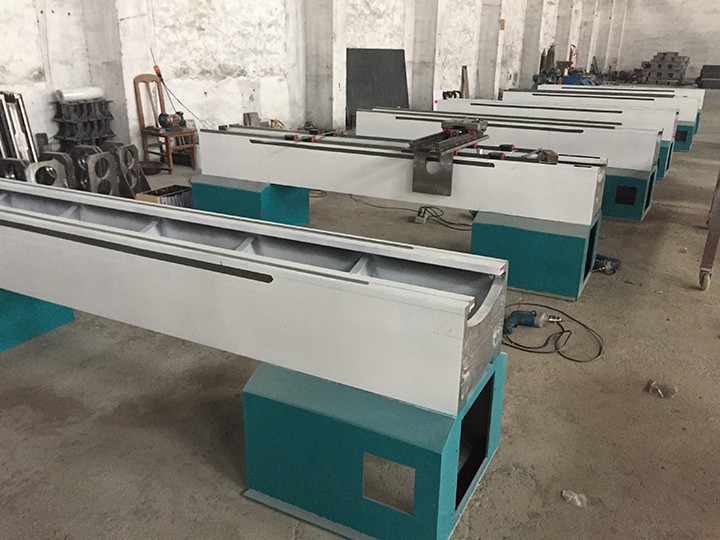
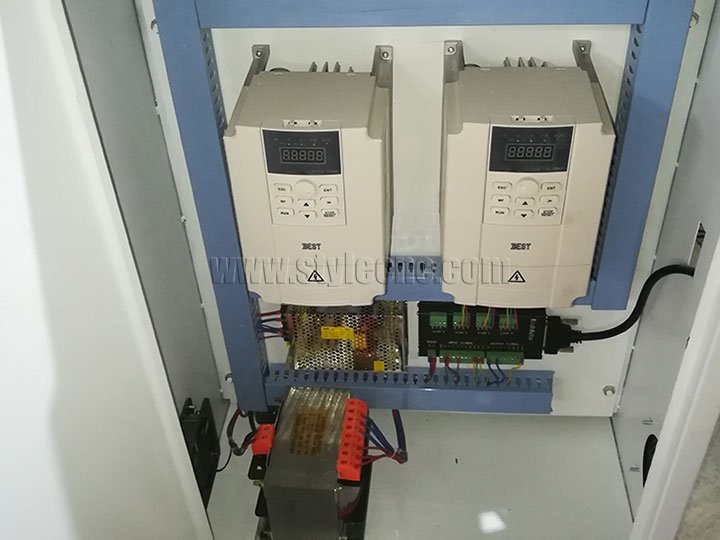
Heavy-duty with good stability to avoid shaking when the spindle rotates with high speed for the big sizes workpiece process, and the main spindle speed can be adjusted through the frequency converter.
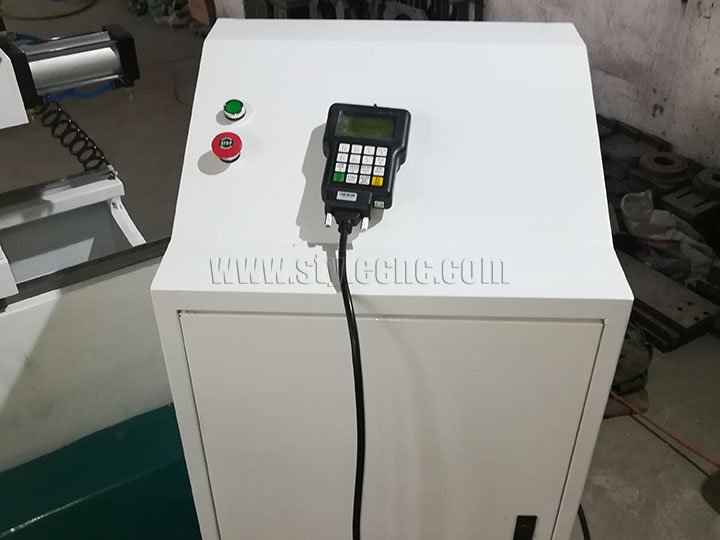
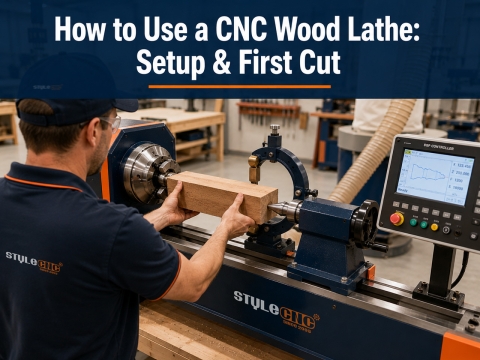
Easy operation, we can draw by Coredraw, Artcam, AutoCAD, and other software, and the control directly by the CNC cabinet computer (Industrial PC configuration) or transfer the files to the machine by USB (DSP handle configuration).
High-frequency inverter with high stability.
The industrial CNC wood lathe machine comes with Taiwan TBI ball screw and Taiwan Hiwin square rail with high transmitting precision and longevity, big module helical/diagonal rack with high precision and durable.
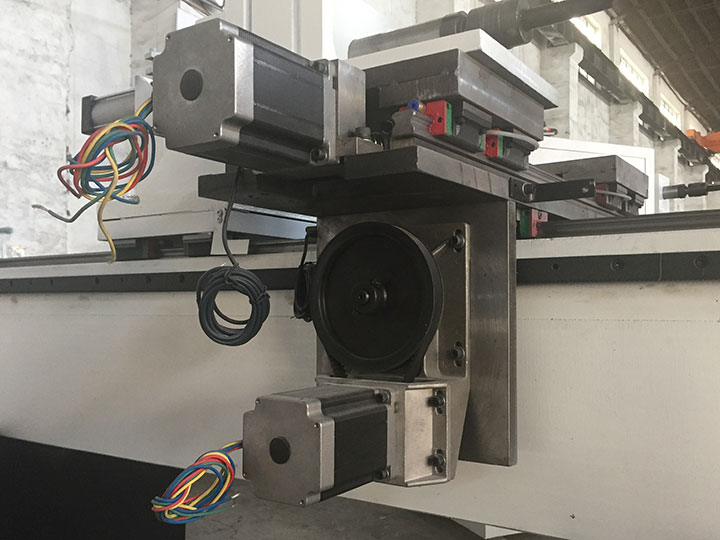
High accuracy stepper motor, after program calculating, guarantee the exact turning size.
Industrial Wood Lathe Turning Table Leg and Stair Baluster Projects
Preparing Wood for Clean Turning
Clean turning starts before the cutters touch the wood. Choose straight, defect-free stock and avoid knots, splits, or punky areas that tear or fly loose at speed. Moisture matters too: bone-dry or brittle wood tears more on end grain, while properly seasoned furniture stock cuts cleanly and stays stable once installed. Mark the centers accurately so the blank runs true between centers, because an off-center blank vibrates and wastes material on the first passes. These basics are half the battle, as any guide on how to use a wood lathe shows.
Sanding and Finishing Turned Parts
A turned leg or baluster still needs sanding and a finish before it ships. Sand through the grits in order, then make a final pass along the grain to erase circular scratches. Most finishing happens right on the lathe: apply the product with the spindle stopped, then spread and buff it as the piece turns slowly. For furniture and stair parts, durable films like wipe-on poly, lacquer, or varnish hold up best, while friction polish suits small decorative work. Exterior posts need a weather-rated finish. Browse wood turning projects for finish ideas.
Common turning issues and fixes
| Issue | Likely Cause | Fix |
|---|
| Torn or fuzzy grain | Dull cutter, dry or figured wood | Sharpen, lighter pass, seal with shellac |
| Spiral chatter | Long thin spindle flexing | Add a steady rest, lower the speed |
| Chipped pommel shoulder | End grain tearing at the square | Score the line first with a skew |
| Sanding scratches | Skipped grits | Step through grits, sand with the grain |
Turning Best Practices
• Turn defect-free, properly seasoned stock.
• Mark centers accurately so the blank runs true.
• Keep cutters sharp; a dull edge tears and chatters.
• Steady long, slender spindles to stop whip.
• Sand through the grits, then finish for the end use.
CNC Wood Lathe vs. Traditional Wood Lathe
For anyone working with table legs, balusters, or detailed wood designs, it's essential to know the differences between CNC and traditional wood lathes. Below is a comparison to help you decide which tool suits your needs best.
| CNC Wood Lathe | Traditional Wood Lathe |
| Highly precise with consistent results on each piece. | Depends on operator skill; can vary piece to piece. |
| Automated operation reduces manual labor. | Manual operation requires constant user involvement. |
| Faster production speed, ideal for bulk projects. | Slower, as each piece is shaped individually. |
| Easily creates intricate, repetitive designs. | Complex designs are more challenging to replicate. |
| Less hands-on skill needed; software does the work. | Requires advanced skills for consistent quality. |
This table highlights the main contrasts in operation, precision, and user involvement between CNC and traditional lathes, helping woodworkers choose the best option for their projects.
Maintenance Tips for CNC Wood Lathes in Industrial Settings
Regular maintenance is key for keeping CNC wood lathes in top shape, especially in busy industrial environments. Proper care can extend the life of your machine, reduce downtime, and ensure smooth, precise operation on every project.
• Clean the Machine Daily: Dust and debris can quickly build up during operations. Wipe down surfaces daily and clear any wood shavings to keep the machine running smoothly and prevent parts from getting clogged.
• Lubricate Moving Parts: Regularly check and oil all moving parts, including the bearings, spindles, and gears. Proper lubrication reduces friction and extends the lifespan of these components.
• Inspect the Tooling: Blunt or damaged tools can impact accuracy and quality. Inspect the cutting tools frequently for wear and replace them as needed to maintain precision in every job.
• Check Electrical Connections: Industrial settings can be rough on machinery, and vibrations can loosen connections. Inspect cables and connectors regularly, ensuring that everything is secure and functional.
• Monitor Software and Calibration: Make sure the software is up-to-date and perform calibration checks regularly. This helps the lathe maintain precise measurements and smooth operation during complex tasks.
FAQS for CNC Wood Balusters and Table Legs Turning Lathe Machine
What types of wood can a CNC lathe turn to make stair spindles?
Almost all hardwoods such as ash, oak, hemlock, maple, pine, walnut, mahogany, cedar, hemlock, redwood, poplar, and cherry stand out as popular options for CNC lathe turning to make stair spindles and wood balusters, and newel posts. Of all the woods, cedar, redwood, and poplar are better woods for exterior use than others, as they come with natural weather resistance.
Is a CNC wood lathe hard to learn to make furniture legs for beginners?
Whether you are new to turning or you are an experienced woodworker & carpenter, you can easily operate a CNC wood lathe machine to make dining table legs, end table legs, chair legs, bar stool legs, sofa legs, and other furniture legs because it is a fully automatic turner with almost no manual intervention. The only difficulty is that you need to have some knowledge of CAD/CAM software.
Can a CNC wood turner copy and mass-produce table legs and stair balusters?
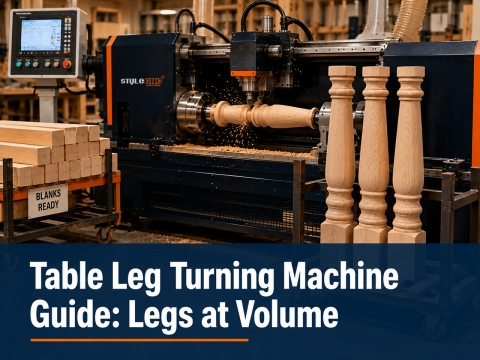
An automatic wood lathe with a CNC controller can create two wooden posts at once using a dual-spindle turning machine, and three timber pillars at a time using a three-spindle turner, enabling copy turning and mass production of table legs and stair balusters for industrial manufacturing.
How much does a CNC turner cost for making wooden posts?
An entry-level CNC wood lathe for making wood posts starts at $5,880, and can go up to $7,180 featuring with a milling spindle. A copy lathe with twin spindles costs from $6,380 to $8,280, and a three-spindle industrial turner for timber pillars ranges from $6,980 to $9,080. All prices depend on your machine configuration and additional options.
Why does my turned wood tear out or come off fuzzy?
Tear-out usually means a dull cutter, awkward grain direction, or very dry, brittle wood. Keep cutters sharp and take a lighter finishing pass. Sealing the spot with shellac before the last pass locks loose fibers. See other common wood lathe problems for fixes.
Do long, thin spindles need extra support?
Yes. A wood column flexes once its length passes about eleven times its diameter, so slender balusters whip and chatter. A steady rest braces the spindle's middle, and a lower speed with light cuts keeps it clean.
Can it turn a square top and round bottom for table legs?
Yes, that square-to-round shape is a pommel, common on table legs and newel posts where a square top meets the apron or rail. Its milling spindle leaves the square, and scoring the transition first keeps the end grain from chipping.
What software do I use to design a leg or baluster profile?
You design a profile or template in software like CorelDRAW, ArtCAM, or AutoCAD, then send it to the controller by PC or USB. The machine turns to that profile automatically. Any CAD/CAM software that exports clean tool paths will work.
What if my newel posts are longer than the turning length?
This model turns up to 1500mm long and 300mm in diameter, which covers most table legs and balusters. For taller newel posts or columns, a larger machine is the answer. This guide to choosing a CNC wood lathe compares the capacities.
What cutters does a CNC wood lathe use?
It cuts with profile knives on the carriage, usually carbide or high-speed steel. Carbide holds an edge far longer in production. A sharp edge slices cleanly; a dull one tears and chatters.
See More CNC Wood Lathe Machines for Stair Balusters and Table Legs