How Long Does It Take To Get Your CNC Machine?
Due to the complexity of the machine tool, the manufacturing cycle is different, and the shipping time is also different for different locations.
1. For 3 axis CNC router and milling machine with standard specification, usually 7-15 days.
2. For 4 axis CNC router and mill with standard specification, usually 20-30 days.
3. For high end 5 axis CNC machine, OEM or Non-standard models, usually 60 days.
4. For laser engraver, laser cutter, laser marking machine, laser cleaning machine, laser welding machine usually 5-10 days.
5. For high power laser cutting machine, usually 30-50 days.
6. For CNC wood turning lathe machine, usually 7-10 days.
7. For CNC plasma cutter & table kits, usually 7-10 days.
Share This Question With Others
Related Articles
2026-08-117 Min Read
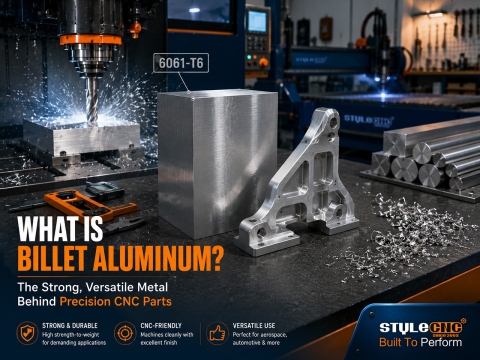
The word billet gets thrown around like a quality badge: billet wheels, billet intake manifolds, billet phone cases, billet everything. Marketing has stretched the term so far that most buyers, and plenty of hobbyist machinists, cannot say precisely what it means. This guide fixes that. It defines billet against cast and forged stock, explains why machinists care, compares the two grades that dominate hobby and pro shops (6061 and 7075), and walks through the feeds and speeds basics for cutting billet aluminum on a mill or aluminum-capable CNC router.
2026-07-177 Min Read
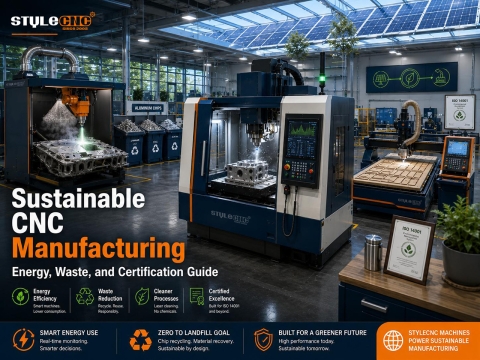
Sustainability has moved from a marketing checkbox to a hard purchasing requirement in CNC manufacturing. Aerospace primes now require ISO 14001 certification from suppliers. Medical device customers pay premiums for bio-compatible processes. Automotive OEMs audit their Tier 1 and Tier 2 suppliers on energy intensity and waste metrics. This guide covers what sustainable CNC manufacturing actually means, a seven-step energy reduction framework, waste reduction through nesting, chemical-free laser cleaning, the certifications that matter, and how to measure your carbon footprint.
2024-10-087 Min Read
Wondering if Chinese CNC machines are good and worth it? Dive into details, including affordability and performance, to make better decisions for your business.
2026-05-306 Min Read
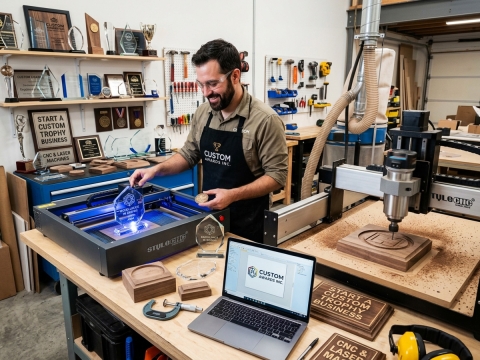
A custom trophy and awards business generates $3,000 to $10,000 per month by serving schools, sports leagues, corporate clients, and event organizers. Startup costs range from $3,000 to $10,000 for a fiber laser marker or CO2 laser engraver, basic materials, and a simple online presence. Profit margins of 55 to 75% come from the gap between low material costs (acrylic, wood, glass blanks) and the high perceived value of personalized recognition products.
2024-11-296 Min Read
Which is better, 3D printing or CNC machining? Here you'll find their similarities, differences, uses, costs, how to pick between 3D printers and CNC machines.
2026-08-067 Min Read
CNC programming is one of the few skilled trades where a technician without a four-year degree can reach six figures. The path from operator to programmer to lead programmer has clearly documented pay steps, and the demand side keeps improving as manufacturing reshoring collides with a shrinking pool of qualified programmers. This guide covers exactly what CNC programmers earn by experience level and by country, what drives the pay differences, and the skills roadmap that moves you up the ladder fastest.