How to Buy The Best CNC Machine?
If you're shopping for a new or used CNC machine in today's marketplace. This list explores the easy-to-flow steps a buyer would take to purchase a CNC machine. Let's begin.
Step 1. Consult: we will recommend the most suitable CNC machines to you after being informed by your requirements.
Step 2. Quotation: We will supply you with our detail quotation according to our consulted machines with the best quality and price.
Step 3. Process Evaluation: Both sides carefully evaluate and discuss all the details of the order to exclude any misunderstanding.
Step 4. Placing Order: If you have no doubts, we will send you the PI (Proforma Invoice), and then we will sign a sales contract.
Step 5. Production: We will arrange the production as soon as receiving your signed sales contract and deposit. The latest news about production will be updated and informed to the buyer during the production.
Step 6. Inspection: The whole production procedure will be under regular inspection and strict quality control. The complete machine will be tested to make sure they can work very well before out of factory.
Step 7. Delivery: We will arrange the delivery as the terms in the contract after the confirmation by the buyer.
Step 8. Custom Clearance: We will supply and deliver all the necessary shipping documents to the buyer and ensure a smooth customs clearance.
Step 9. Support and Service: We will offer professional technical support and service by Phone, Email, Skype, WhatsApp around the clock.
Share This Question With Others
Related Articles
2026-05-195 Min Read
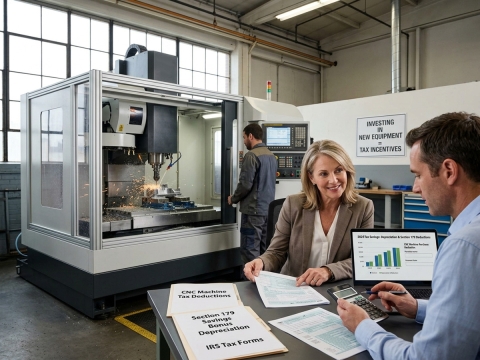
CNC machines, laser engravers, CAD/CAM software, tooling, and raw materials are all tax-deductible business expenses. Under Section 179 of the Internal Revenue Code, qualifying businesses can deduct up to $2,560,000 of equipment costs in the year the machine is placed in service instead of depreciating it over five to seven years. Combined with 100% bonus depreciation (reinstated in 2025), most CNC and laser equipment purchases can be fully written off in year one.
2026-07-148 Min Read
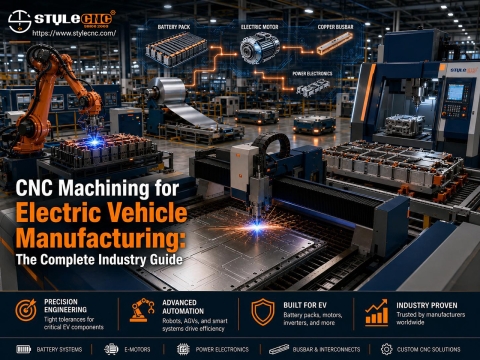
Electric vehicle production has become one of the largest single drivers of demand for CNC machinery outside of aerospace. Every EV rolling off a modern assembly line has passed through fiber laser cutters, CNC mills, robotic welders, and precision machining centers dozens of times before reaching a customer. This guide covers the specific CNC processes involved in EV manufacturing, the parts each process produces, the materials that dominate the industry, and where STYLECNC fiber laser cutters, robotic welding systems, and ATC routers fit into the EV supply chain.
2024-04-126 Min Read
A CNC machinist programs and operates computer-controlled routers, lathes, lasers, mills to create parts, starting from layout file design to implementation.
2024-11-296 Min Read
Which is better, 3D printing or CNC machining? Here you'll find their similarities, differences, uses, costs, how to pick between 3D printers and CNC machines.
2026-06-082 Min Read
Looking for the best software for computer numerical control programming? Here is a list of popular free & paid CNC programming software for beginners and pros.
2025-02-1010 Min Read
Are you learning & researching on how to make your own CNC kits for beginners? Review this DIY guide on how to build a CNC machine step by step from scratch.