I REALLY love this CNC foam router. It makes my foam work much easier. Fully automatic, high precision. I am not an expert but this kit works well for my purpose. Highly recommended.
3 Axis Foam CNC Router Machine for Styrofoam, EPS & XPS
Last Updated: 2026-06-10 14:45:28
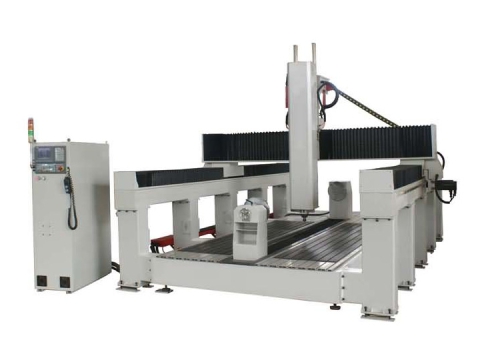
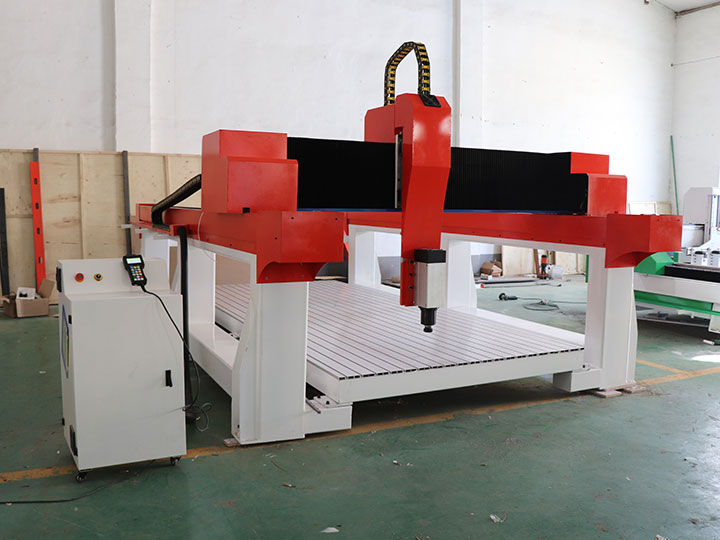
Foam CNC router machine comes with a 3 axis for foam board cutting and foam relief carving, and a 4 axis swing head for 3D foam mold making, as well as a 4th axis for rotary milling and cutting Styrofoam, EPS and XPS foam.
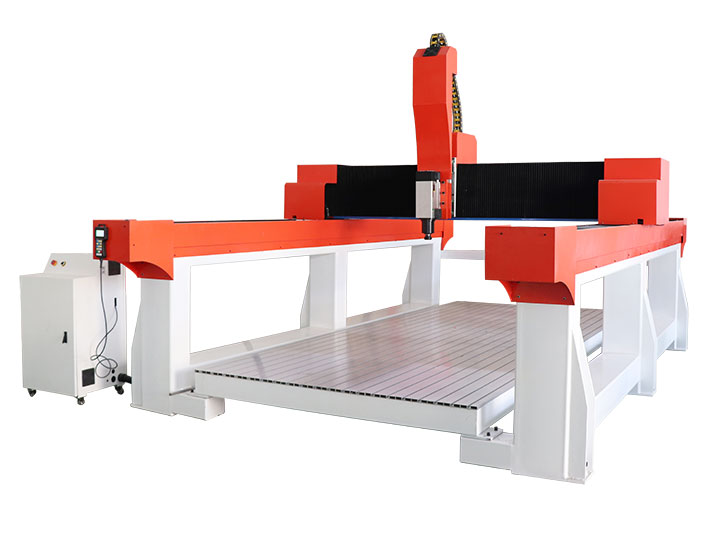
- Brand - STYLECNC
- Model - STM1325F
- Maker - Jinan Style Machinery Co., Ltd.
- Table Size - 4' x 8' (48" x 96", 1300mm x 2500mm)
$8,000 - $20,000 for Basic & Pro Editions
- 360 Units in Stock Available for Sale Every Month
- Meeting CE Standards in Terms of Quality & Safety
- One-Year Limited Warranty for Entire Machine (Extended Warranties Available for Major Parts)
- 30-Day Money Back Guarantee for Your Purchase
- Free Lifetime Technical Support for End-Users & Dealers
- Online (PayPal, Alibaba) / Offline (T/T, Debit & Credit Cards)
- Global Logistics and International Shipping To Anywhere
A foam CNC router is a type of CNC equipment specifically designed for cutting and milling polystyrene foam (commonly referred to simply as "foam"). Compared to heavy-duty CNC machines used for metal cutting, this is a lightweight machine; consequently, its requirements for rigidity and precision are relatively lower. The design and manufacturing philosophy for this equipment is derived from metal-cutting machine tools; key components undergo heat treatment processes—such as annealing—and are subjected to coordinate measuring machine (CMM) inspections after fabrication to ensure dimensional accuracy.
Polystyrene foam (often known by the trade name Styrofoam) is a material produced by foaming polystyrene (PS) with a blowing agent at high temperatures. Depending on the expansion ratio, it can be thermoformed into various containers, such as disposable tableware, fresh food trays, instant noodle bowls, and hamburger boxes. It is also frequently used as a shock-absorbing packaging material due to its combination of light weight and high strength; however, it is gradually being replaced by paper-based packaging due to environmental concerns.

3 Axis Foam CNC Router Machine Features
1. The Z-axis travel can be extended to 1000mm, expanding the machining envelope to meet the requirements for processing large 3D curved surfaces.
2. Constructed with a large steel square-tube framework—featuring seamless welding and hardening treatments—the machine is robust, reliable, and durable, offering high load-bearing capacity and a long service life.
3. Self-lubricating blocks, four-row ball bearings, and widened guide rails ensure uniform load distribution in all directions, thereby maintaining mechanical precision and structural integrity.
4. A wide range of optional configurations and OEM services are available; we can provide tailored CNC foam machining solutions based on your specific requirements.
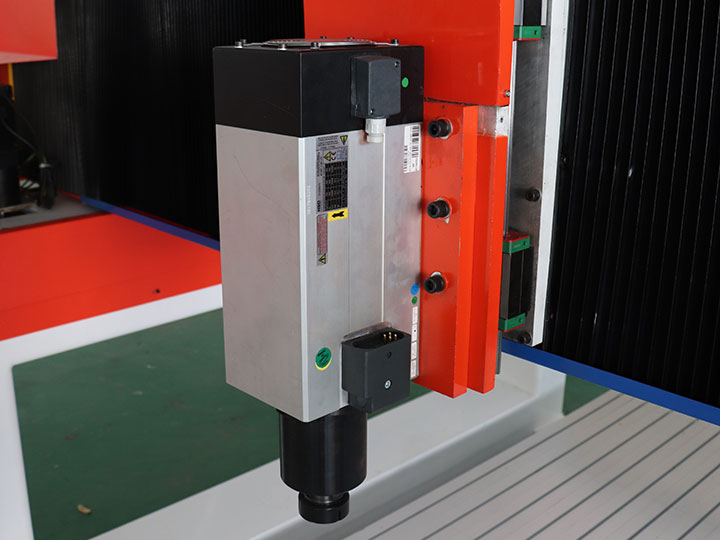
5. High-precision ball screws and Hiwin (Taiwan) linear square guide rails ensure smooth, stable operation and guarantee machining accuracy.
3 Axis Foam CNC Router Machine Technical Parameters
| Model | STM1325F |
| Working area | 1300*2500*600mm |
| Table size | 1300*2500mm |
| Travelling speed | 12000mm/min |
| Working speed : | 10000mm/min |
| Spindle power | 6KW |
| Spindle speed | 0-18000rpm/min |
| Transmission | X/Y rack and pinion, Z ball screw |
| Driving motor | Stepper motor(servo motor for choose) |
| Control System | DSP (Nc studio for choose) |
| Voltage | AC380V/50HZ |
| Running Environment | Temperature: 0 degree~45 degree |
| Software | Artcam/Type3, other CAD/CAM |
| Weight | 2300 KG |
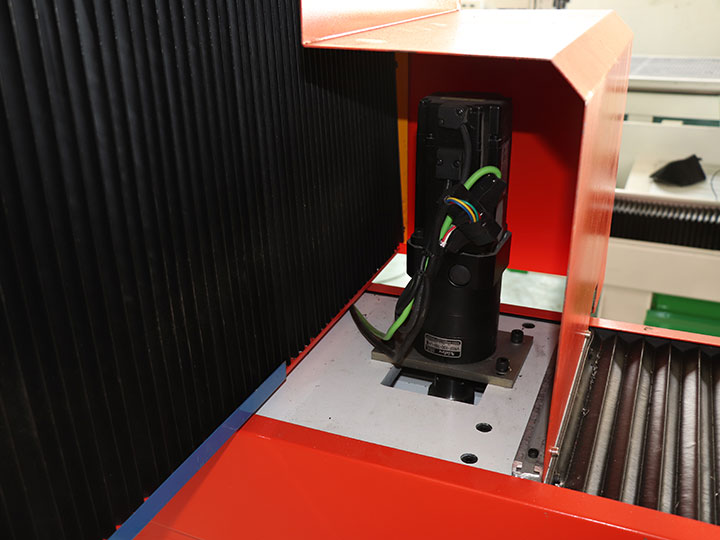
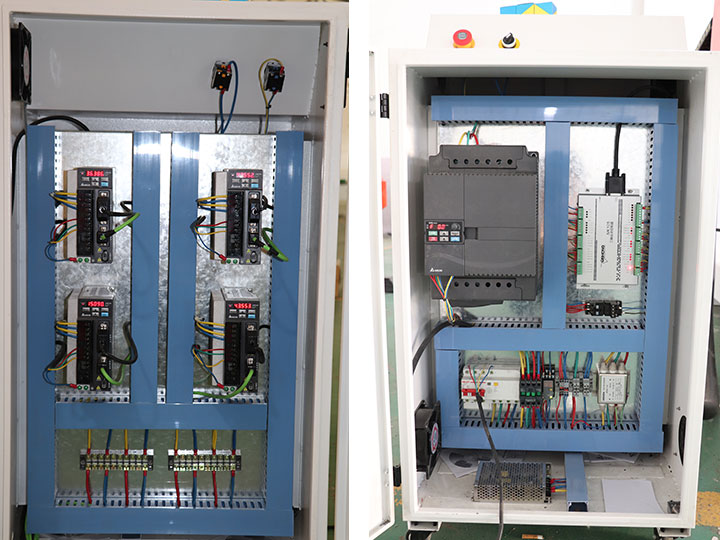
3 Axis CNC Foam Router Machine Details

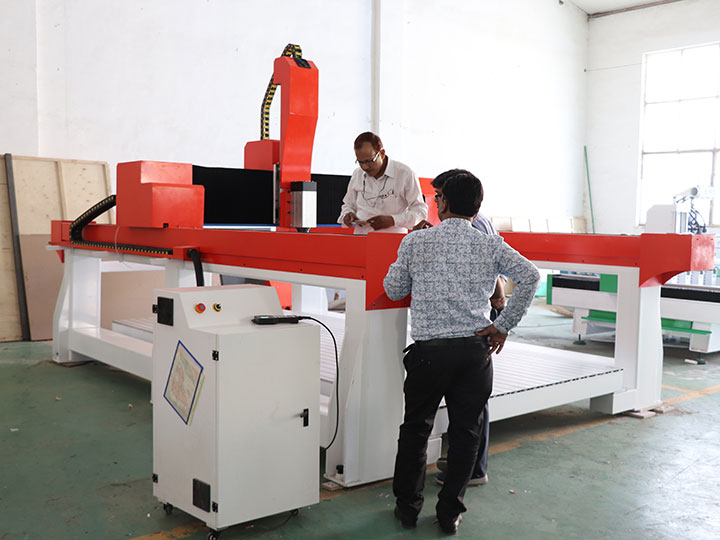


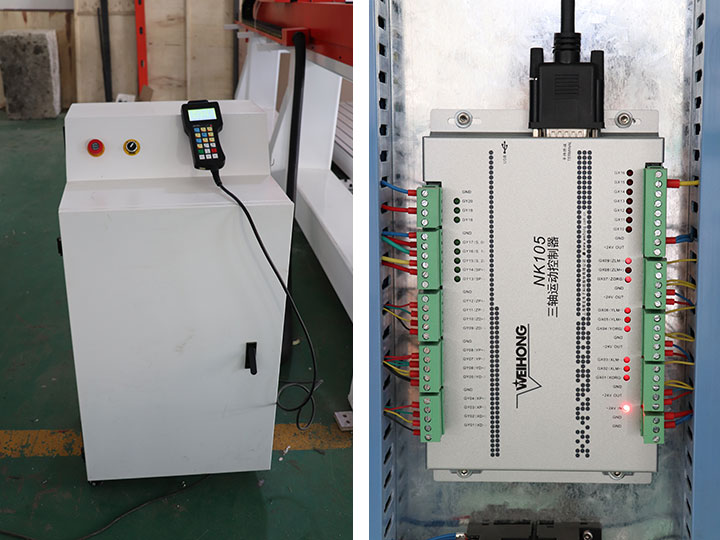

3 Axis CNC Foam Router Machine Applications
Applicable Materials
CNC foam router is used to shape and cut all types of foams, EPS, polystyrene, polyurethane, styrofoam, polyfoam, wood, composite board, Alucobond, PVC, plastic, acrylic, organic glass, aluminum, copper, and other materials.
Applied Industries
Die and mold industries: Milling and cutting various large foam molds for automobiles, ships, aviation, trains and precision machinery, creating wood molds, food molds (such as cake molds) and other molds for precision manufacturing.
Musical instrument industry: Large 3D curved surface milling and contour cutting.
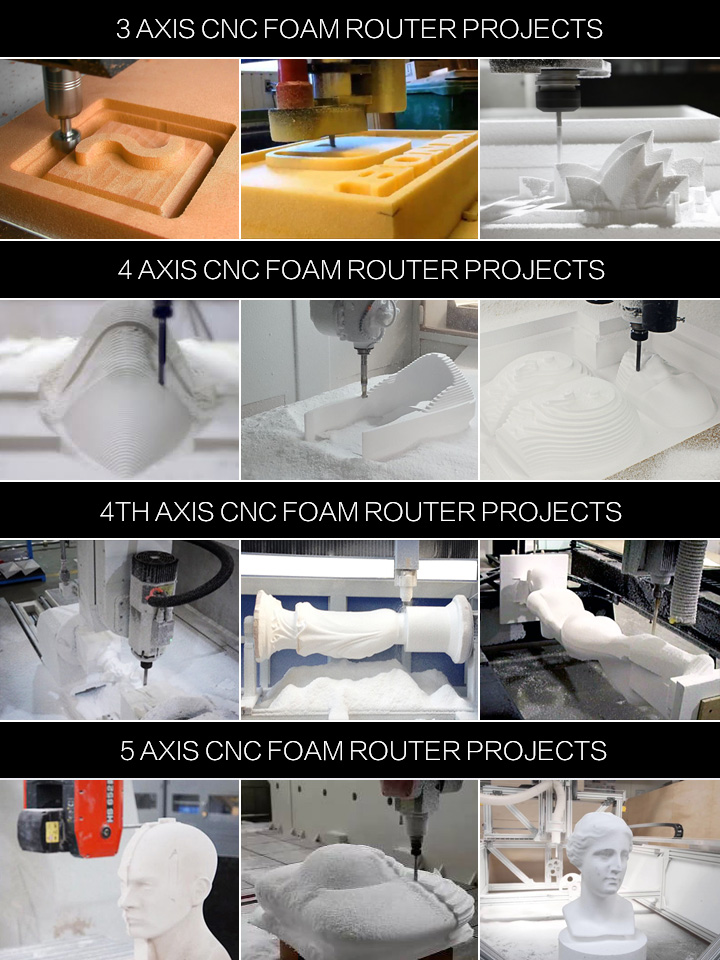
3 Axis Foam CNC Router Machine for Styrofoam, EPS and XPS Foam Projects
4th Axis CNC Foam Router Machine for Styrofoam, EPS and XPS Foam
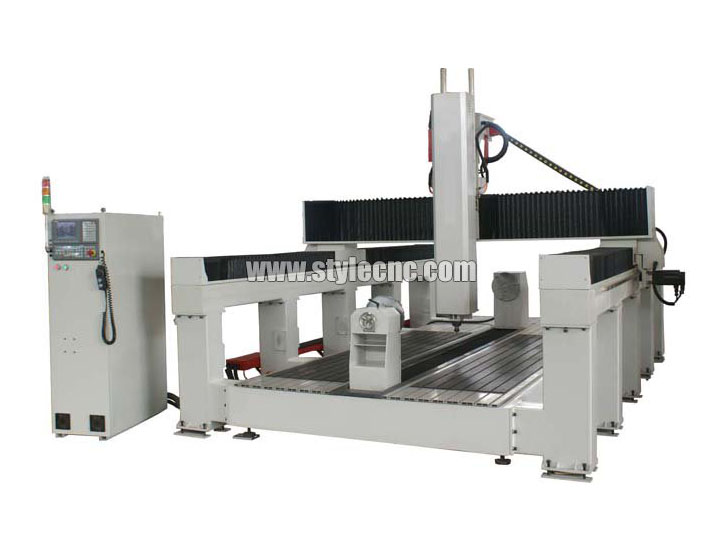
4 Axis CNC Foam Router Machine for Styrofoam, EPS and XPS Foam
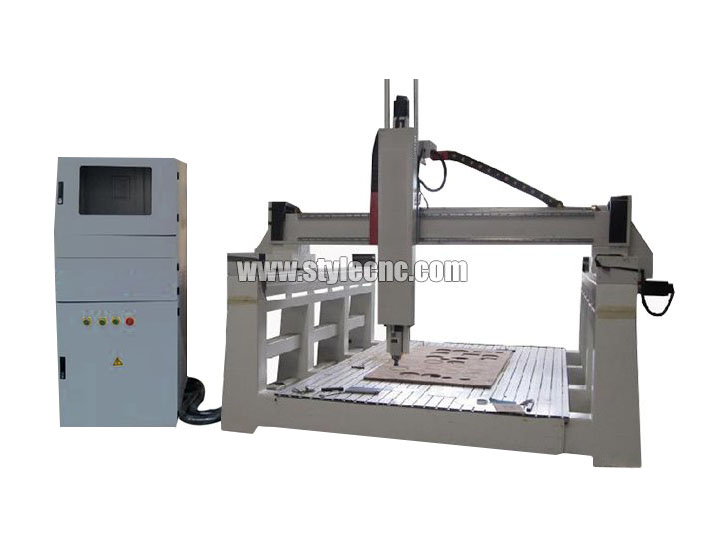
4 Axis Foam CNC Router Machine Details
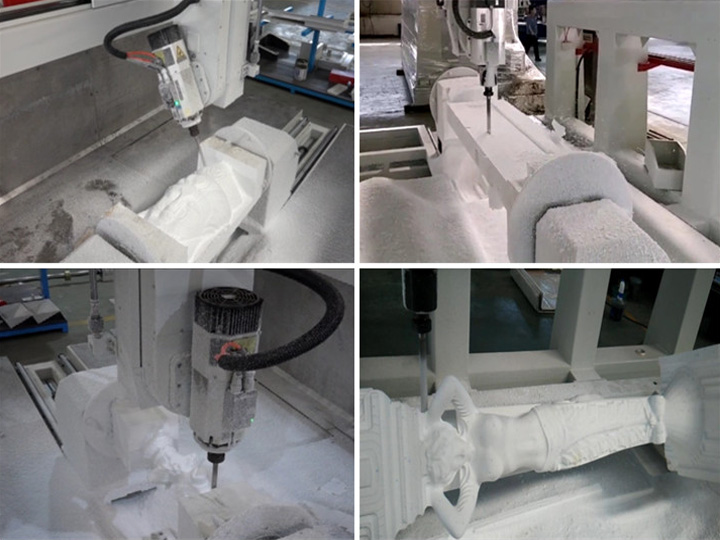
Based on the foam model required for solid casting, CNC machining has the obvious advantages of uniform and accurate margins and a good overall appearance of the mold. The important processing parts of the machine tool are subjected to annealing and other heat treatment processes. After processing, the three-axis measurement is performed to ensure the accuracy of the parts. Full-program processing of foam will be the direction of future development.
Benefits of Using a CNC Router for Foam Cutting
The cutting and shaping of foam is changing thanks to CNC routers. With their accuracy, speed, and adaptability, they are perfect for a wide range of uses. Here are a few main advantages of foam cutting with a CNC router.
• Precision and Accuracy: CNC routers cut foam with high precision. They follow exact dimensions and shapes defined in the software. This accuracy reduces material waste and ensures the final product meets specifications.
• Versatility: CNC routers can work with various types of foam, including Styrofoam, EPS, and XPS. This versatility makes them suitable for many projects, from prototypes to artistic designs.
• Speed: Manual cutting techniques can be sluggish and labor-intensive. CNC routers can cut enormous amounts of foam quickly. This speed enables firms to fulfill tight deadlines while increasing productivity.
• Repeatability: Once a design is programmed, the CNC router can replicate it multiple times with consistent quality. This repeatability is crucial for production runs and ensures uniformity in parts.
• Complex Shapes: CNC routers can create intricate designs that may be difficult to achieve manually. This capability opens up new possibilities for creativity and design.
Overall, using a CNC router for foam cutting improves efficiency and quality. It helps businesses stay competitive in a fast-paced market. Whether for prototyping or large-scale production, CNC routers are a valuable asset.
Is a 3 Axis Foam CNC Router Worth the Investment?
Purchasing a 3-axis foam CNC router can be a big choice for both enthusiasts and companies. Knowing the advantages and disadvantages can help you decide if the investment is smart.
The initial cost a 3-axis foam CNC router can be really high. Factors such as machine quality, features, and brand influence the price. However, consider this an investment in efficiency and quality. CNC routers save time and labor costs. They automate cutting processes that would otherwise require manual labor. This efficiency can lead to faster project completion and the ability to take on more work.
The precision of CNC routers minimizes material waste. You can maximize the use of foam sheets, leading to lower material costs over time. This advantage is especially significant in foam cutting, where excess material can add up. With faster production times and reduced waste, businesses can increase their profitability. The ability to take on more projects or offer complex designs can attract more clients and grow revenue.
A CNC router that is properly maintained can last for many years. The time savings, the decrease in errors, and the potential for service expansion can all contribute to a significant return on investment.
Maintenance Tips for 3 Axis CNC Routers Used for Foam Cutting
A 3-axis CNC router needs to be properly maintained in order to function well, particularly when cutting foam. Frequent maintenance increases the machine's lifespan and guarantees efficient operation. Here are some crucial maintenance guidelines to stick to.
• Regular Cleaning: There is a lot of dust and debris produced during foam cutting. Develop the practice of regularly cleaning the workspace. To clear the machine of any remaining foam and debris, use a vacuum or a soft brush. This keeps the environment clean and stops accumulation.
• Lubricate Moving Parts: The moving parts, like rails and lead screws, need proper lubrication to function well. Check these areas regularly and apply a suitable lubricant as recommended by the manufacturer. This ensures everything moves smoothly and reduces wear.
• Router Bit Inspection: The router bit is vital for achieving precise cuts. Examine it regularly for signs of dullness or damage. If the bit is worn out, replace it immediately to maintain cutting quality and efficiency.
• Electrical Check: Regularly look over electrical connections for any wear or loose wires. Secure and intact connections are crucial for the machine's safe operation and performance.
• Calibration: It's important to calibrate your CNC router periodically. This process ensures that the machine operates accurately and cuts are precise. Regular calibration can enhance overall performance.
Choosing Bits and Cutting Settings for Foam
Foam is forgiving, but it punishes the wrong settings. Most carvers use an O-flute or single-flute bit to clear chips, then a ball-nose for smooth 3D finishing. Keep spindle speed modest and feed fast: too much RPM for the feed melts foam and balls it up on the bit. Aim for a clean slicing sound. Cut conventional rather than climb for a cleaner edge, and since foam compresses, leave an allowance and take a finish pass. The right router bits and collets make this easier.
Sealing and Finishing Routed Foam
A finished foam part rarely leaves the machine ready to use. Bare EPS is soft and porous, so it needs a coating for durability, paint adhesion, and outdoor protection. Skip polyester resin, which eats polystyrene; use epoxy, which cures hard and smooth. For tougher pieces, prop and sign makers spray a polyurea hardcoat that sands clean and takes any paint. Fiberglass in epoxy adds strength for props and plugs. Coatings also turn foam into a casting or concrete mold. Hardcoats often use isocyanates, so proper respiratory protection matters. See finished foam projects for ideas.
Starting points from foam carvers (run a test cut to confirm):
| Operation | Tool | Spindle Speed | Feed Rate |
|---|---|---|---|
| Roughing | 1/4" upcut spiral | 10,000 RPM | ~100 IPM |
| 3D finishing | 1/4" ball nose | 10,000 RPM | moderate |
| Hogging thick EPS | large single/2-flute | ~8,000 RPM | high feed, multi-pass |
Foam Routing Best Practices
• Use an O-flute bit to clear chips, not melt foam.
• Keep RPM modest, feed fast, aim for a slicing sound.
• Cut conventional, not climb, for clean foam edges.
• Run dust collection and ground the machine against static.
• Seal bare foam before painting or outdoor use.
Frequently Asked Questions
How do I keep EPS dust and static under control?
EPS builds a strong static charge that flings fine dust everywhere. Run a dust collector or a shop vacuum mounted near the spindle, fit anti-static brushes, and ground the machine. Anti-static spray on the panel also helps.
How do I hold lightweight foam down while cutting?
Practical Machinist users rely on double-sided tape once dust is blown off the sheet, or clamp from the sides with grippy jaws. A vacuum fixture works well too. Light cuts keep thin foam from shifting.
Can I cut thick foam, or do I glue sheets into a block?
Both. Many machines hog deep in one block, but when stock is too thin, WOODWEB shops laminate sheets first. Use a foam-safe glue such as PVA, water-based contact, or a foam construction adhesive, and avoid solvent glues that dissolve polystyrene.
Can a 3-axis router make fully 3D foam shapes?
A 3-axis machine carves reliefs and contours from the top, and you can flip the block to reach the back. For seamless all-around shapes like figures or columns, a 4-axis foam cutter with a rotary head is the better tool.
What software do people use for 3D foam toolpaths?
Carvers commonly run ArtCAM, Vectric Aspire, or Fusion to generate roughing and finishing passes from a 3D model. The page model accepts ArtCAM and Type3. Any CAD/CAM software that exports clean G-code will drive the machine.
How much does a foam CNC router cost?
Pricing tracks table size, spindle power, and any rotary axis. This 4x8 foam model runs from around eight thousand dollars into the low twenties for fuller editions. For a broader picture, see how CNC router prices compare.
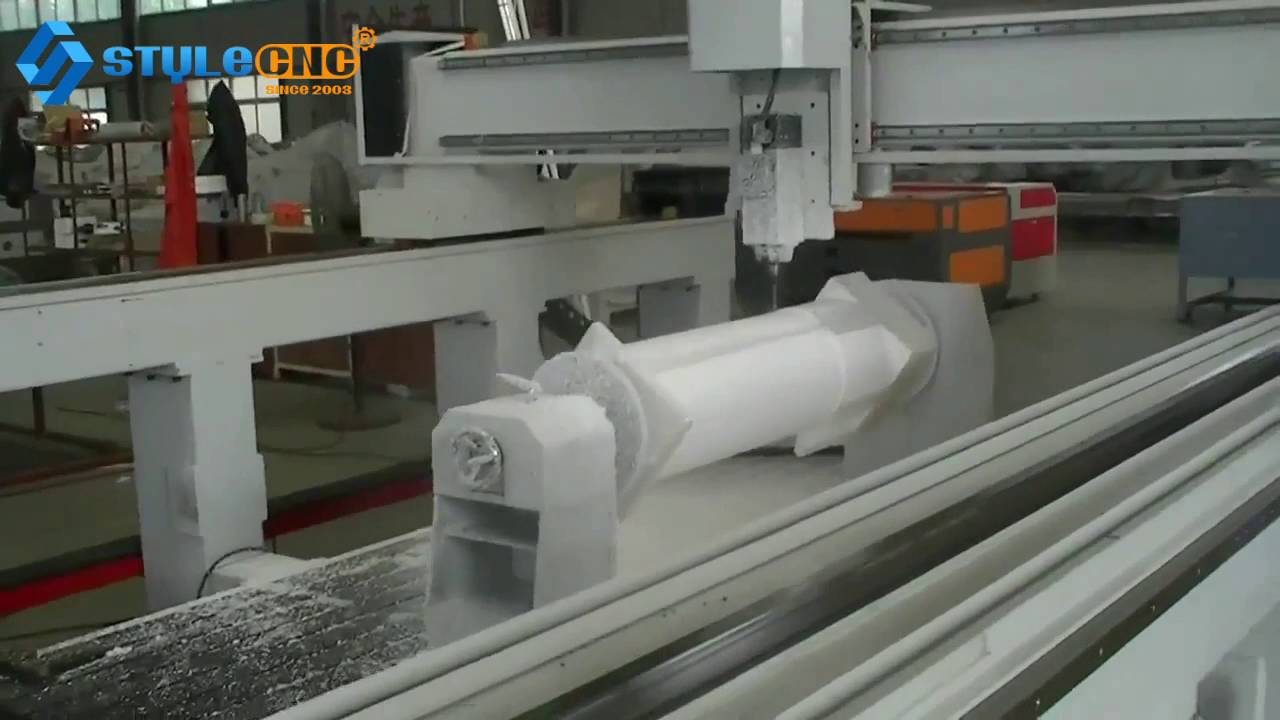
Customers Say - Don't take our words as everything. Find out what customers say about our products and services they have purchased, owned or experienced.
David
Further Reading
Related Stories

Related Products