
I have one CNC laser cutter, but when I do the cutting work, it produces smoke which is very troublesome. With STYLECNC's help, I bought this air filter, it really helps me very much.
Pick Up The Best Parts & Accessories for CNC Laser Engraving & Cutting
Last Updated: 2026-09-14 17:30:49
Looking for affordable laser cutter parts or laser engraver accessories? Review the best laser engraver parts and laser cutter accessories for CNC laser machine. We'll offer you the best laser cutting machine parts and laser engraving machine accessories of 2025 with expert customer service to fit your requirements.
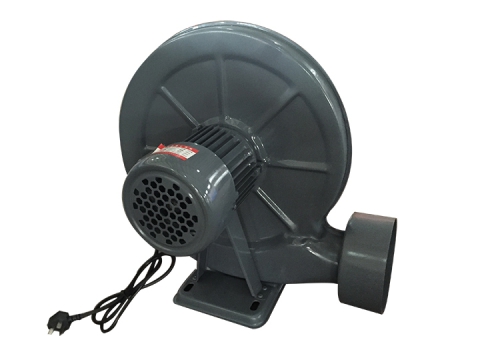
Laser Accessories
$20 - $80
Exhaust Fan for Laser Cutting Machine Dust Collector
Exhaust fan for laser cutting machine is also named by dust collector, which has 250W, 270W, 550W and 750W for choose in different working area.
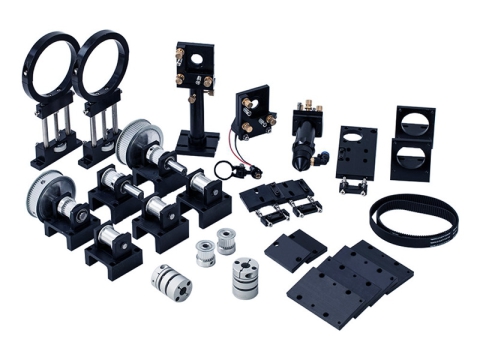
Laser Parts
$20 - $1,800
Full Set Laser Parts to Assemble CO2 Laser Cutter Engraver
If you want to assemble or build a CO2 laser engraving cutting machine, Review the full set laser parts listing with any budget for your DIY plans.
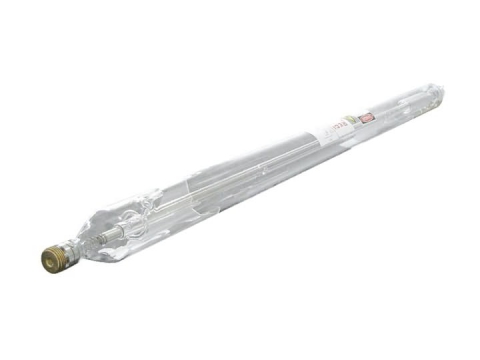
Laser Tube
$100 - $1,500
China RECI CO2 Laser Tube 80W, 90W, 100W, 130W, 150W, 180W
China RECI CO2 sealed laser tube is equipped with 80W, 90W, 100W, 130W, 150W, 180W laser power, RECI CO2 laser tube features with 10,000 hours long lifespan.
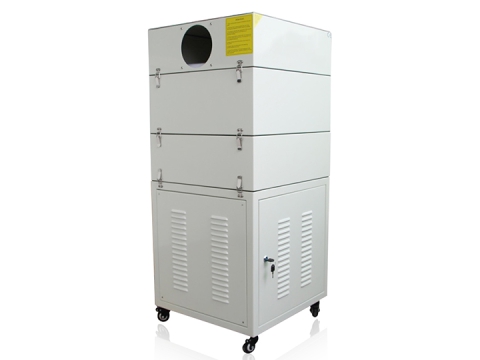
Laser Accessories
$500 - $2,000
Air Filter & Fume Extractor for CNC Laser Machine
Air filter & fume extractor for CNC laser machine with four layers filter filtration to ensure high efficiency purification for fume filtration & air cleaning.
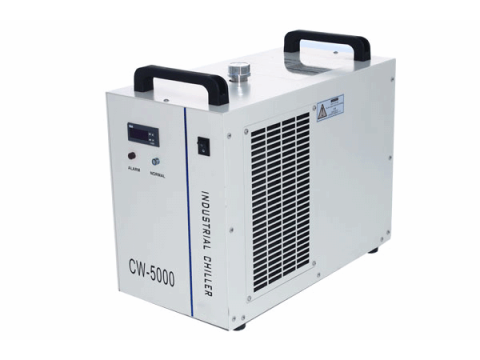
Water Chiller
$150 - $400
Industrial Water Chiller CW5000 for CO2 Laser Tube
CW5000 is a refrigeration type industrial water chiller with 800W cooling capacity for CO2 laser tube used on laser engraving and cutting machine.
- Showing 5 Items On 1 Page
A Guide To Buying Affordable CNC Laser Parts & Accessories In 2025
CNC Laser Parts & Accessories
Parts of CNC laser machines include parts for establishing or operating such machines as engraving lasers, laser cutters, laser marking systems, laser welders, and laser cleaning machines. STYLECNC also offers all types of accessories, including but not limited to the focus lens, reflection mirror, air blower(exhaust fan), power supply, laser cutting head, mirror stand, CO2 laser tube, laser lamp, laser diode module, RD cam mother board, rail, belt, chiller, air compressor used for laser engraver, laser marker, laser cutter, and laser welder. Components in a CNC laser machine would include components in the laser engraver, laser marker, laser cutter, and laser welder.
Laser Generator
The laser generator is the most basic constituent part of a laser machine; its performance will directly influence the whole performance of the machine.
Servo Motor
Servo motors are involved in the control of the operation of mechanical components within a servo system. High-quality servo motors can guarantee the accuracy and speed of a laser machine.
Control System
The control system can be considered the brain of a laser machine. It controls the movement of the machine tool in the X, Y, and Z-axis directions and also the output power of the laser generator.
Laser Head
The laser head is an output device of the laser machine, including a nozzle, a focusing lens, and a focus tracking system. Driven by the control system, moving the machine tool, the nozzle does walking along the cutting trajectory and realizes the engraving and cutting of the material.
Laser Lens
The laser lenses, in this sense, become part of the laser machining system. In this case, refraction is used via lenses to change the laser optical path: laser focusing lenses, reflectors, beam combiners, beam expanders, and field lenses.
How to Identify Quality CNC Laser Accessories on a Budget
Finding good CNC laser accessories without breaking the bank doesn't have to be hard. Focus on these critical factors to get value for your investment.
Research the Market
First and foremost, conduct detailed research: compare various brands and suppliers to understand pricing trends and product quality. Read customer reviews and expert opinions to identify trusted brands. From this knowledge, it becomes easy to make informed decisions without spending too much.
Focus on Compatibility
Ensure that the accessories you choose are compatible with your CNC laser machine. Be keen on the specifications in relation to dimensions, power requirements, and performance standards. Otherwise, incompatible parts might create operational problems or even damage your equipment, which will increase costs.
Prioritize Core Features
Look for accessories with special features that fill your particular requirements. Do not pay for features that you do not need; for example, when buying a laser lens or nozzle, look for precision and durability rather than decorative features.
Look for Deals or Refurbished Ones.
Explore options for refurbished or discounted accessories. Trusted suppliers often offer refurbished parts that perform like new but cost significantly less. Check the warranty and return policies to ensure you’re covered.
Verify Supplier Reputation
Choose suppliers with a good reputation in the market. A credible supplier is more likely to sell quality products. Check for reviews, ratings, and certifications that would indicate the supplier is genuine.
Things to Consider When Buying Low-Cost CNC Laser Parts
Looking for affordable CNC laser parts? The right choice is important for both performance and savings. Here are the key factors to consider before you buy.
Material Quality
Material quality is among the factors to be considered while buying CNC laser parts. Choose components with durable, heat-resistant materials that contribute toward long service life and stable performance under high operating temperatures. Always ask for material specifications to evaluate the product's durability.
Supplier Reputation
Quality assurance means the supplier is trusted. Always check reviews, ratings, and history in the market. Reliable suppliers offer consistent products and support, even for budget-friendly parts. Look for any type of warranty or replacement policy to secure your purchase.
Cost vs. Value
Don't be fixated on price alone. Instead, strike a balance between cost and value. A slightly more expensive part may last longer, improving the efficiency of a machine. Compare features and benefits to get the best return on your investment.
Tips on the Use of CNC Laser Machines through Budget-Friendly Parts
Want to keep your CNC laser machine running like new without breaking the bank? Well-planned maintenance and smart part choices can make all the difference. Check out these tips on how to keep it efficient and within budget!
•Clean Components Regularly: Dust and debris can lower the efficiency of laser parts. Use a soft, dry cloth or compressed air to clean parts such as the lens, mirrors, and filters. This prevents wear and ensures consistency in performance over time.
•Wear and Tear: Just like looking for wear on critical components, such as belts and gears, replace damaged parts. Even the cheapest of parts function better when maintained.
•Lubricate Appropriately: Lubricate moving parts only as recommended by the manufacturer. Proper lubrication reduces friction, improving life span and machine precision.
•Check Alignment: Misalignment of parts can decrease cutting precision and harm components. Check alignment regularly and calibrate as required.
Handling Optics Without Ruining Them
Lenses and mirrors are coated surfaces, and most are destroyed by cleaning rather than by use. Never touch the coated face with bare fingers, since skin oils bake on under the beam and cannot be removed afterwards. Use proper lens tissue with the recommended solvent, wipe gently in one direction from the centre outwards, and let the tissue do the work rather than pressing. If a mark stays after careful cleaning, the coating has gone and the part needs replacing, not more scrubbing. Keep the replacement in a sealed box until fitting, and handle it by the edge. Owners of CO2 laser tubes should treat the tube's own end windows with the same care.
Size the Chiller to the Tube
Cooling is where quiet damage happens. A chiller rated below the tube it serves keeps the water flowing but never brings the temperature down, so the tube runs hot, loses power, and ages fast, and nothing on the display warns you. Match the chiller's cooling capacity to the tube wattage, which is why a CW5000 water chiller is specified for a hundred watt tube rather than a smaller unit. Fill it with pure or distilled water, never tap water, whose minerals leave scale inside the tube, and change the water on a schedule rather than when it looks dirty.
Blow It Out or Filter It?
Extraction comes in two forms and the right one depends on your building. An exhaust fan with ducting is cheap and effective when you can vent through an outside wall, though it is noisy and pushes heated air out with the smoke. A filtered fume extractor cleans the air and returns it to the room, which suits an inner unit with no external wall, at the cost of filter replacements. Whichever you choose, extraction also protects the optics you just cleaned, since smoke that lingers settles on them.
Choosing extraction:
| Option | Best When | Trade-Off |
|---|---|---|
| Exhaust fan and duct | You have an outside wall | Noise and lost heated air |
| Filter unit | No outside wall available | Filters are a running cost |
| Both together | Heavy smoke from thick stock | Highest cost and footprint |
Laser parts checklist:
✔️ Size the chiller to the tube it must cool.
✔️ Use pure or distilled water, never tap water.
✔️ Clean optics with proper lens tissue and solvent.
✔️ Wipe in one direction, never scrub.
✔️ Duct outdoors where you can, filter where you cannot.
Frequently Asked Questions
How do I tell a dirty lens from a damaged one?
Clean it properly first. Smoke film lifts away and the surface looks even again, while damage shows as a permanent spot, cloudiness, or a patch where the coating has burnt. A damaged lens scatters energy and should be replaced rather than persevered with.
Can I use tap water in the chiller?
No. Minerals in tap water leave scale inside the tube and cooling channels, which insulates exactly where heat needs to escape. Pure or distilled water is the requirement, and it is cheap next to a replacement tube.
How often should optics be cleaned or replaced?
Check before each shift and clean whenever they look filmed, which is often daily on smoky materials. Replacement depends on damage rather than hours, so keep a spare so a marked lens never becomes a reason to keep working.
Do I need both an exhaust fan and a filter unit?
Usually one or the other. Ducting outdoors is simpler and cheaper if you have the wall; filtration suits enclosed spaces. Heavy smoke from thick organics is the case where shops run a blower into a filter unit together.
What comes in a full laser parts set?
A complete CO2 parts set covers the tube, power supply, optics, head, controller, and motion components for a self-build. Check what is missing rather than what is included, since frames and extraction are often separate.
Does a bigger chiller hurt anything?
No, oversizing is safe and often sensible in a hot workshop, since the unit simply cycles less. Undersizing is the mistake to avoid, because the tube quietly runs above its rated temperature every working hour.
What Our Customers Say?
Are you still skeptical about STYLECNC? Are you still hesitating whether to buy CNC machines from STYLECNC? What better proof of that than finding unbiased testimonials from our real customers? All the while, we continually conduct satisfaction surveys of our customers asking if they would like to have a factual review of our products and services. As you'll see in the list below, many users have shared their personal experiences. We are happy to provide customers with high-quality CNC machines and services that satisfy them, which also drives us to continue to innovate and grow.