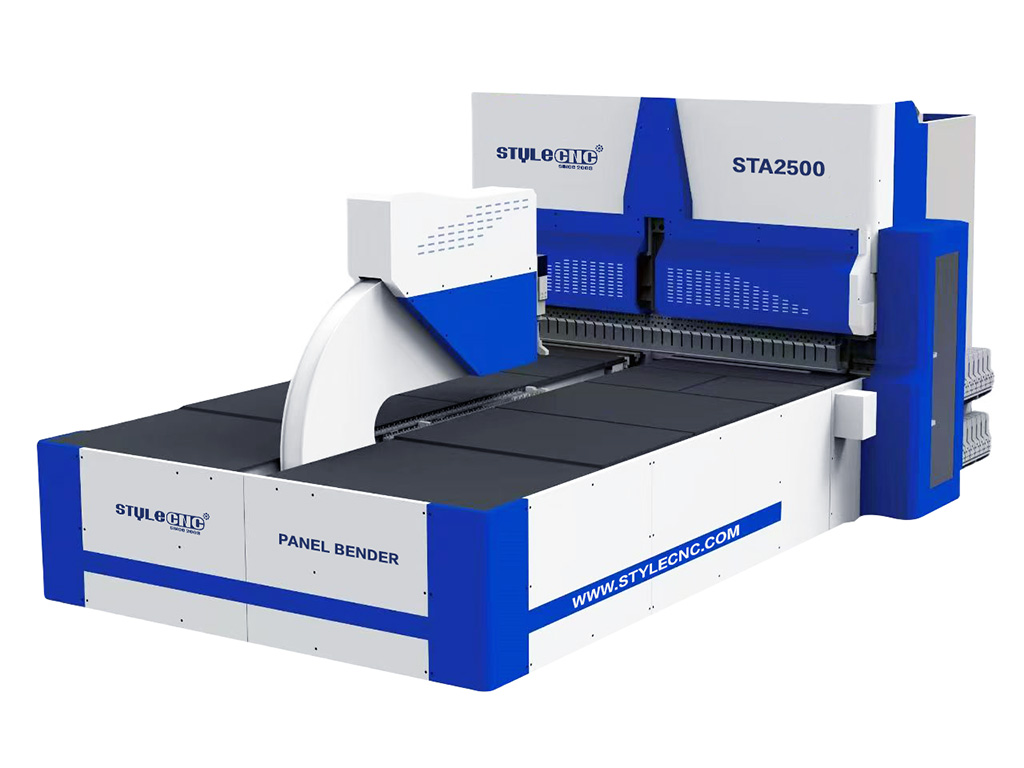
The STA2500 offers exceptional configurability and a wide array of bending options. I utilize it in my HVAC and ventilation business to fabricate complex structural panels, protective guards, and various ductwork components—all of which demand a high degree of bending precision. This panel bender has been in service for over ten days, and so far, its performance has fully met my expectations in every respect. It features a high level of CNC automation requiring no tedious setup, is capable of executing bends with extremely tight radii, and performs with pinpoint accuracy—yielding results with negligible error. I anticipate that it will serve me reliably for many years to come. If you are engaged in high-intensity, assembly-line production with a heavy workload, this panel bending machine is your perfect fit.
Automatic Panel Bender for Sheet Metal Fabrication
Are you looking to launch a sheet metal bending business, or integrate a panel bender with a fiber laser cutter or industrial robot to build a Flexible Manufacturing System (FMS)? This automatic panel bending machine is your ideal partner—whether you are a beginner or a seasoned professional. What's still on your mind? Let's dive in together.
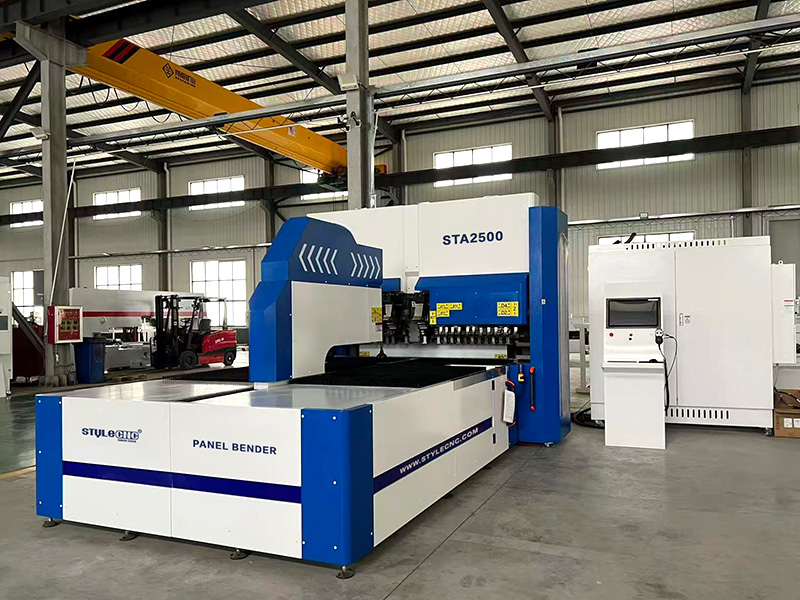
- Brand - STYLECNC
- Model - STA2500
- Maker - Jinan Style Machinery Co., Ltd.
- Category - CNC Bending Machine
- 360 Units in Stock Available for Sale Every Month
- Meeting CE Standards in Terms of Quality & Safety
- One-Year Limited Warranty for Entire Machine (Extended Warranties Available for Major Parts)
- 30-Day Money Back Guarantee for Your Purchase
- Free Lifetime Technical Support for End-Users & Dealers
- Online (PayPal, Alibaba) / Offline (T/T, Debit & Credit Cards)
- Global Logistics and International Shipping To Anywhere
What Is A Panel Bender?
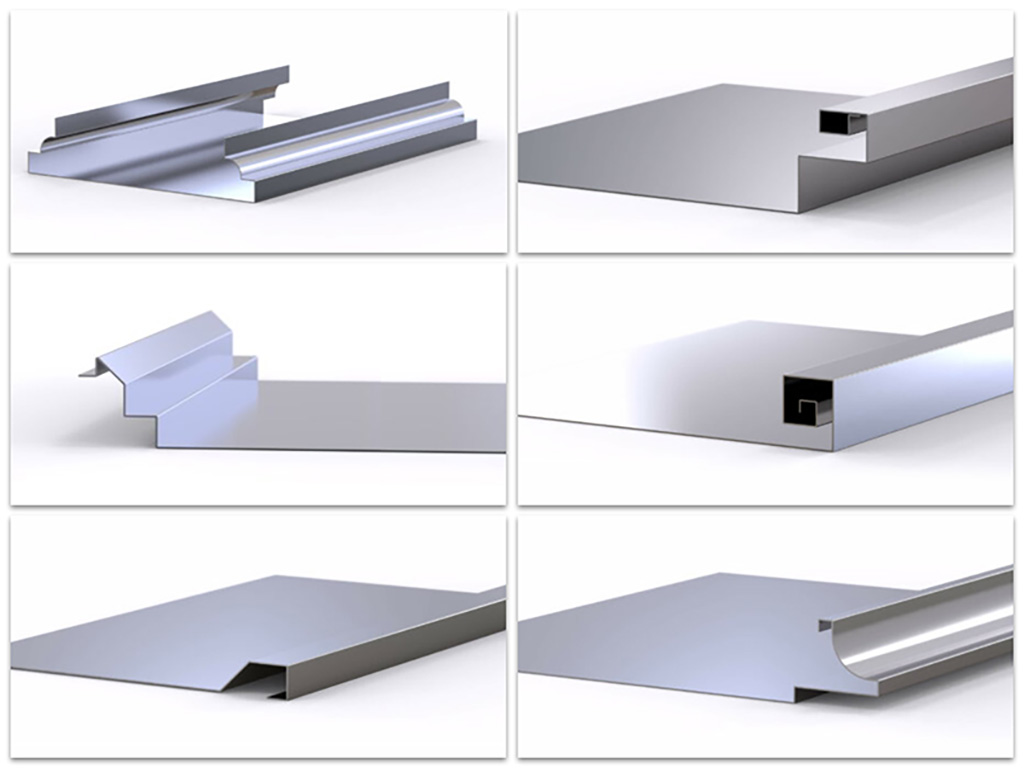
A panel bender is an automated machine tool that operates in conjunction with a smart CNC controller, capable of performing high-precision bending operations on sheet metal parts—ranging from step bends to hem bends (180° for strength), from internal bends to offset (jog) bends, from back (W) bends to radius bends, as well as complex bending sequences—with exceptional speed and superior quality.
How Does A Panel Bender Work?
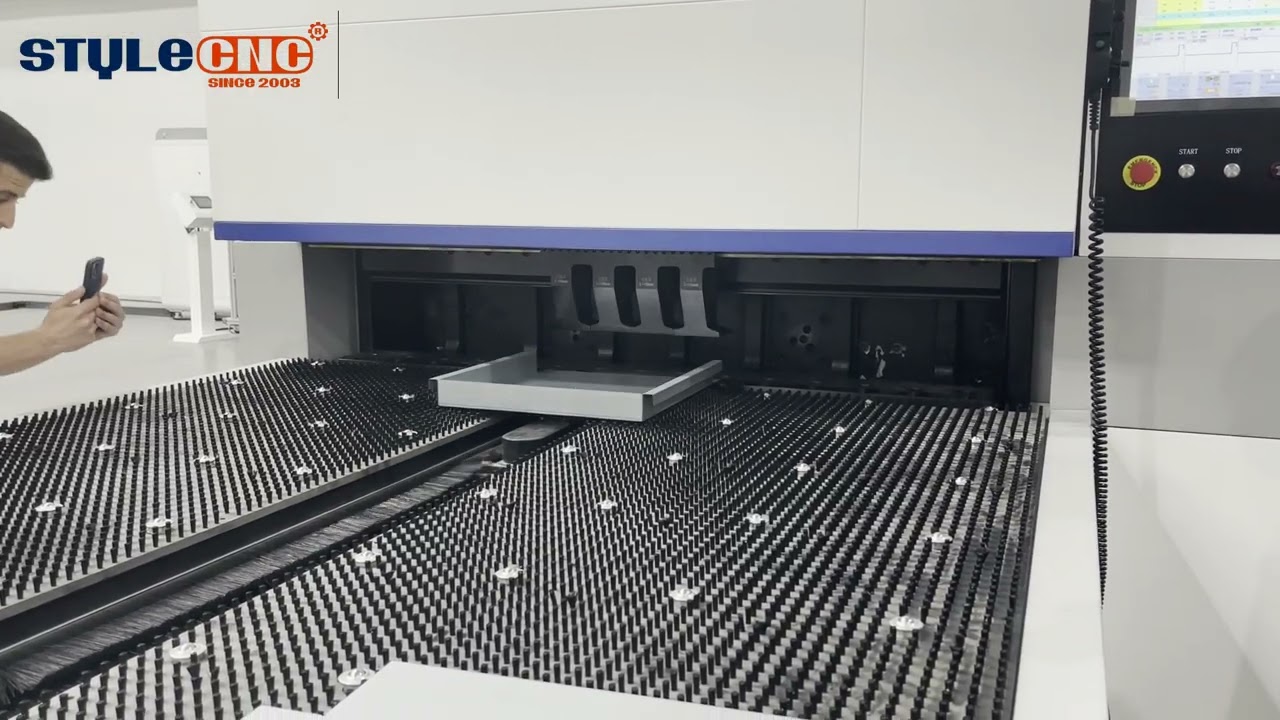
A CNC panel bender utilizes CAM software to control multi-axis servo motors, driving forming tools to execute simultaneous upper and lower compound bending operations on sheet metal parts.
Hydraulic or electric clamps firmly hold the sheet metal workpiece on the bending table and precisely position it beneath the bending tool.
The operator inputs the workpiece parameters into the CNC control system, and the CAM software automatically generates the bending program, calculating the motion trajectories for each axis as well as the clamping parameters.
The CNC controller software drives the forming tool assembly via multi-axis servo motors to execute bending movements in both upward and downward directions (utilizing the C-axis for angle and the Y-axis for bending depth). High-precision encoders provide real-time feedback on the tool's position, ensuring the rapid and sequential completion of bending, hemming, and forming operations across multiple sides of the workpiece.
Specifications
| Model | STA1600 | STA2000 | STA2500 | STA3200 | STA4000 |
|---|---|---|---|---|---|
| Feeding structure | Press-down arm | Press-down arm | Press-down arm | Press-down arm | Press-down arm |
| Workbench Structure | Brush & Rolling Bead | Brush & Rolling Bead | Brush & Rolling Bead | Brush & Rolling Bead | Brush & Rolling Bead |
| Max Bending Speed (S/bend) | 0.2 | 0.2 | 0.2 | 0.2 | 0.2 |
| Max Bending Length | 1600 mm | 2000 mm | 2500 mm | 3200 mm | 4000 mm |
| Max Bending Thickness | Stainless Steel (SS) 1.5 mm | Stainless Steel (SS) 1.5 mm | Stainless Steel (SS) 1.5 mm | Stainless Steel (SS) 1.5 mm | Stainless Steel (SS) 1.5 mm |
| Carbon Steel (MS) 2.0 mm | Carbon Steel (MS) 2.0 mm | Carbon Steel (MS) 2.0 mm | Carbon Steel (MS) 2.0 mm | Carbon Steel (MS) 2.0 mm | |
| Aluminum (AL) 3.0 mm | Aluminum (AL) 3.0 mm | Aluminum (AL) 3.0 mm | Aluminum (AL) 3.0 mm | Aluminum (AL) 3.0 mm | |
| Min Bending Thickness | 0.3 mm | 0.3 mm | 0.3 mm | 0.3 mm | 0.3 mm |
| Max Bending Size (L × W) | 1600 × 1250 mm | 2000 × 1250 mm | 2500 × 1250 mm | 3200 × 1250 mm | 4000 × 1250 mm |
| Maximum Feeding Speed | 120m/min | 120m/min | 120m/min | 120m/min | 120m/min |
| Overall Dimensions (L × W × H) | 5000 × 3000 × 2480 mm | 5800 × 3170 × 2500 mm | 6300 × 3700 × 2500 mm | 7100 × 4500 × 2800 mm | 7900 × 5000 × 2800 mm |
Features
Leveraging its exceptional precision and level of automation, this CNC panel bending machine empowers manufacturers to boost production efficiency, reduce labor costs, and ensure that every processing cycle yields flawless sheet metal products.

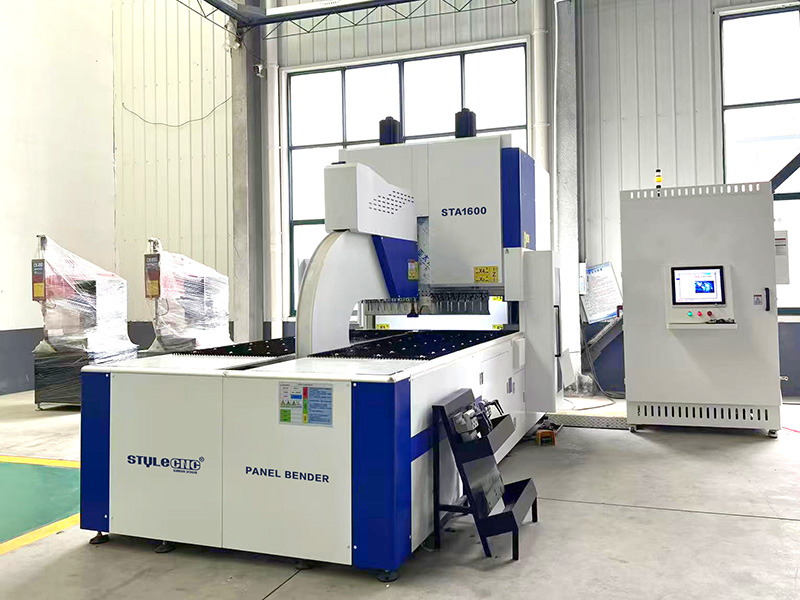
STA1600
High-Precision Control
Employs an advanced CNC control system to ensure precise positioning and repeatable bending accuracy.
Automated Tool Adjustment
Smart servo-driven tooling for facilitating rapid setup and flexible production.
High Efficiency and Energy Savings
Achieves low-energy operation through optimized motion control.

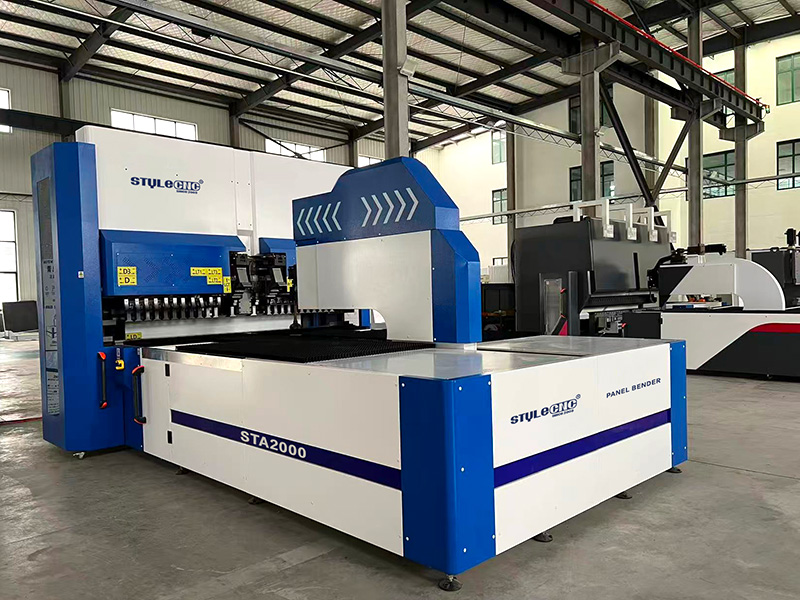
STA2000
Smart CNC Controller
The controller features an intuitive, user-friendly interface (touchscreen design) that provides comprehensive management over every stage of the bending process—from program creation to real-time parameter adjustments.
Robust and Durable
Combines a rigid machine frame with high-quality components to ensure an exceptionally long service life. Key components possess exceptional rigidity, enabling the machine to not only maintain its inherent strength and precision but also facilitate smaller, lighter cross-sectional designs, thereby minimizing deformation under load.

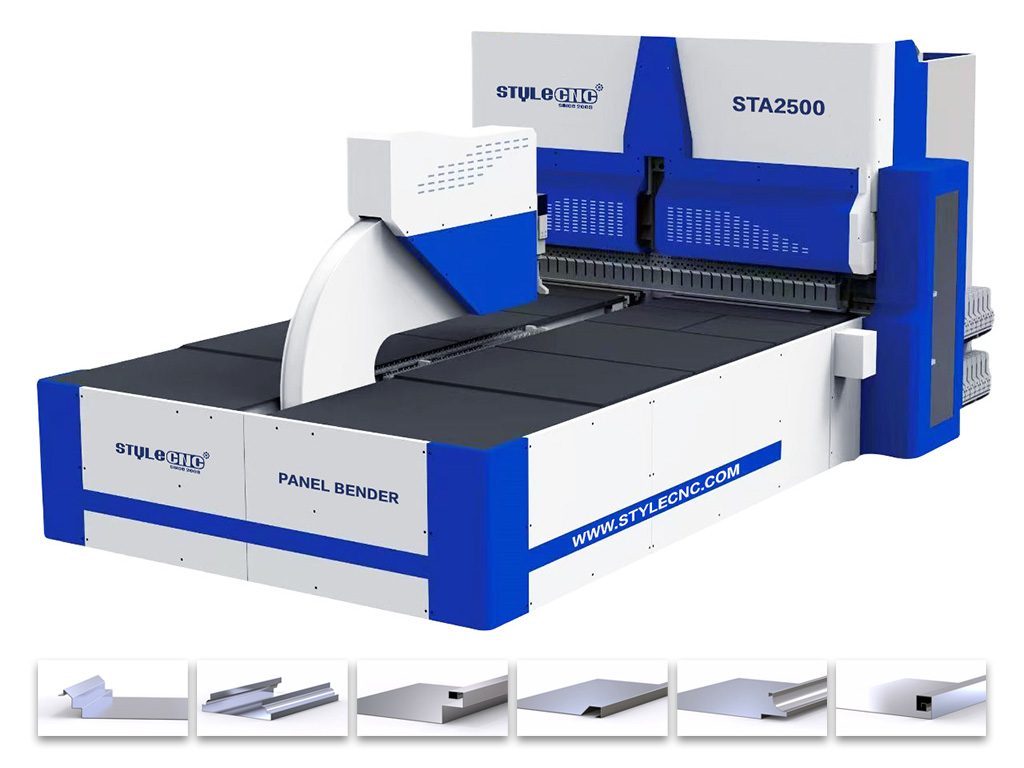
STA2500
Safety Guards
Constructed from metal, these safety guards effectively prevent operators from coming into contact with the equipment's moving components, thereby significantly reducing the risk of personal injury caused by accidental contact or flying debris. These guards are securely mounted around the perimeter of the bending center's worktable, ensuring that—while providing safety protection for operators—the operational stability and reliability of the equipment are fully maintained.
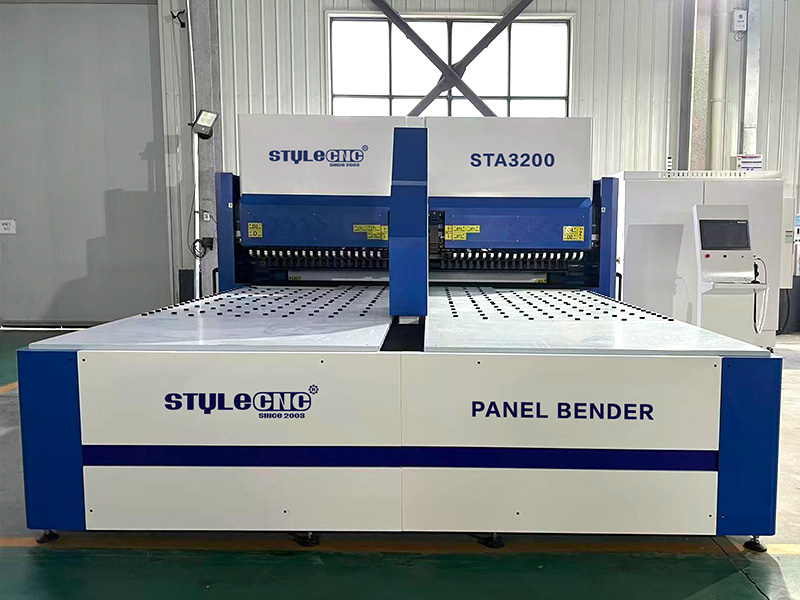
STA3200
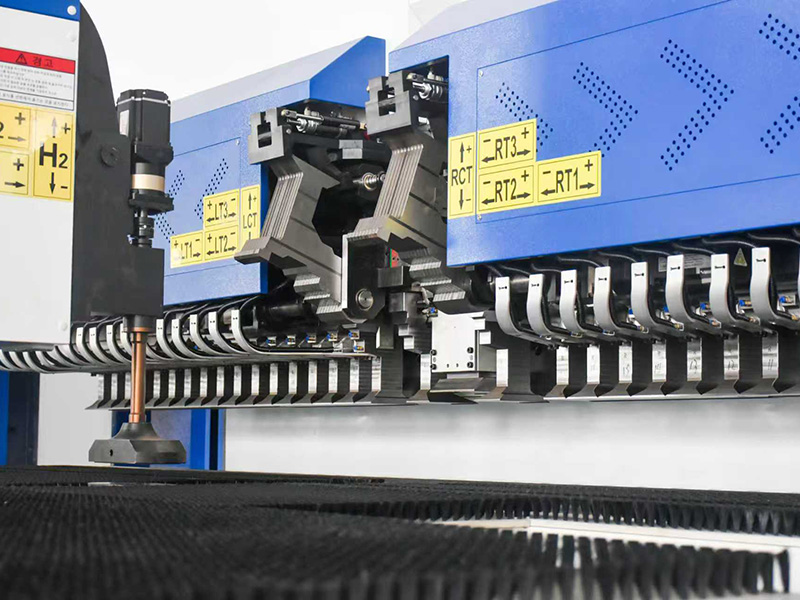
Automatic Clamping Tool Changer
The automatic clamping tool changer significantly enhances the machine's production efficiency and processing capacity by enabling the automated switching of tooling fixtures. The automatic blankholder changer minimizes downtime and manual intervention, allowing for rapid transitions between various bending tasks while simultaneously ensuring precision—thereby maximizing overall operational efficiency.
Uses & Applications
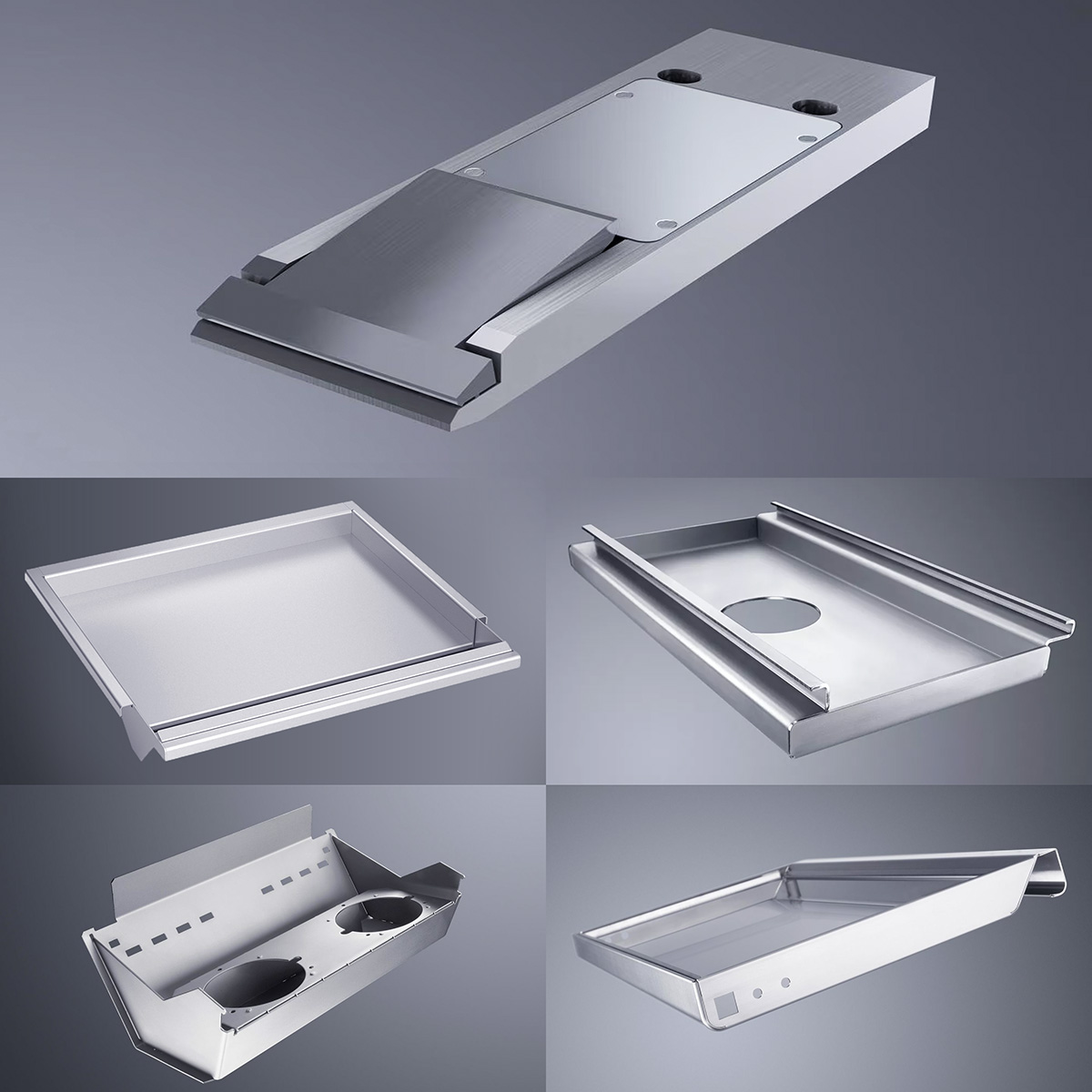
The panel bender is an automated sheet metal forming machine primarily used for the continuous, multi-sided, and complex-angle bending and shaping of metal sheets. Compared to traditional press brakes, CNC panel benders excel particularly at processing parts involving complex angles, curved geometries, and high-precision requirements, making them popular across industries such as cabinetry, elevator manufacturing, kitchenware manufacturing, and home appliance manufacturing to facilitate the efficient and rapid processing of complex sheet metal components. Panel bending machines are frequently integrated with laser cutters and industrial robots to form Flexible Manufacturing Systems (FMS), thereby enabling unmanned or minimally staffed production environments and significantly reducing cycle times.

Advantages and Benefits
The entire panel bending machine is designed and manufactured in accordance with high-precision machine tool standards. The main machine bed is constructed from welded steel plates, subjected to a rigorous stress-relieving process, and precision-machined as a single integrated unit on high-precision machine tools. Finally, the machine undergoes strict quality control using high-precision inspection instruments to guarantee long-term operational accuracy, stability, and high structural rigidity.
Enhanced Safety
Unlike manual bending machines—which require close-proximity operation—this product allows workpieces to be transferred from an external workstation, thereby ensuring the safety of the operator.
Higher Precision and Quality
It delivers exceptional bend quality and high repeatability, making it particularly well-suited for high-mix, on-demand, and lean manufacturing environments.
Greater Productivity
Productivity can be maximized even without the need for skilled operators. Compared to manual bending machines and robotic bending systems, this solution significantly reduces labor costs and boosts overall profitability.
Low Energy Consumption
Energy consumption and CO2 emissions are reduced by 64% compared to hydraulic-based solutions.
Lower Maintenance Costs
Maintenance costs are reduced by 65% compared to traditional hydraulic bending machines.
How To Operate A Panel Bending Machine?
A panel bending machine is a highly automated bending tool featuring a system capable of positioning, clamping, and bending sheet metal through a series of programmable actions. Operators must follow specific steps to ensure successful operation:
Step 1: Material Preparation
Panel Inspection: Before beginning, ensure that the metal sheet meets the required dimensions, thickness, and material specifications for the job.
Handling and Loading: Carefully load the sheet metal onto the machine. Some panel benders feature automatic loading systems, while manual systems require the operator to precisely position the sheet on the worktable.
Step 2: Program Setup
Program Selection: Use the machine's CNC (Computer Numerical Control) controller interface to select the appropriate bending program. Based on the design specifications, the program dictates the bending sequence, angles, and dimensions.
Parameter Input: Ensure that all parameters—such as sheet thickness, bending radius, and angles—are correctly entered into the system. Fine-tuning may be required depending on the material properties.
Step 3: Test Run
Test Bend: Before commencing full-scale production, a test bend must be performed using a test sheet. This verifies that the programmed settings yield the correct angles and dimensions.
Adjustments: If any discrepancies are observed during the test run, adjust the program or machine settings accordingly.
Step 4: Bending Process
Automated Bending: Once all settings are finalized, the machine automatically feeds and positions the sheet metal, executes the bending sequence, and produces the desired shape. The operator's primary role at this stage is to monitor the process.
Quality Control: Periodically inspect the accuracy of the bent parts during the bending process. This helps identify any issues early on, before proceeding with large-batch production.
Step 5: Completion Steps
Unloading: Once the parts have been bent, they can be unloaded from the machine either manually or automatically.
Post-Processing: In some cases, the parts may require further processing—such as deburring or additional forming—before they are ready for assembly or shipment.
Key Considerations
Material Specifications
Different materials (e.g., steel, aluminum, copper) require specific bending settings, as properties such as ductility, strength, and thickness influence the final product. It is essential to verify that the material is suitable for the programmed task.
Machine Setup and Maintenance
Proper machine setup is critical to ensuring accurate and consistent bending results. Ensure that key components—such as clamping systems, blades, and forming tools—are regularly inspected for wear.
Lubrication and Cleaning: Ensure that all moving parts are adequately lubricated and that the machine is kept clean to prevent errors during operation.
Program Accuracy
The CNC program must be correctly calibrated for each specific job, as inaccurate settings can lead to poor bending quality. Subtle variations in material thickness or machine settings can significantly impact the results; therefore, fine-tuning the program for every job is essential.
Safety Measures
Personal Protective Equipment (PPE): Operators should always wear appropriate safety gear—including gloves, safety glasses, and protective clothing—to prevent injury from sharp metal edges or machine operations.
Emergency Stop: Always remain aware of the emergency stop function and ensure that safety guards are in place during operation. Never reach inside the machine while it is running.
Machine Maintenance: Regular maintenance and upkeep are key to ensuring safe operation. Periodically inspect the system for mechanical issues or software malfunctions.
Precision and Quality Control
Continuous monitoring and frequent quality control checks are vital to ensuring that every bent panel meets the design specifications. Angles and dimensions should be measured—either automatically or manually—throughout the entire production process.
FAQs
What Materials Can A Panel Bending Machine Bend?
A panel bender is capable of bending a wide variety of materials, including carbon steel, stainless steel, iron, brass, aluminum, and other sheet metal. A panel bending machine can handle materials of varying thicknesses and hardnesses for a wide range of industrial applications.
Is Operating A Panel Bender Easy For Beginners?
Panel benders are designed with user-friendliness in mind, featuring an intuitive and user-friendly interface. With proper traing and practice, novice operators can easily set up and manage bending jobs—effortlessly handling even complex workpiece geometries.
How To Pick A Panel Bending Machine?
When picking a panel bending machine, priority should be given to processing requirements—specifically defing material thickness, table length, bending precision, and compensation capabilities—while also taking into account both initial investment and long-term operating costs.
How can I avoid inaccurate panel bending?
This may be caused by incorrect program settings, inconsistent material properties, or mechanical misalignment. Re-examine the program and ensure that the panel bending machine is properly calibrated.
What should I do if the sheet metal slips?
If the material is not securely clamped, check the clamping force settings and ensure that the sheet is correctly positioned on the worktable.
What causes surface damage to the sheet metal?
If the metal surface becomes scratched or damaged during processing, check the cleanliness of the machine's contact points and ensure that there is no debris between the sheet and the bending tool.
Sirven
Eliot
Sturdy and durable, worked great for what I needed it for. After using it many times on various sheet metal bends, the panel bending machine stood up well to regular use. Excellent value for money.
Pros
• Automated processes with CNC allow for rapid production of panels and complex shapes.
• Hands-off operation prevents pinch injuries.
• Ultra-fast cycle times for large panels.
• Material stays flat, preventing whipping or kinks.
Cons
• High initial investment (standard units often exceed $60,000).
• Usually optimized for thin-gauge metal (up to 3.2mm).
• Requires a larger, more permanent footprint than most standalone press brakes.
Further Reading
No Next Product Available
Related Products