Arrived at the agreed time and well packaged. The STB10032 is constructed from high-strength steel, enabling stable bending even under heavy-load operating conditions. Its CNC controller supports smart bend sequencing and real-time diagnostics with a user-friendly touchscreen interface. In addition, STYLECNC provides a global support network with remote troubleshooting and rapid spare parts delivery. However, as a hydraulic-based system, the STB10032 requires a relatively higher level of routine maintenance compared to fully automatic panel bending machines. All in all, this is a great hydraulic press brake that offers high performance at a price point (around $22,000), which is more cost-effective for growing shops than high-end European and American brands.
2026 Best CNC Press Brake for Sheet Metal Bending
Are you striving to achieve precise and consistent angles in sheet metal fabrication, whether you are dealing with tiny and intricate components or large-scale structural parts? CNC benders make everything easy. Let's delve into automated bending techniques in industrial sheet metal fabrication and pick your best-in-class precision CNC press brake for 2026 from STYLECNC.
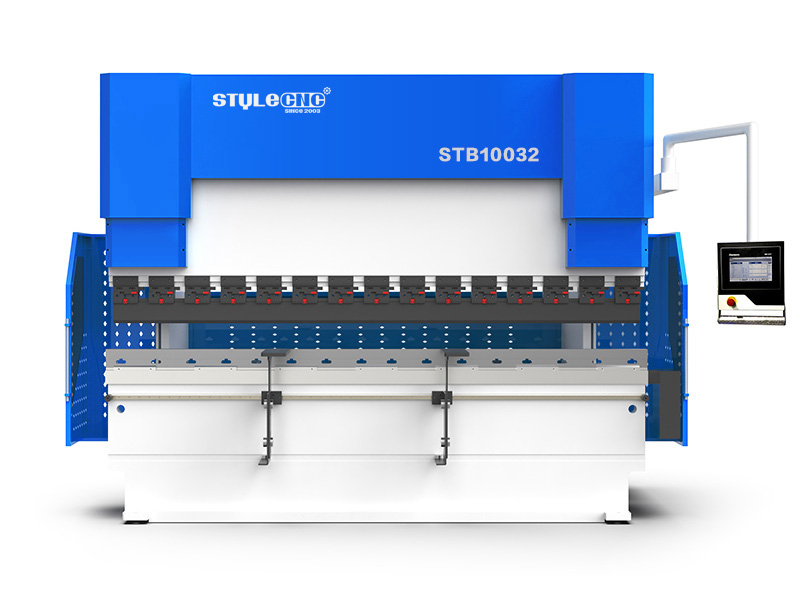
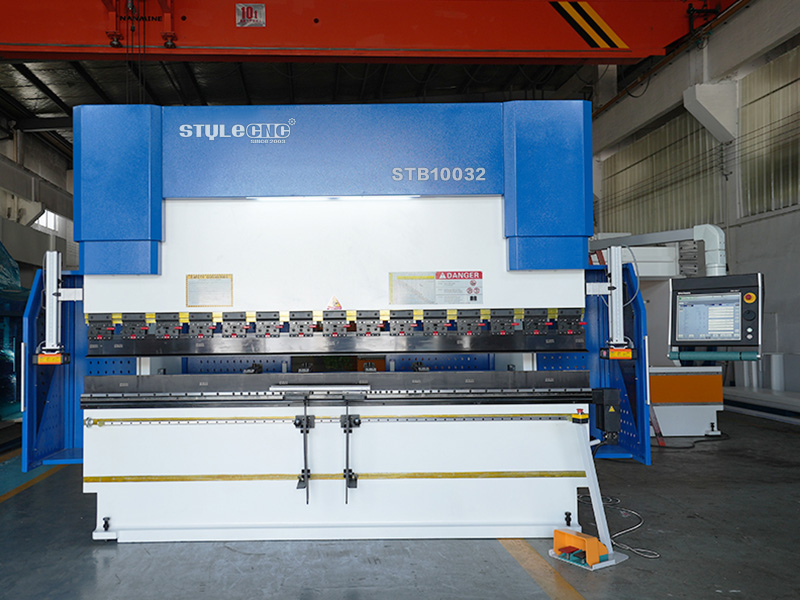
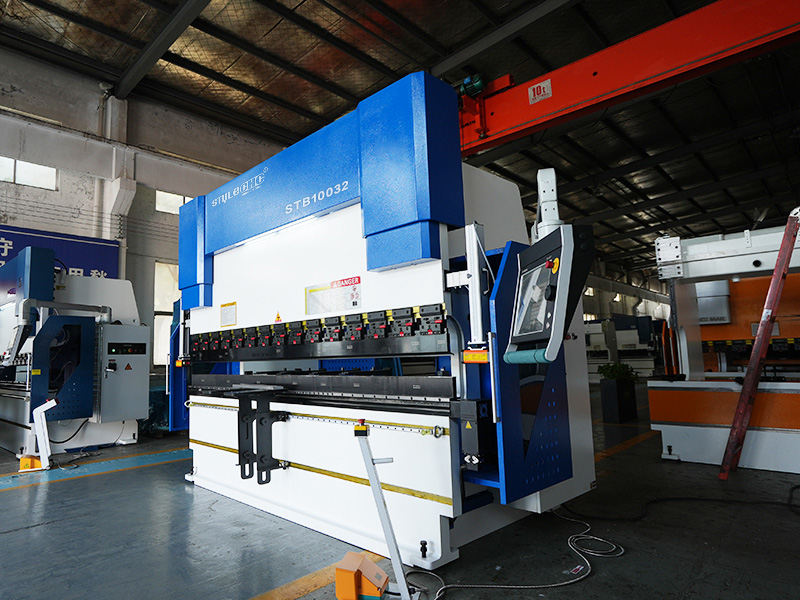
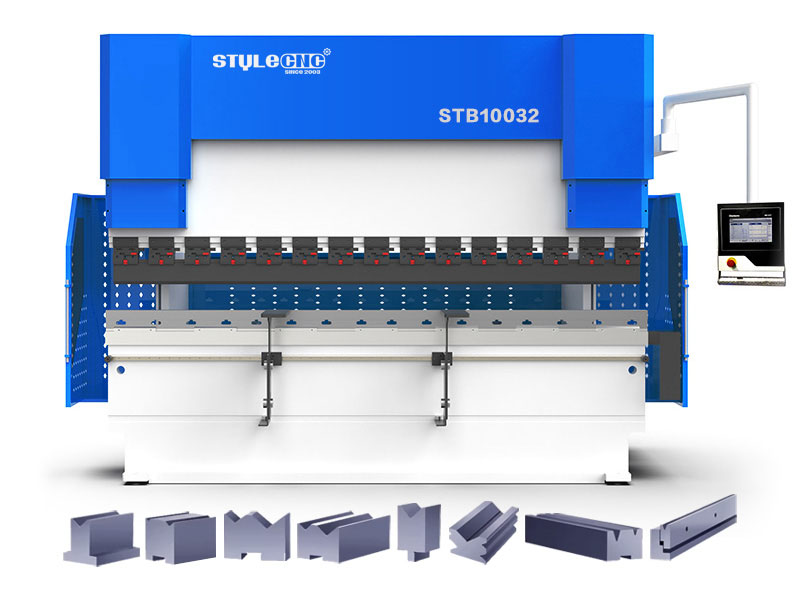
- Brand - STYLECNC
- Model - STB10032
- Maker - Jinan Style Machinery Co., Ltd.
- Category - CNC Bending Machine
- 360 Units in Stock Available for Sale Every Month
- Meeting CE Standards in Terms of Quality & Safety
- One-Year Limited Warranty for Entire Machine (Extended Warranties Available for Major Parts)
- 30-Day Money Back Guarantee for Your Purchase
- Free Lifetime Technical Support for End-Users & Dealers
- Online (PayPal, Alibaba) / Offline (T/T, Debit & Credit Cards)
- Global Logistics and International Shipping To Anywhere
What Is A CNC Press Brake?
A CNC press brake is an automatic sheet metal bender used in industrial manufacturing, primarily for bending metal plates into high-precision metal components of desired shapes.
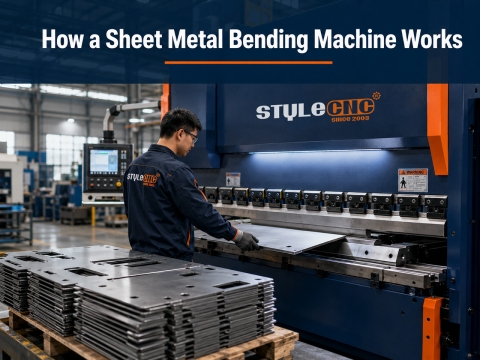
A CNC press brake comprises key components including the machine frame, ram, worktable, and back gauge assembly. The CNC system precisely controls the ram (upper die) and the back gauge to automatically adjust the positioning of the metal sheet for each subsequent bending operation, thereby minimizing human error and ensuring high-quality bends.
How Does A CNC Press Brake Work?
A CNC press brake utilizes computer-controlled CAM software to convert parameters—such as workpiece dimensions, material type, and bending angles entered by the operator, or CAD design files imported directly—into command codes, which drive the bender's axes and tooling to move in various directions and at different angles, thereby executing complex forming tasks that involve multiple bending stages.
What Can CNC Press Brakes Do?
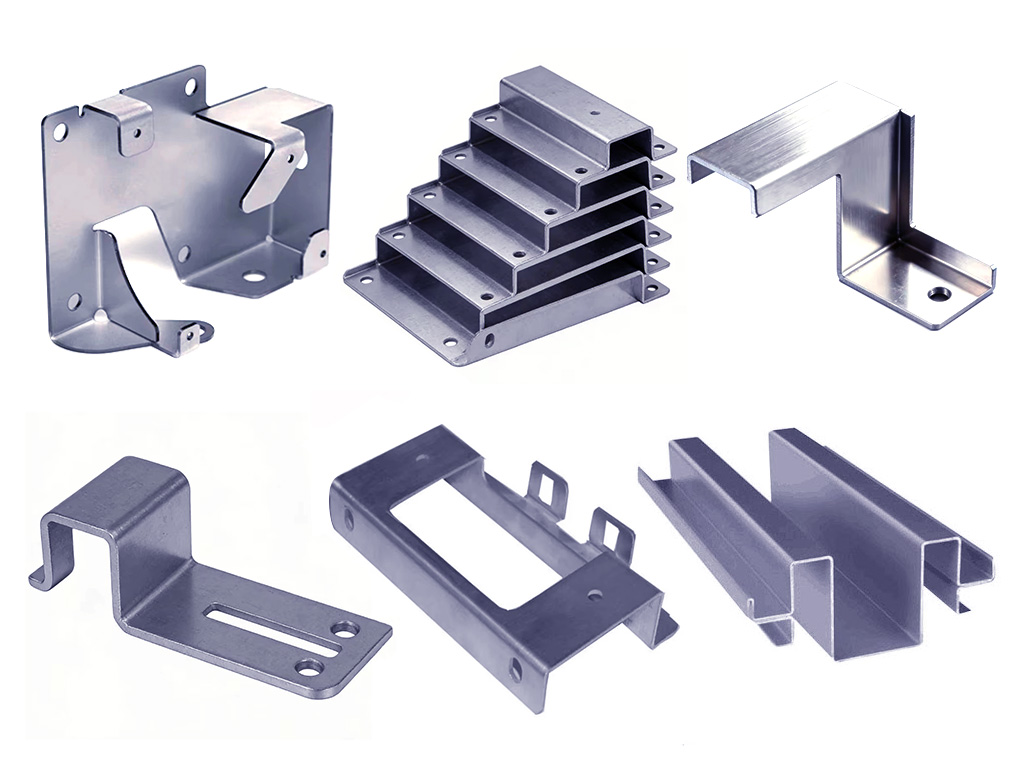
Utilizing CAD/CAM software to precisely calculate bending angles and required pressure—and relying on the coordinated action of an upper die (punch) and a lower die (die block)—a CNC press brake can execute tasks such as folding, custom shaping, and forming various complex metal structures using materials such as steel, iron, aluminum, brass, and copper. A CNC press brake serves as an ideal tool for achieving rapid, high-volume production as well as bending operations requiring extremely high precision, making it popular for the precision forming of critical aerospace components, the manufacturing of electronic equipment chassis and cabinets, the forming and creation of automotive doors, roofs, and structural parts, as well as a wide variety of prototyping applications.

Specifications
| Model | STB10032 | STB25041 | STB60060 |
|---|---|---|---|
| Maximum bending force | 1000KN | 2500KN | 6000KN |
| Bending length | 3200mm | 4100mm | 6000mm |
| Width Between Columns | 2600mm | 3400mm | 4800mm |
| Throat depth | 400mm | 400mm | 600mm |
| Open Height | 480mm | 500mm | 670mm |
| Fast falling speed | 180mm/s | 130mm/s | 90mm/s |
| Working speed | 0-10mm/s | 0-8mm/s | 0-7mm/s |
| Return speed | 160mm/s | 120mm/s | 90mm/s |
| Main motor power | 7.5KW | 18.5KW | 51KW |
| Dimensions (L×W×H) | 3700×1930×2630mm | 4700×2120×2820mm | 6200×2700×4750mm |
| Machine Weight (kgs) | 8000 | 14800 | 59000 |
| Bending thickness (Note: By bending length of 3000mm) | ≤ 3mm carbon steel | ≤ 7mm carbon steel | ≤ 12mm carbon steel |
| ≤ 2mm stainless steel | ≤ 4.5mm stainless steel | ≤ 7.5mm stainless steel | |
| ≤4.5mm aluminum | ≤10mm aluminum | ≤18mm aluminum |
Key Features
Mechanical Structure
The structure of the CNC press brake primarily comprises the machine frame, uprights, ram (slider), worktable, main hydraulic cylinders, and back gauge assembly. All components have undergone finite element analysis (FEA) and 3D software optimization to ensure exceptional strength and rigidity. Each structural component features exquisite design—being robust, durable, and stable in operation—thereby significantly enhancing the overall performance and service life of the machine.

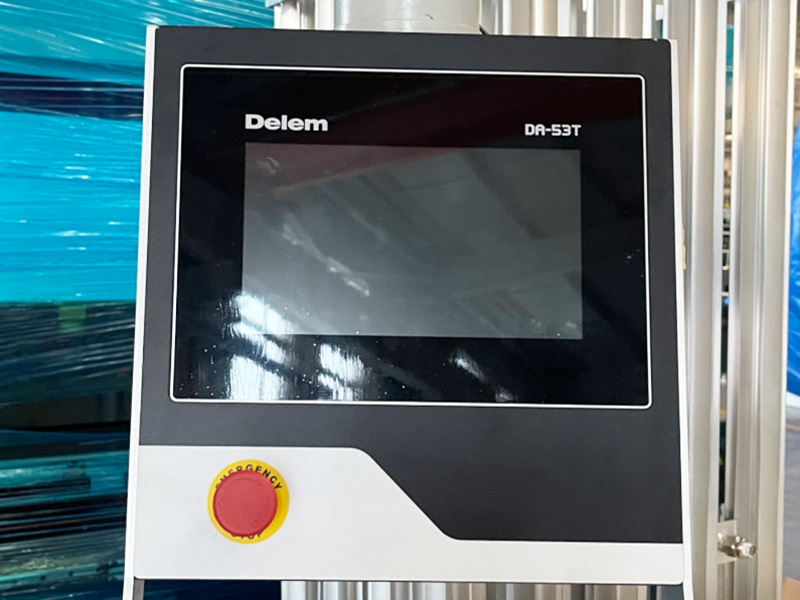
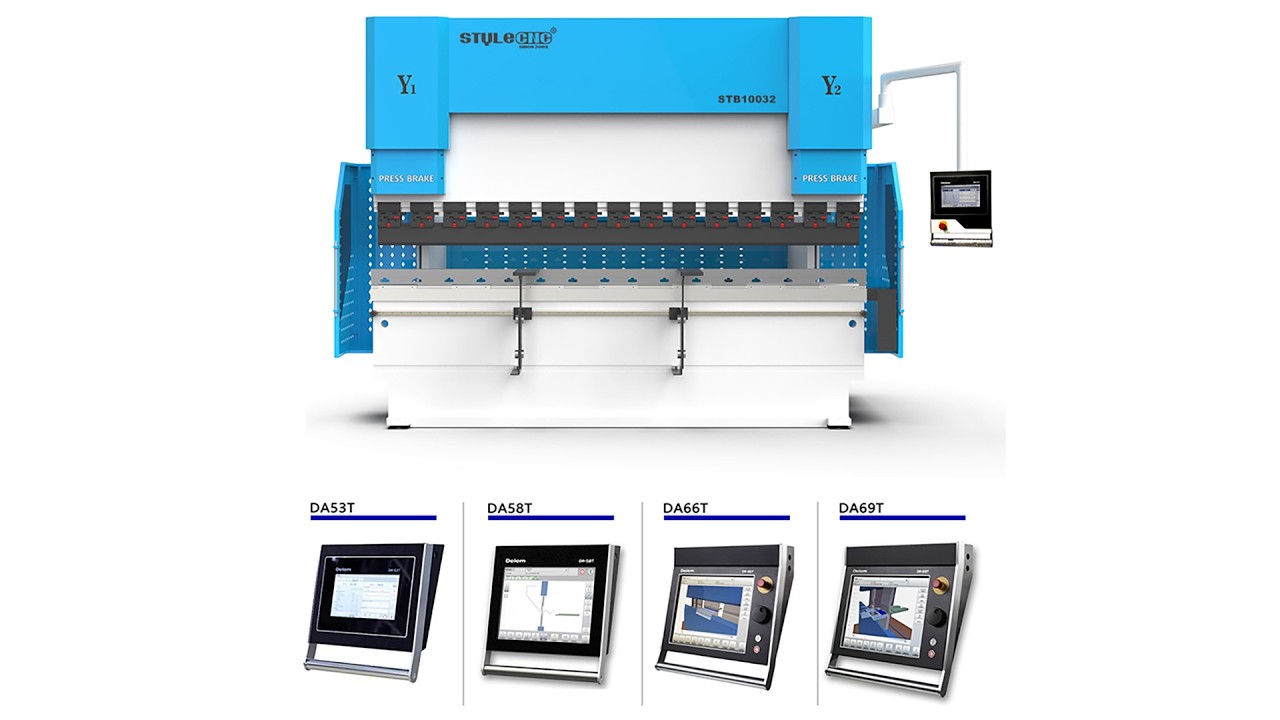
DELEM 53T Control System (Netherlands)

• 10.1-inch high-resolution color display.
• Automatic calculation of workpiece bending length.
• 2D touch-screen graphical programming.
• Supports 4+1 axis control.
• USB interface.
Rexroth Hydraulic System (Germany)
Rexroth hydraulic valves feature exceptional durability and high pressure resistance, ensuring reliable performance even under demanding operating conditions.
CNC press brakes with these valves support a variety of operational modes—including rapid descent, slow descent, bending at working speed, rapid return, and emergency stop functions—thereby significantly enhancing both operational flexibility and safety.
Electric Motor
This series of motors is specifically designed to meet high starting torque requirements and strictly adheres to international IEC standards, ensuring compatibility and ease of maintenance across a wide range of applications.
The motors deliver outstanding operational performance with extremely low noise and vibration levels, coupled with high reliability, effectively enhancing the user experience and extending the overall system lifespan.
Electrical System
All core components utilize original parts from Schneider Electric (France), effectively boosting the system's durability and stability to ensure a longer service life for the equipment.
The electrical cabinet features an adaptive design combined with superior anti-interference capabilities, guaranteeing stable and reliable operation of the electrical system.
Servo Motors and Drives
Thanks to their precise control capabilities, servo motors enable extremely accurate positioning and motion control. This is crucial for applications that demand the highest levels of fine-tuning precision and motion repeatability.
Fast Clamp
Dies can be installed and replaced from either the bottom or the side. This design not only drastically reduces the time required for die changes—thereby boosting work efficiency—but also enhances the equipment's load-bearing capacity.
Back Gauge Fingers
The machine's back gauge assembly is equipped with high-precision ball screws and adjustable back gauge fingers, ensuring precise positioning for various types of upper dies (punches).
Furthermore, this assembly features a manual height adjustment function, significantly enhancing the machine's adaptability and enabling it to accommodate and fulfill the bending requirements of a wide variety of upper die types.
Synchronization Control System
This synchronization control system ensures the precise synchronization of bending movements through the coordinated interaction of dual optical scales and a hinged structural mechanism. This mechanism not only effectively prevents wear on the guide rails and damage caused by excessive load, but the real-time feedback capability of the optical scales also further enhances positioning accuracy.
Mechanical Deflection Compensation System
The mechanical compensation table is assembled from wedge blocks that have undergone specialized processing and heat treatment. The relative displacement compensation value for each set of wedges is meticulously designed based on the potential deformation of the upper and lower beams during the machine's operational state. The CNC control system automatically calculates the required compensation for the upper and lower beams based on the actual load conditions during the bending process; it then automatically controls the relative movement of the wedge blocks to effectively counteract and compensate for the deflection and deformation of the beams under load. This mechanical compensation mechanism significantly simplifies the machine tool manufacturing process and represents a technically more advanced and operationally more reliable solution. Moreover, this system eliminates any potential risks associated with fluid leakage, ensuring even more precise and accurate control.
Bending Compensation System
Side Frame Deflection Compensation System: Developed by a specialized technical team, this system is designed to address the issue of deformation in the machine's side frames (openings) during the bending process. The system employs a "C-type" structure—independent of the main machine frame walls—and is equipped with a specialized automatic balancing adjustment mechanism. By effectively counteracting the deformation of the side frames caused by reaction forces, the system prevents accuracy deviations that might otherwise result from positioning errors in the optical scales, thereby ensuring the precision of the bending operation.
Front Drag Module
The front tray is supported by rollers and slides manually left and right along linear guides in the Z-axis direction. Its height can also be easily adjusted via a handle. Furthermore, depending on specific requirements, this tray can be optionally equipped with a specialized extended crossbeam featuring a parking position function.
Optional Features
• Offers an optional multi-axis expansion capability, allowing for the addition of a C-axis (rotational axis) and a W-axis (compensation axis) to meet the bending requirements of complex-shaped workpieces.
• Optional laser safety light curtains are available to provide operators with an enhanced level of safety protection. By featuring robust resistance to electromagnetic and optical interference, it effectively enhances personnel safety levels, ensuring the equipment operates reliably across a wide range of environments.
How To Operate A CNC Press Brake?
Step 1: Power On. Turn on the main power supply, flip the switch on the control panel, and then start the oil pump. You should hear the sound of the oil pump running, however, the machine will not perform any bending operations at this stage.
Step 2: Stroke Adjustment. It is crucial to carefully adjust the stroke settings before operation, and a test run must be performed prior to actual bending. When the upper die descends to its lowest point, a clearance equal to at least the thickness of the sheet metal must be maintained; failure to do so will result in damage to both the dies and the machine. The stroke adjustment mechanism typically features an electric rapid-adjustment function.
Step 3: V-Die Selection. Select the appropriate V-die opening (groove) based on the thickness of the sheet metal being processed.
Step 4: Back Gauge Adjustment. The back gauge typically features both an electric rapid-adjustment function and a manual fine-tuning mechanism. The adjustment procedure is similar to that used for shearing machines.
Step 5: Initiate Bending. Depress the foot pedal switch to begin the bending operation. Unlike the operation of a shearing machine, the bending process on a CNC press brake can be interrupted at any time, releasing the foot pedal will immediately halt the machine's downward movement, while depressing it again will resume the descent.
Precautions for Operating CNC Press Brakes
• Strictly adhere to the machine tool operator's safety regulations and wear the prescribed personal protective equipment.
• Before starting, carefully inspect the motor, switches, wiring, and grounding connections to ensure they are in good working order and securely fastened. Verify that all control components and buttons are set to their correct positions.
• Check the alignment and secure fastening of the upper and lower dies, verify that all positioning devices meet the specific requirements of the workpiece being processed.
• If the upper slide and the various positioning axes are not currently at their home (origin) positions, execute the "Return to Home" program.
• After starting the equipment, allow it to run idle for 1–2 minutes, and cycle the upper slide through its full stroke 2–3 times. If any abnormal noises or malfunctions are detected, stop the machine immediately; resolve the issue, and resume operations only after confirming that everything is functioning normally.
• During operation, one designated person must serve as the central commander to ensure close coordination between the machine operator and the material feeding/holding personnel. The bending signal may be issued only after confirming that all assisting personnel are positioned in safe zones.
• When bending sheet metal, the material must be firmly clamped to prevent it from lifting up during the bending process, which could result in injury to personnel.
• Adjustments to the sheet metal clamping die must be performed only after the power supply has been disconnected and the machine has come to a complete stop.
• When adjusting the opening width of the variable lower die, ensure that no material is in contact with the lower die.
• During operation, no personnel are permitted to stand behind the machine tool.
• Avoid bending sheet metal at only one end of the machine; distribute the load evenly across the bending beam.
• If the workpiece or dies are observed to be misaligned while the machine is running, stop the machine immediately to make corrections. It is strictly forbidden to attempt manual adjustments while the machine is in motion, as this poses a severe risk of hand injury.
• Do not attempt to bend excessively thick iron plates, heat-treated (quenched) steel plates, high-grade alloy steels, square bars, or any material that exceeds the bending machine's specified performance limits, as doing so may cause damage to the machine tool.
• Regularly check the alignment of the upper and lower dies, and verify that the pressure gauge readings comply with the specified parameters.
• If any abnormal conditions arise, stop the machine immediately; investigate the cause and resolve the issue promptly.
• Before shutting down the machine, place wooden blocks on the lower die beneath both hydraulic cylinders, and lower the upper slide down onto these blocks.
• Exit the control system program first, and then disconnect the main power supply.
Srbriak
Further Reading
No Previous Product Available
Related Products